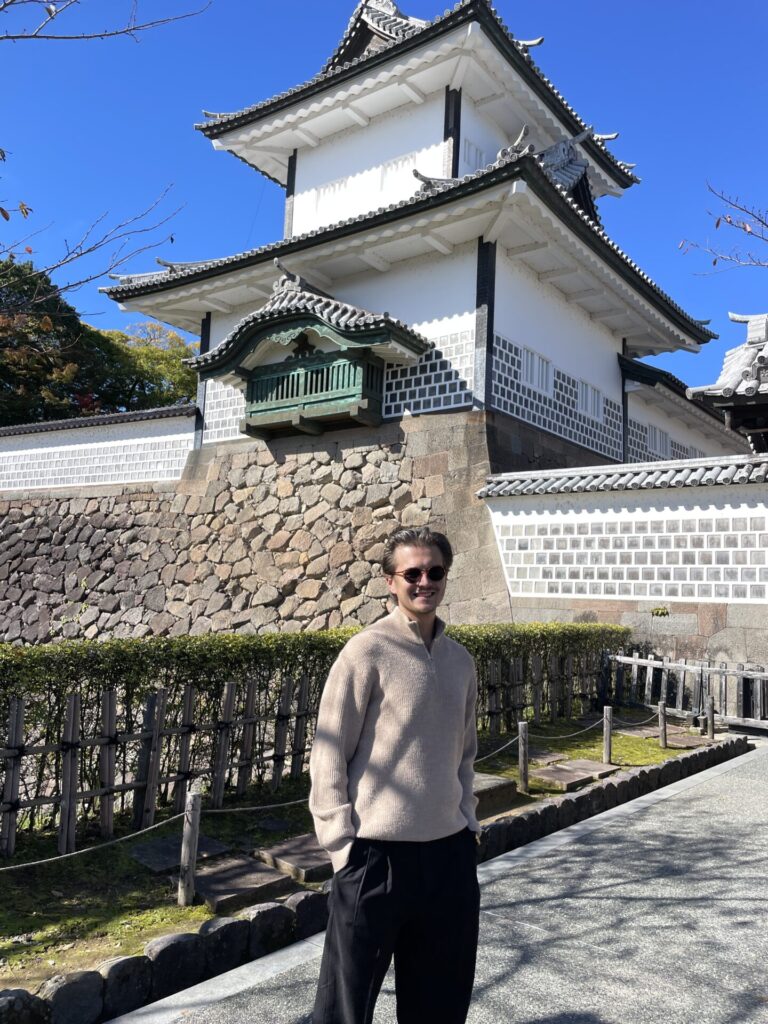
The Best 7 Days in Japan Itinerary: How I Spent 1 Week in Japan in 2026
Japan has absolutely exploded as a travel destination over the past couple of years. At least according to my social media, basically everyone I know went to Japan last year, so naturally, I had to see what all the fuss was about.
Long story short: I loved it. I’m borderline obsessed now. The cities, the culture, the food, the overall vibe, I get it. I completely understand why Japan is at the top of so many travel lists, and I’d recommend it in a heartbeat.
That said, I know not everyone has a month to spend in Japan like I did (lucky me). Most of you will probably have around a week, and honestly, that’s still enough time to have an amazing trip if you plan it well.
So for those of you with limited time, I put together this 7 days in Japan itinerary based purely on my personal highlights. Seven days is short-ish, which means this route focuses on the best bits and skips anything that isn’t worth your time. If you only have one week in Japan and want to make the most of it, this itinerary will point you in the right direction.
In a Rush? Here Are Our Favorite Hotels in Tokyo Japan
⭐️⭐️⭐️ Hotel Indigo Tokyo Shibuya – Click here for rates & availability
⭐️⭐️ Shibuya Tokyu REI Hotel – Click here for rates & availability
⭐️ Hotel Gracery Shinjuku – Click here for rates & availability
7 Days in Japan Itinerary – My Experience
As I mentioned earlier, I personally spent almost a month in Japan because I really wanted to get to know the country properly. During that time, I visited Osaka, Kyoto, Hiroshima, Kanazawa, Tokyo, and even made it out to Mount Fuji. I traveled fairly slowly, left plenty of days unplanned, wandered around aimlessly, and ate an unreasonable amount of good food. I Loved it.
That said, if you only have 7 days in Japan, I wouldn’t recommend traveling the same way I did. With limited time, I’d want those days to count. You don’t want to leave feeling like you missed half of what makes Japan so special.
At the same time, I also wouldn’t want to spend half the trip sitting on trains. Constantly moving cities eats into your time faster than you think, especially on a short itinerary.
Based on my own experience, I’d focus on Tokyo, Kyoto, and Osaka for a one-week trip. These three feel like the core pillars of most Japan itineraries. Yes, I loved the other places I visited too, but with just a week, this combo gives you a really solid mix of modern city life, traditional culture, and incredible food.
That said, there’s no single “right” way to do it. If you’re more into slowing down and relaxing, I totally get that. You could easily spend a full week just in Tokyo (I did, and it was amazing) or base yourself in Kyoto and take things at a gentler pace.
Everything You Need to Know Before Visiting Japan
Before you hop on the plane, there are a few things I really wish I’d known ahead of time. None of them are deal-breakers, but they’ll make your trip smoother and save you a lot of minor daily stress.
- Book certain activities in advance: You don’t need to plan every single day, but some popular experiences do sell out quickly. Things like Shibuya Sky, a tea ceremony in Kyoto, teamLab Planets, and Universal Studios Japan are best booked ahead of time.
- Get an eSIM: I needed data constantly for navigation, public transport, and finding places to eat. I used Sim Local, and it worked flawlessly for me. (Sign up here and use my discount code GIRLONAZEBRA.)
- Get an IC card: An IC card (like Suica or PASMO) is essential. You top it up once and use it for subways, buses, and even convenience stores. It made getting around for me so much easier.
- Know the unspoken rules: Japan has a lot of social rules that aren’t always obvious and took me a while to get used to. Don’t be loud on public transport, avoid eating or drinking while walking, and be mindful of personal space.
- Always carry cash: Before arriving, I thought Japan would be 100% card-friendly. Nope. I needed cash way more often than expected, and I ended up buying a coin purse because the coins add up fast.
- Pick the best time to visit Japan: I visited Japan in early November and loved it for the mild temperatures, beautiful fall foliage, and fewer crowds. I’m already planning a winter trip because I think Japan would be amazing in colder weather. Summer, though, is a hard pass. It’s way too hot for me.
- Don’t expect trash cans: There are almost no public trash cans anywhere, which can be surprisingly annoying. I ended up carrying a small trash bag in my backpack and throwing things away once I got back to my hotel.
My 7 Day Japan Itinerary
Quick disclaimer before we dive in. This itinerary is purely based on my own experience and includes the places I personally loved the most and would genuinely recommend to friends. I used those highlights to build this 7 day Japan itinerary, so think of it as tried-and-tested rather than theoretical.
I’m also assuming you have 7 full days in Japan. I’d highly recommend flying into Tokyo and out of Osaka (or the other way around). It saves you roughly $150 USD on train tickets and a surprising amount of travel time, which really matters when you only have a week.
Day 1 Tokyo: Shibuya Crossing, Shibuya Sky & Shinjuku
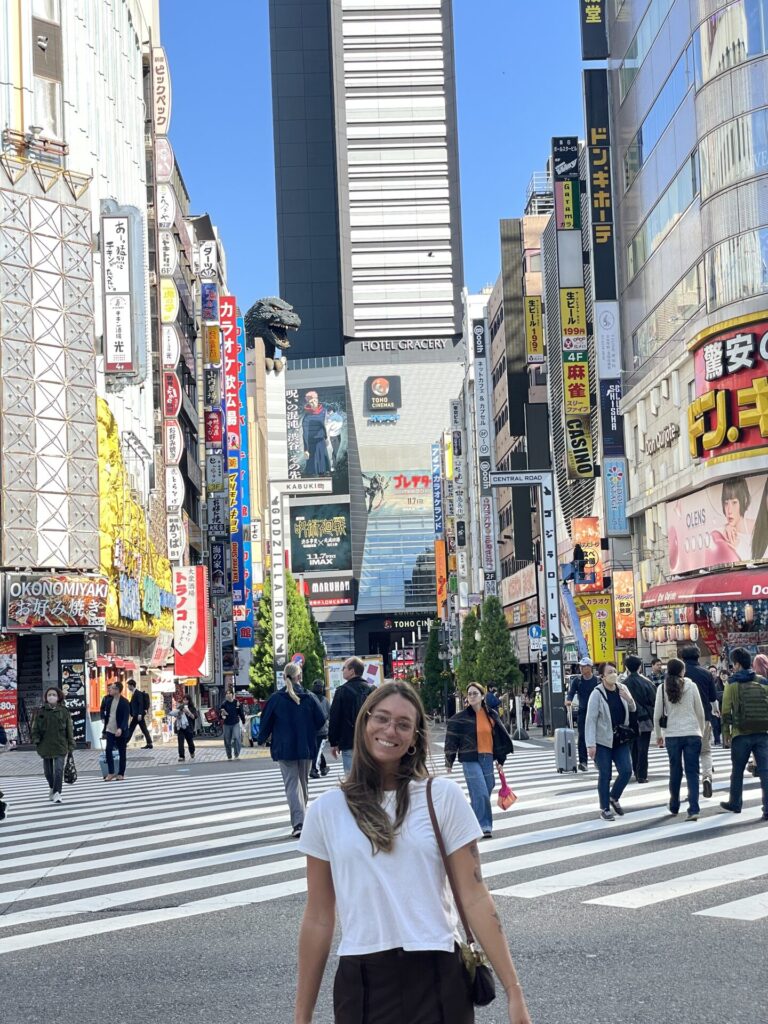
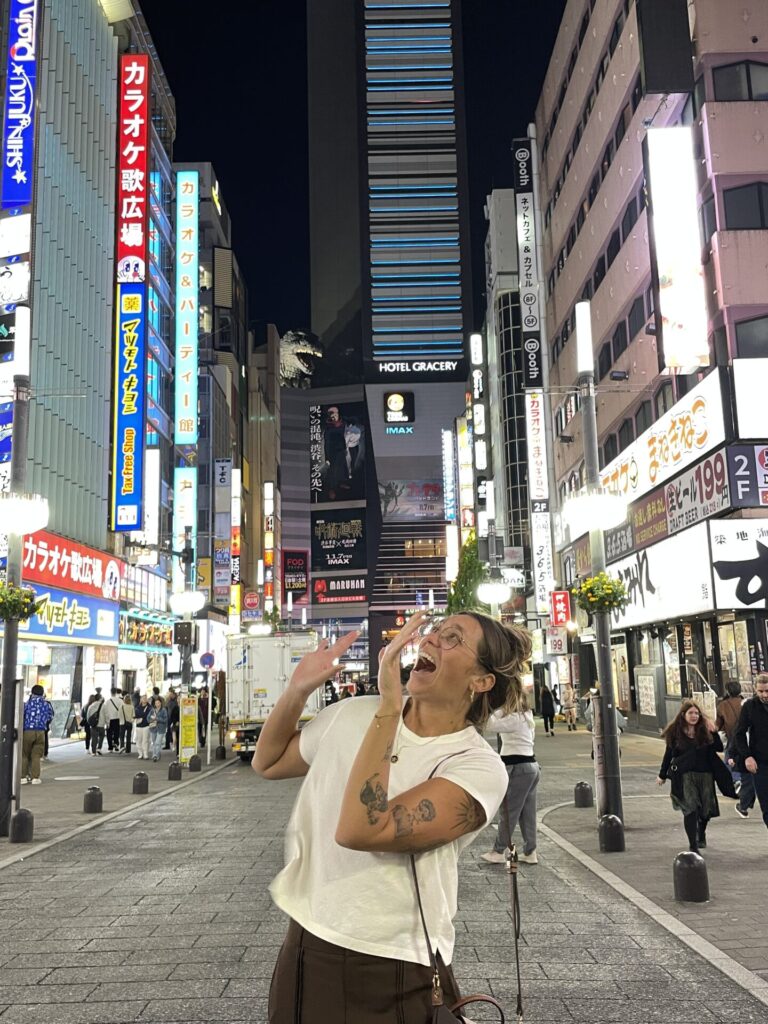
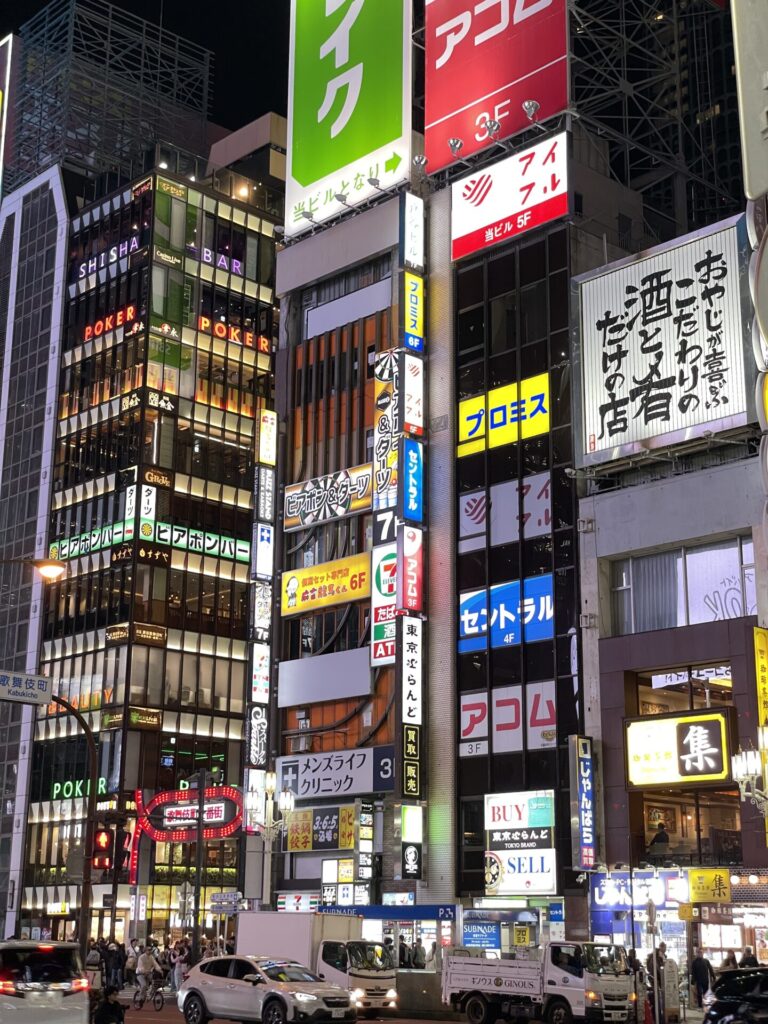
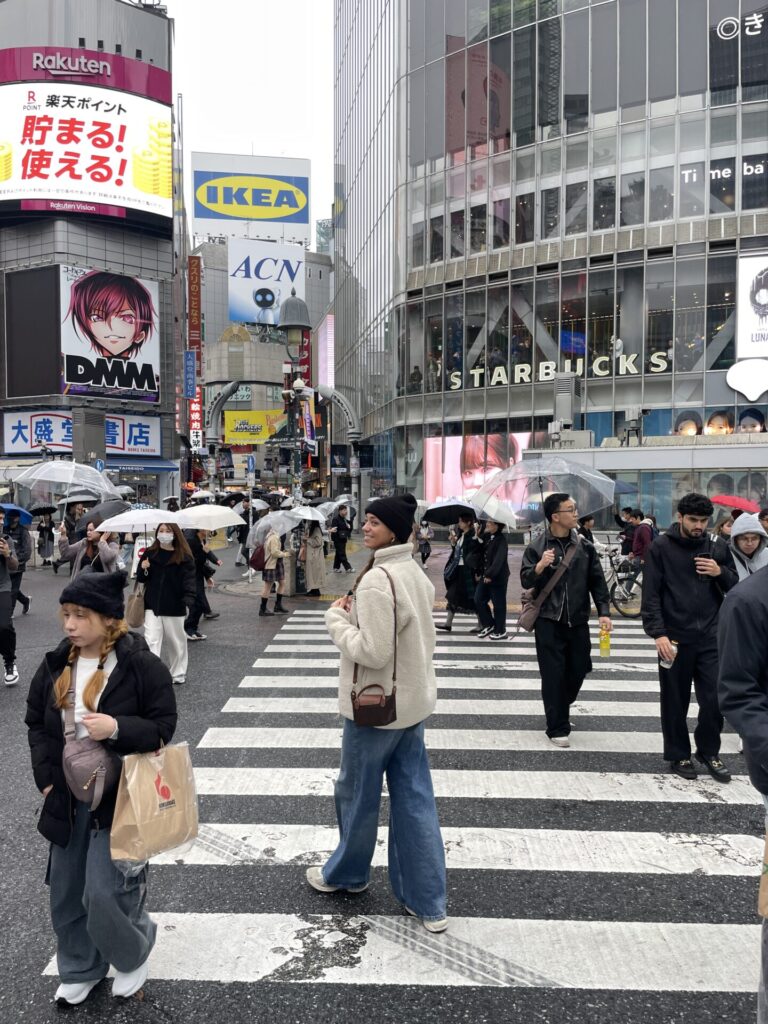
On my first day in Tokyo, I’d go straight into it. No easing in. I focus on Shibuya and Shinjuku, because for me, this is exactly what I always pictured when imagining Tokyo. Huge buildings, neon signs everywhere, and a slightly chaotic energy which is super fun and exciting.
I start at Shibuya Crossing, the iconic scramble crossing you’ve probably seen in movies like Fast & Furious: Tokyo Drift. It’s hectic, loud, and honestly kind of fun to just stand there and take loads of pictures.
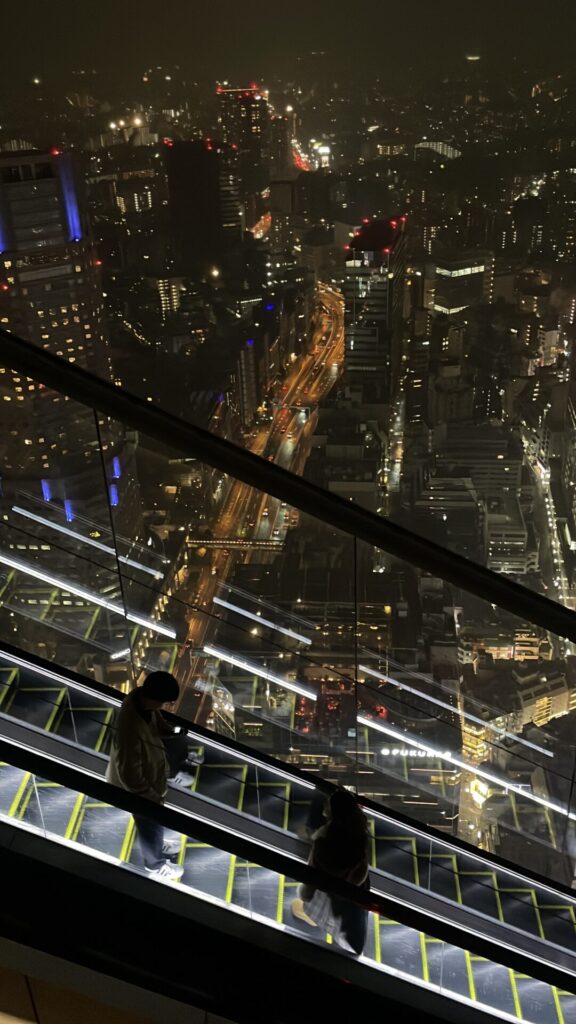
From there, I head up to Shibuya Sky. This is my favorite observation deck in Tokyo. It’s an open-air rooftop with insane views over the city, and it feels much more special than the fully enclosed observation decks. Book this in advance because tickets do sell out.
I finish my first day in Shinjuku, which is basically Tokyo’s nightlife heart. Bars, restaurants, neon lights, and constant movement. I stayed in Shinjuku for part of my time in Tokyo, and it’s a great area to end a long first day.
For dinner, I keep it simple and stick to two of my favorite spots in Tokyo. Either sushi at Sushi Bar Nigirite or ramen at Ramen Tatsunoya. I loved both, and honestly, you can’t go wrong with either after a full day of walking.
Book Here: Shibuya Sky Tickets
Day 2 Tokyo: Tokyo’s Fish Markets & Teamlab Planets
On day two of my 7 days in Japan itinerary, I’m still in Tokyo (Tokyo gets the first three days), and today is all about food and one of the coolest art experiences in the city.
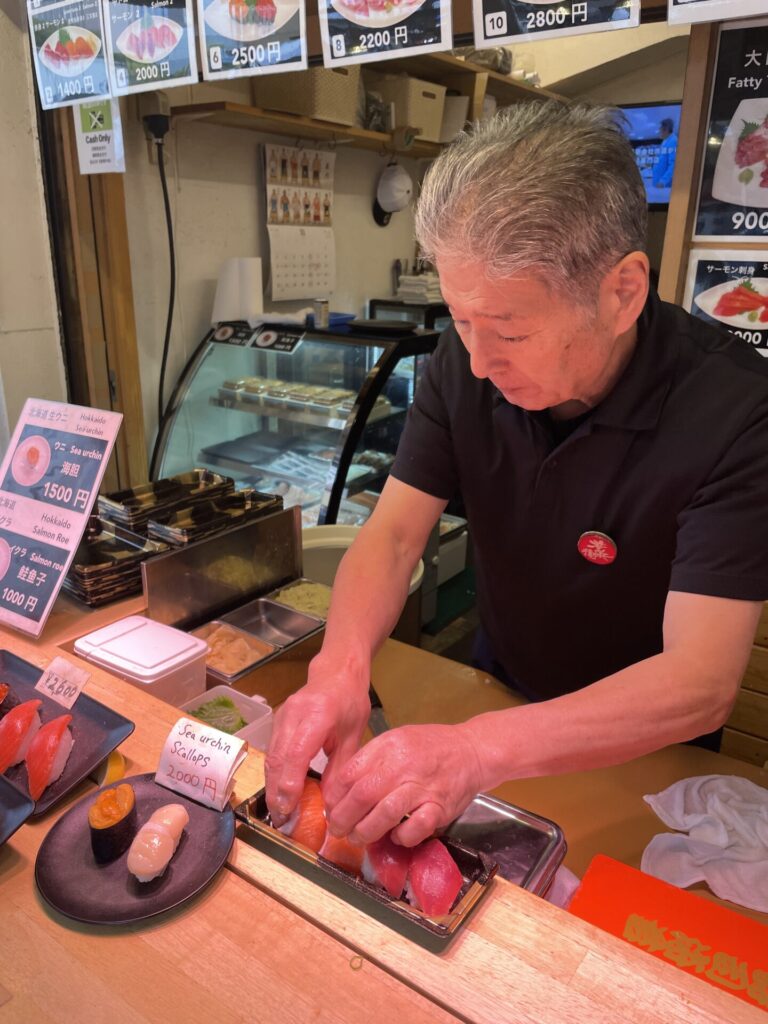
Tokyo actually has two fish markets, and I went to both. You can absolutely do the same, or just pick one depending on your time and interest level. I started at Tsukiji Fish Market, which is the old market. It’s no longer the working wholesale market and is definitely more touristy now, but honestly, I still loved it. I wandered around, tried a bunch of snacks, and had some really good sushi at 8am, so no regrets there.
The second one is Toyosu Fish Market, which is the newer, working fish market. This is where the famous tuna auctions happen, and seeing those massive tuna lined up was genuinely impressive. The vibe here is very different from Tsukiji, way more industrial and less “street food chaos.” If I had to choose just one, I’d probably pick Toyosu purely because it feels more unique and behind-the-scenes.
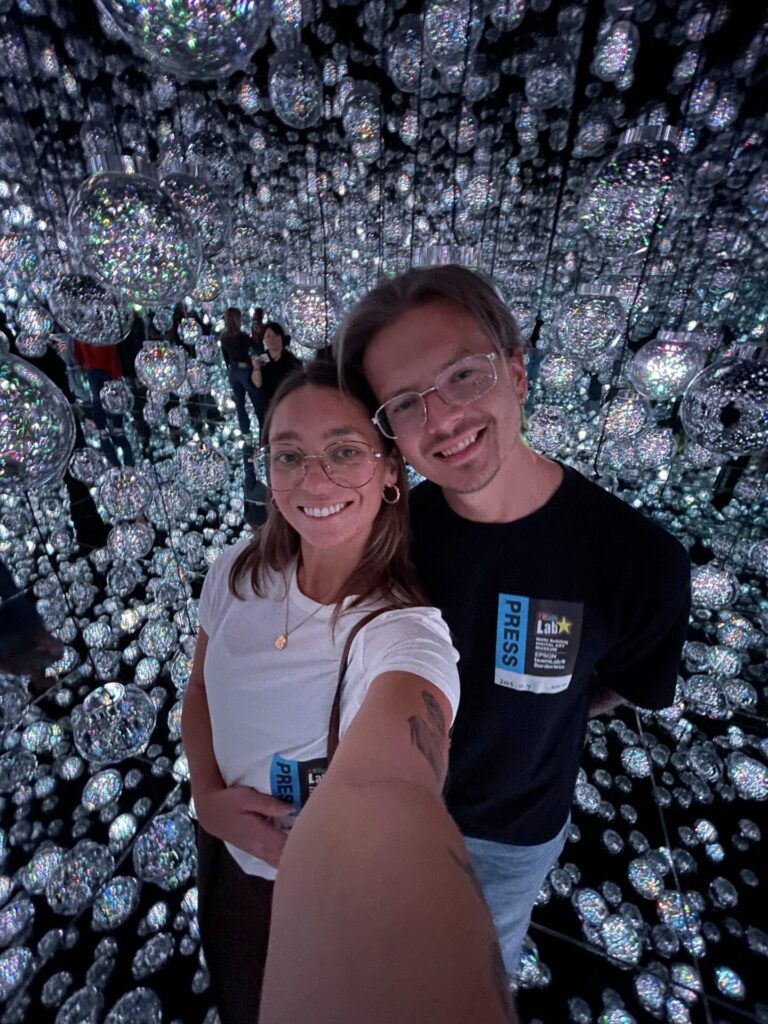
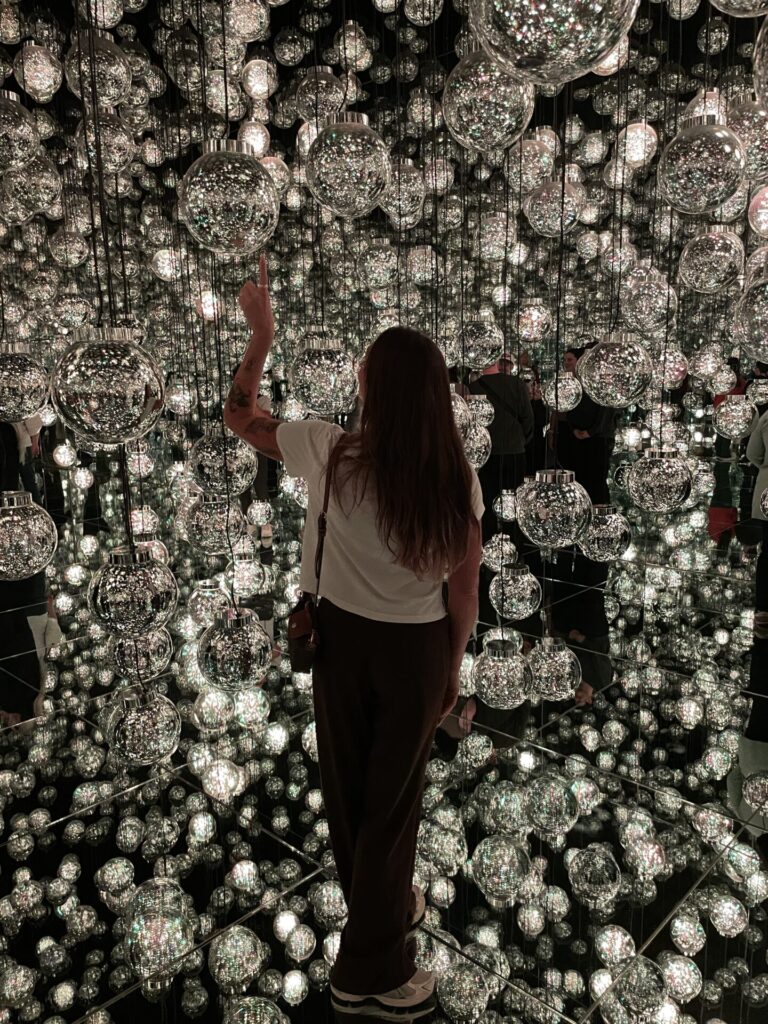
In the afternoon, I headed to teamLab Planets, which was one of my Tokyo highlights. It’s an immersive, interactive art experience with different rooms full of mirrors, lights, giant floating balls, and even water you walk through barefoot. It sounds a bit strange on paper, but it’s actually super fun and very well done. I took way too many photos and would 100% do it again.
Book Here: Teamlab Planets Tickets

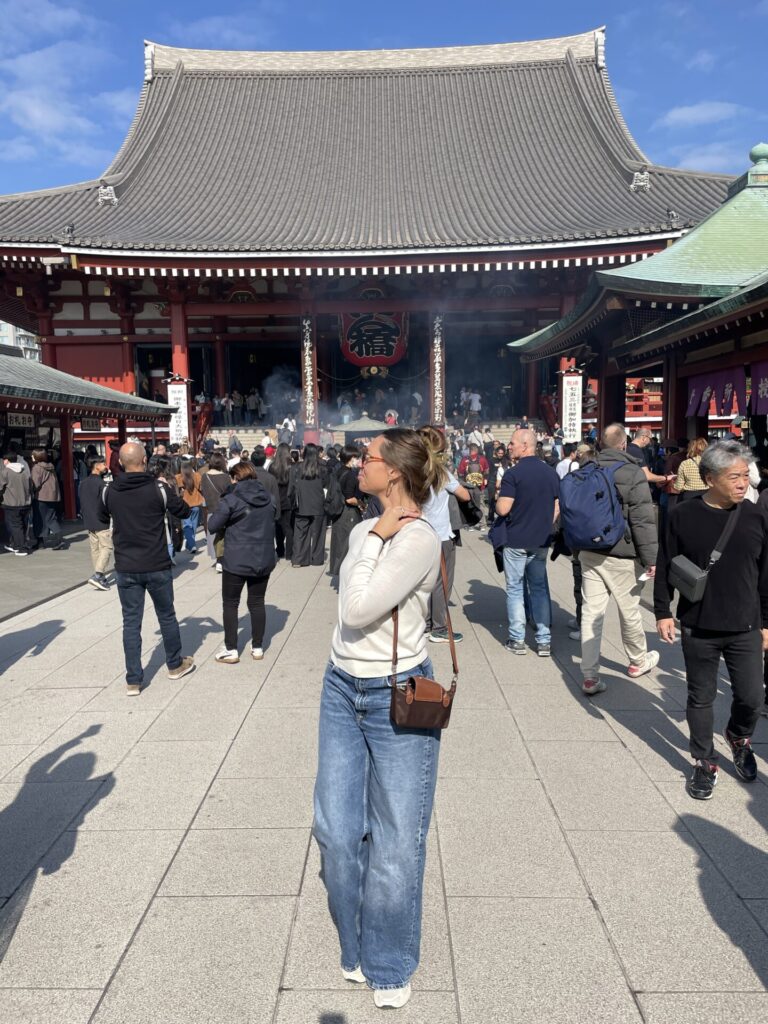
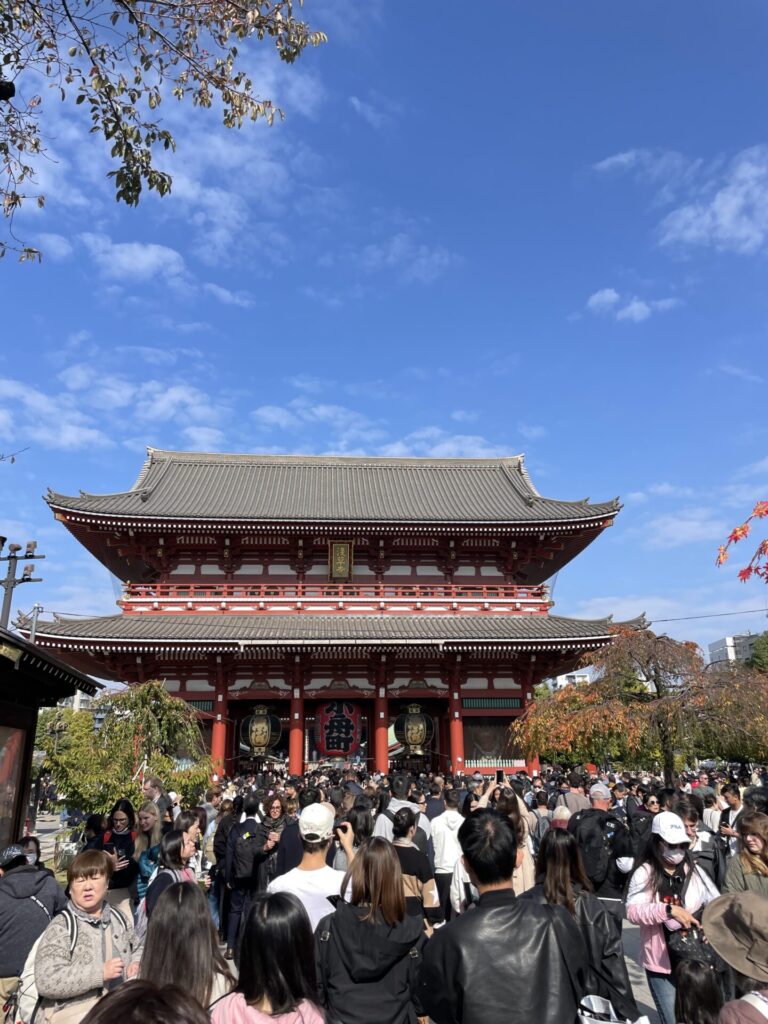
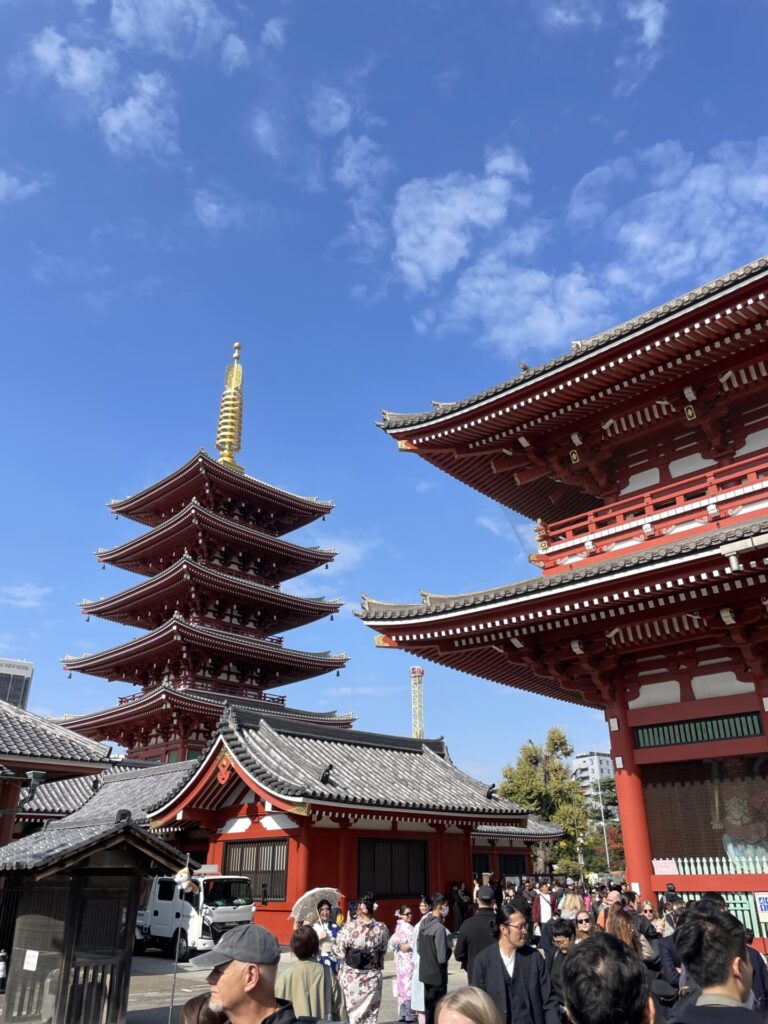
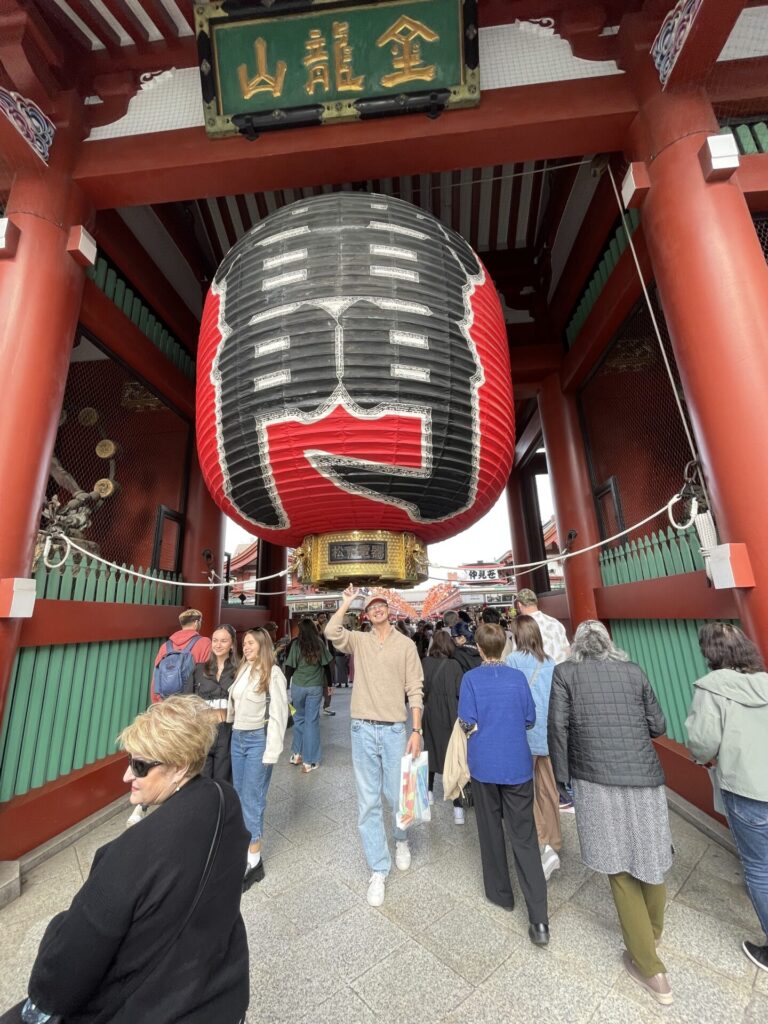
Day 3 Tokyo: Explore Asakusa, Senso-Ji & Tokyo Skytree
On my last day in Tokyo, I’m heading to one of the most underrated areas in the city in my opinion: Asakusa. I really loved it here because compared to Shinjuku and Shibuya, it feels noticeably calmer and more local, which was honestly a nice break after a few very full-on Tokyo days.
I’m starting the day on Nakamise Shopping Street, a narrow street lined with snack stalls and souvenir shops that leads straight up to Senso-ji. It’s touristy, yes, but still very fun, and I had no self-control when it came to trying random street food.
Senso-ji itself is the oldest temple in Tokyo, around 1,400 years old, and it’s dedicated to the Buddhist goddess of mercy, Kannon. I really enjoyed seeing this more traditional, historic side of Tokyo, even though it does get busy. If you can, come early. It’s a much nicer experience.
In the afternoon, I’m heading to Tokyo Skytree, which is the second observation deck of my Tokyo stay. The main deck sits at 450 meters, which is wild when you think about it. For reference, the Empire State Building’s observation deck is at around 320 meters.
What I liked most about Tokyo Skytree is the sheer scale of it all. From up there, Tokyo just looks endless. You can see so far in every direction, and it’s still just city, city, city. On a clear day, you can even spot Mount Fuji from up here, which sounds amazing. With my luck, of course, I couldn’t see it, but I still thought it was 100% worth it.
Book Here: Tokyo Skytree Tickets
Day 4 Kyoto: Tea Ceremony + Kimono & Nishiki Market
Day 4 of my 7 day Japan itinerary starts early with a Shinkansen ride from Tokyo to Kyoto. I took the bullet train first thing in the morning, and it only took about 2.5 hours, which honestly still blows my mind every time.
Before leaving Tokyo, I had my luggage forwarded from my Tokyo hotel to my Kyoto hotel with Yamato, which meant I could start exploring right away instead of dragging a suitcase across the city first. Absolute game changer.
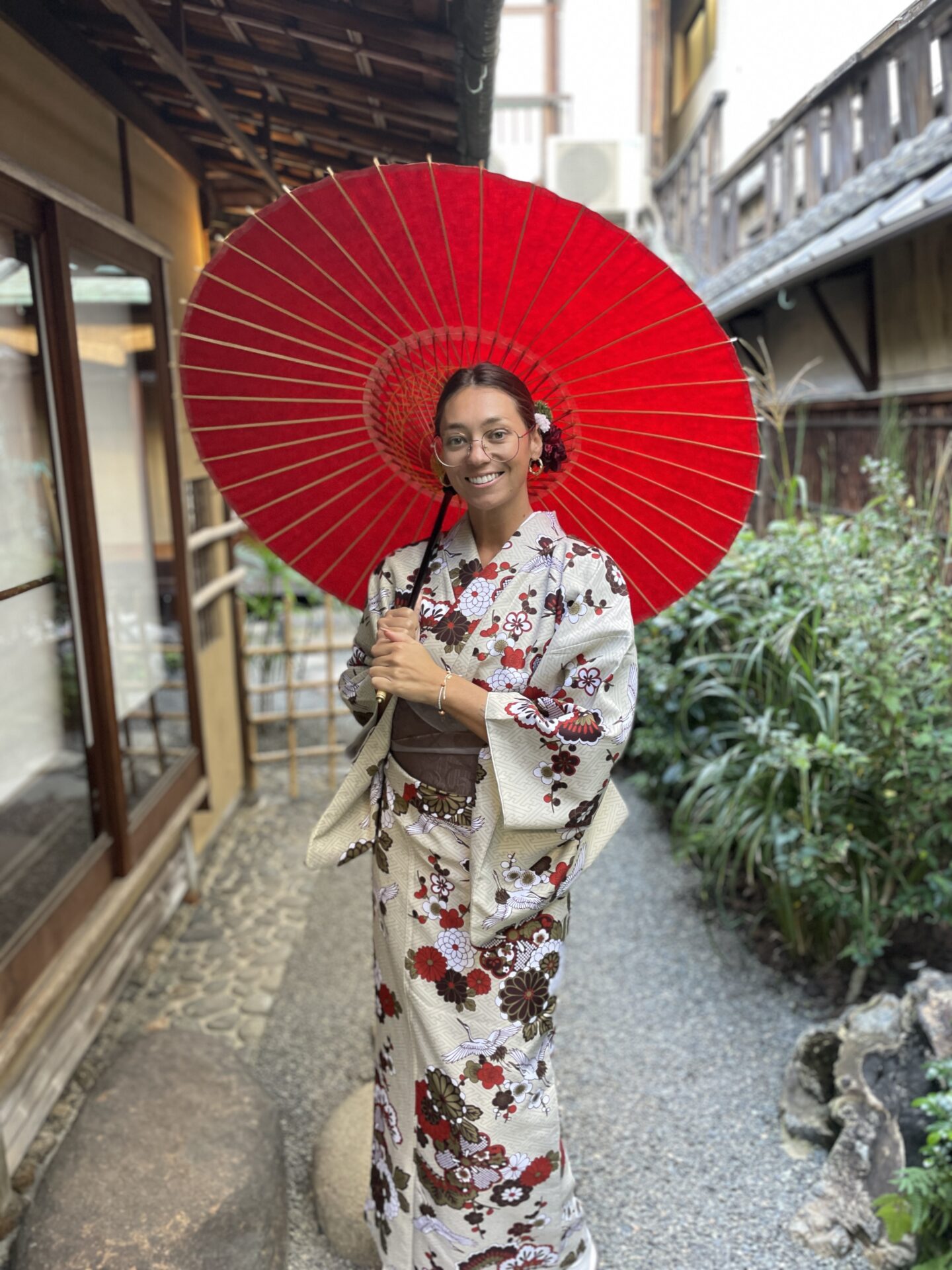
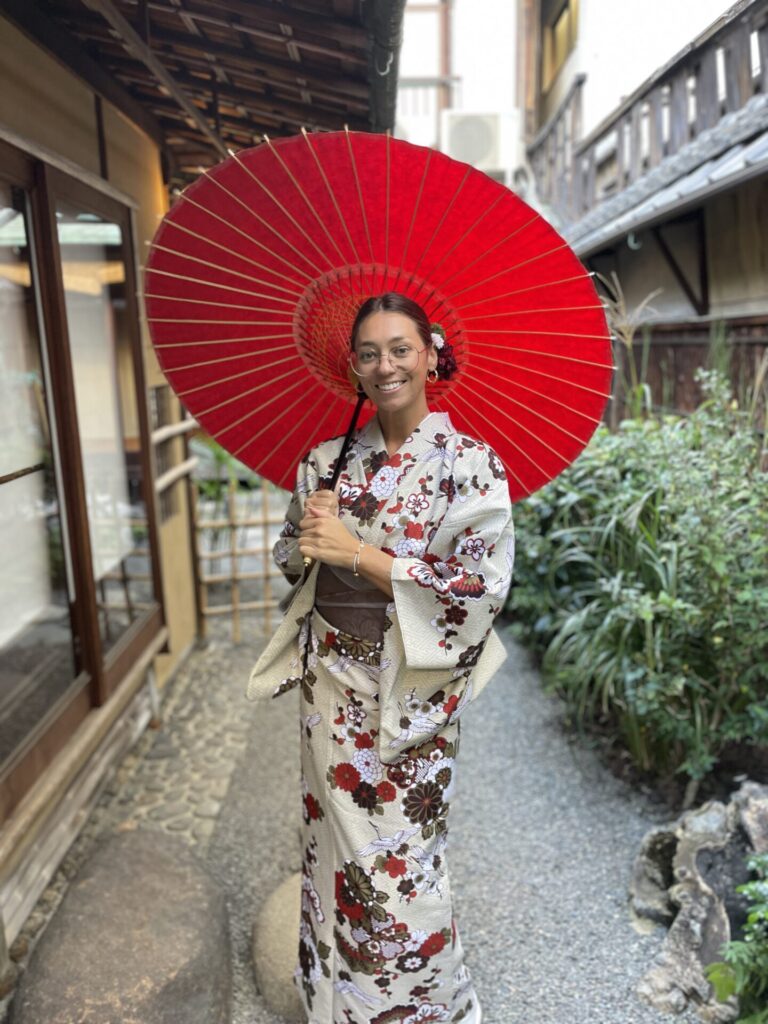
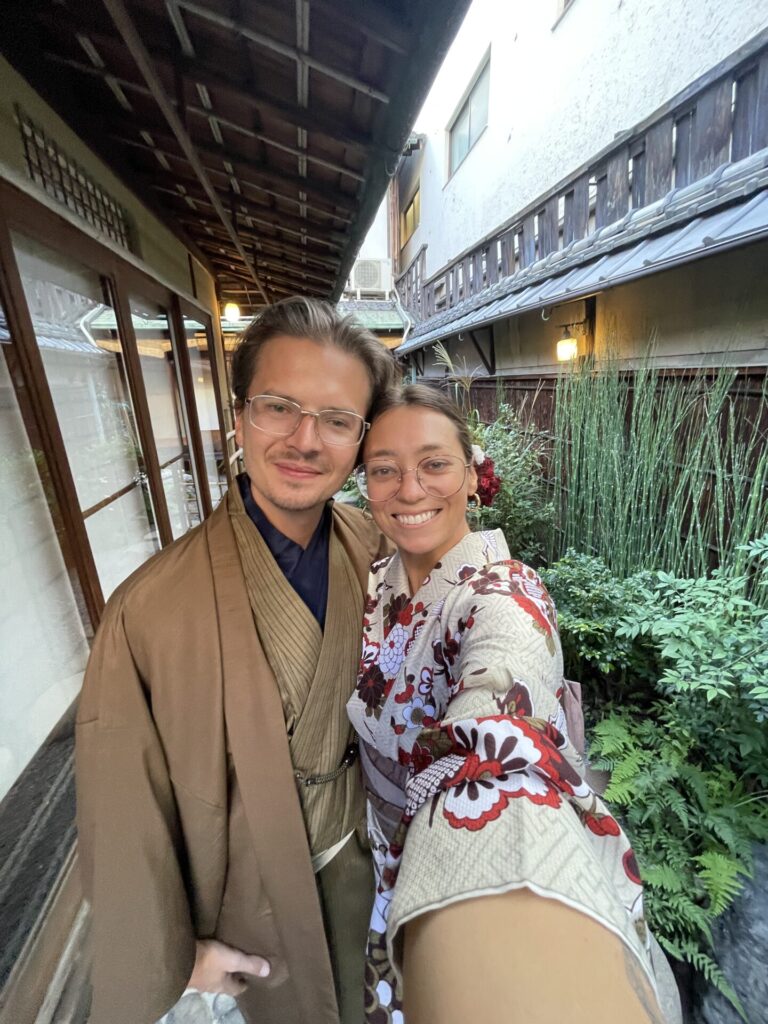
Once I arrived in Kyoto, I headed straight to a tea ceremony where we also wore a kimono. I met up with a small group of friends there, and I’ll be honest, I was a little skeptical beforehand because it can sound like one of those overly touristy experiences. But this one really surprised me. Everything felt thoughtful and well done, from the explanation of the tea ceremony to the quality of the kimono, and it ended up being one of my highlights in Kyoto.
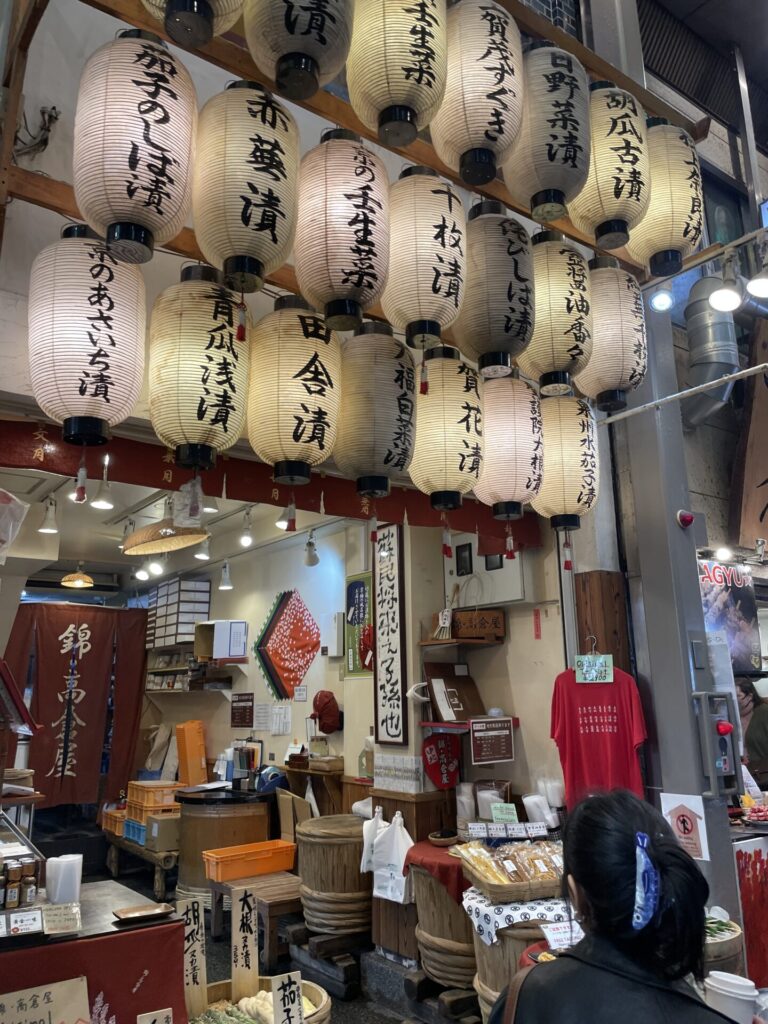
After that, I made my way to Nishiki Market, which is one of the best markets I had been to in all of Japan. I wandered the market for ages, hopping from stall to stall, grabbing small bites and having a beer here and there.
I tried everything from eel and huge oysters to dumplings and wagyu, and it’s easily one of the most fun food markets I visited in Japan. My advice here is simple: come hungry, don’t overthink it, and try as many things as you can.
Book Here: Kyoto Tea Ceremony
Day 5 Kyoto: Yasaka Pagoda & Kiyomizu-dera
Day 5 started early for me. I headed to Yasaka Pagoda (Hōkan-ji) basically at sunrise because I really wanted to see this area without the crowds. I think we arrived around 6 or 7am, and at that time it was almost empty, which honestly made the early alarm worth it.
After that, I spent quite a bit of time walking around the surrounding streets, especially Ninenzaka and Sannenzaka. These little lanes are some of the most classic, old-town-looking streets in Kyoto, and without tour groups around, it actually felt relaxed instead of hectic. I grabbed a coffee from one of the few places that was already open and just wandered around slowly, no real plan, just enjoying how quiet everything still was.
From there, I walked over to Kiyomizu-dera, which is only about five minutes away. It’s one of Kyoto’s big-ticket temples for a reason, and seeing it in autumn was a highlight for me. I visited in November, so the fall foliage was already a little out, and the whole temple complex looked especially impressive against the colors.

Day 6 Kyoto: Bamboo Forest & Fushimi Inari Shrine
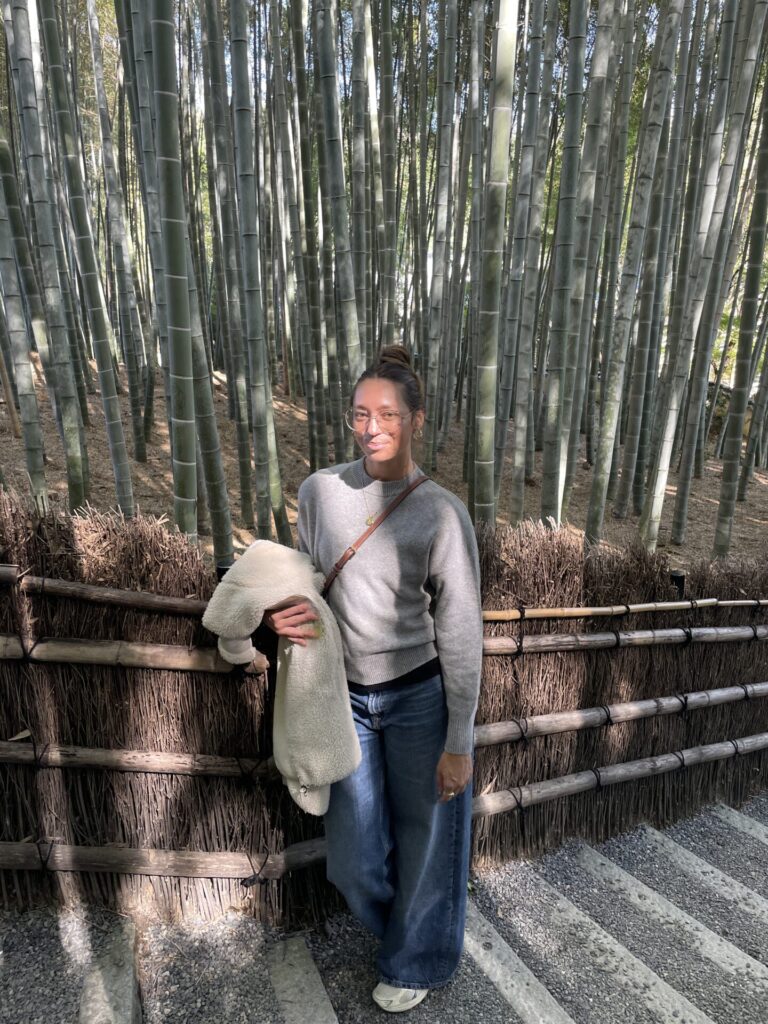
On the morning of day six, I headed out early to the famous Arashiyama Bamboo Forest. It is beautiful, but it’s also very touristy, and that became obvious pretty quickly. I spent some time walking around, took a few photos, and then decided not to force it and move on instead.
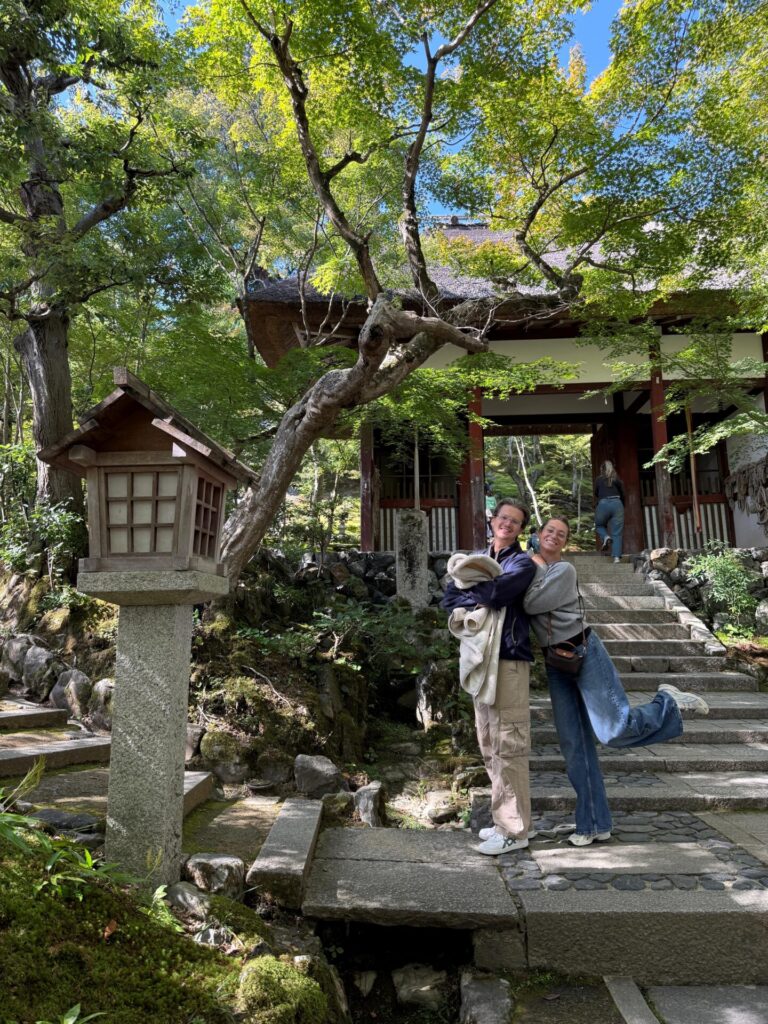
From Arashiyama, I kept walking and ended up passing Jōjakkō-ji Temple, which I honestly just stumbled into by accident. It turned out to be one of my favorite temples in Kyoto, quiet, green, and without tour buses rolling up every five minutes.
From there, I continued on to Adashino Nenbutsu-ji, which has a small bamboo grove that felt way more relaxed and, in my opinion, way more enjoyable than the main one. If I were to do this again, I’d skip spending too much time at the main bamboo forest and focus on this area instead.
In the afternoon, I headed to another Kyoto classic: Fushimi Inari Shrine, the one with the thousands of orange torii gates. I walked the entire way up to the top, which is a lot more stairs than it looks like in photos, but the views over Kyoto made it worth it.
If you care about having some breathing room or taking photos without crowds, go early. And by early, I mean really early. Otherwise, just accept that this is one of Kyoto’s busiest spots and enjoy it for what it is.
Day 7 Osaka: Osaka Castle, Shinsekai & Dotonbori
For the very last day of my Japan itinerary, I’m in Osaka. Quick logistical note here: if you’re flying out of Osaka, I’d stay the night. If you need to get back to Tokyo, I’d honestly stay in Kyoto instead and just do Osaka as a day trip. It’s only about 30 minutes by train and saves you a bit of backtracking.
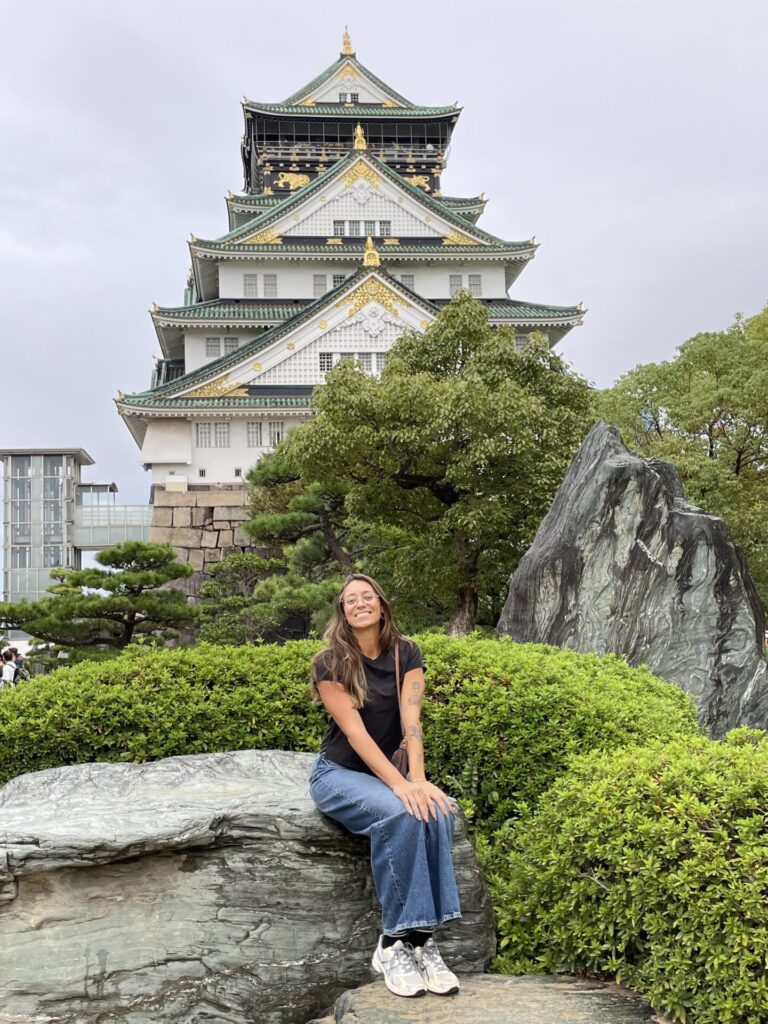
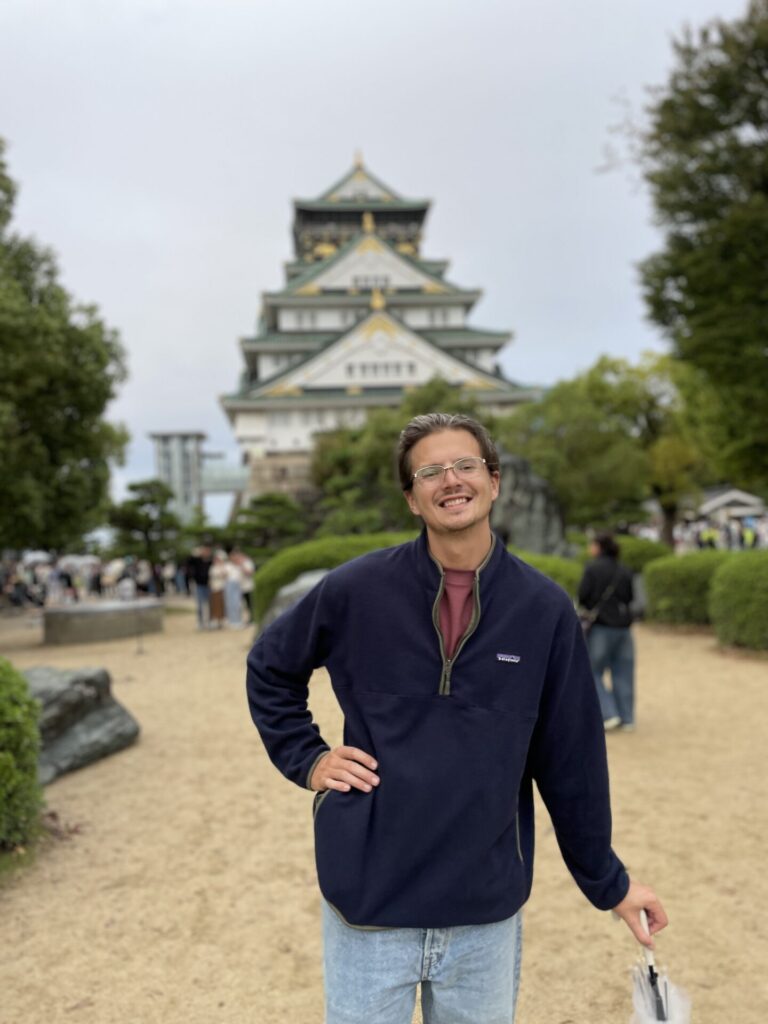
I had a really good time in Osaka. I spent a few days here in total, went to Universal Studios Japan, and explored the city properly, but for a one-day visit I’d keep things simple and focus on the highlights. That’s why I started the day at Osaka Castle.
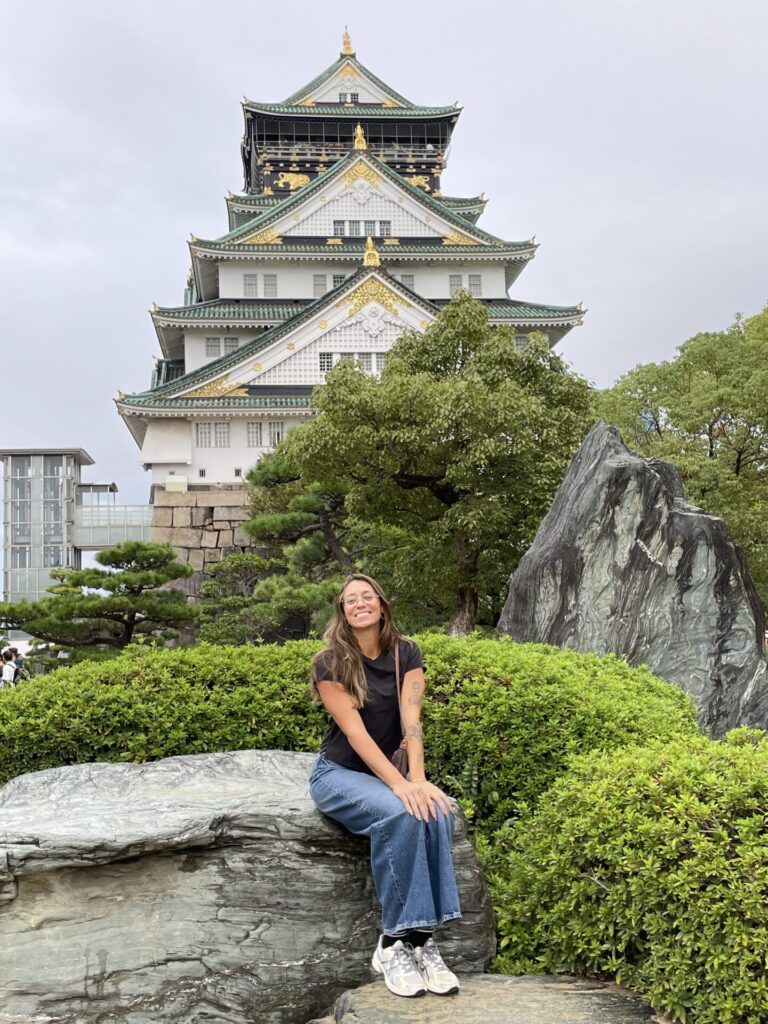
I spent most of the morning there, walked all the way up, and took far too many photos along the way. It’s one of the more impressive castles I’ve seen in Japan, especially with the big park around it, and it feels like a nice change of pace after a few busy city days.
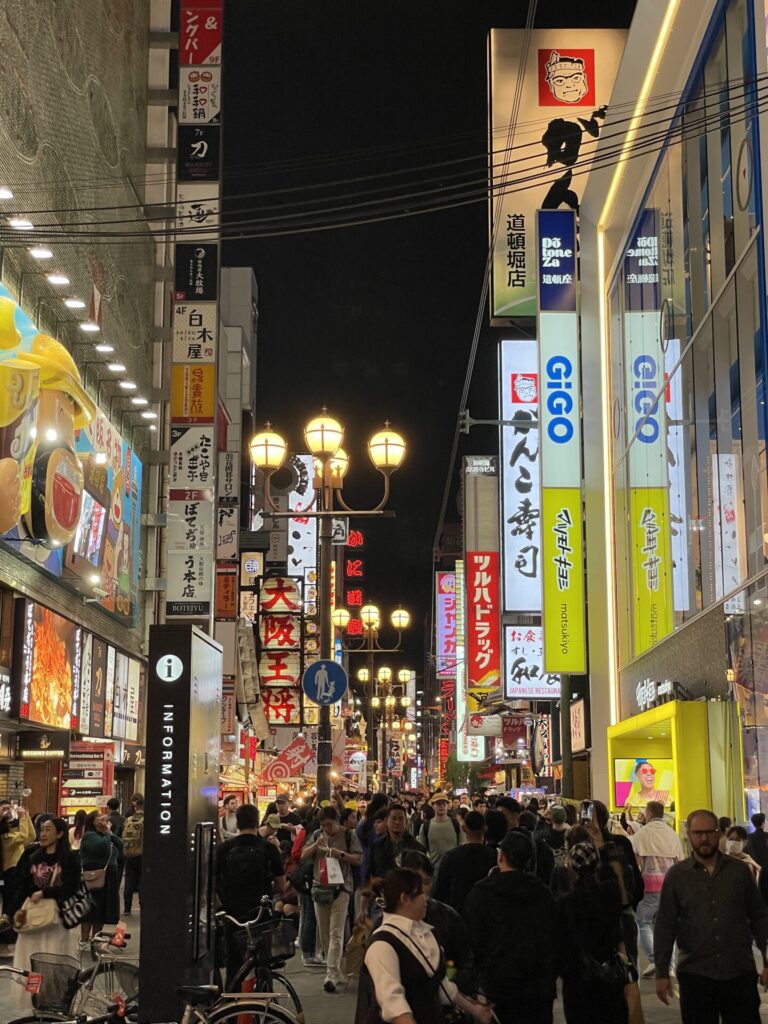
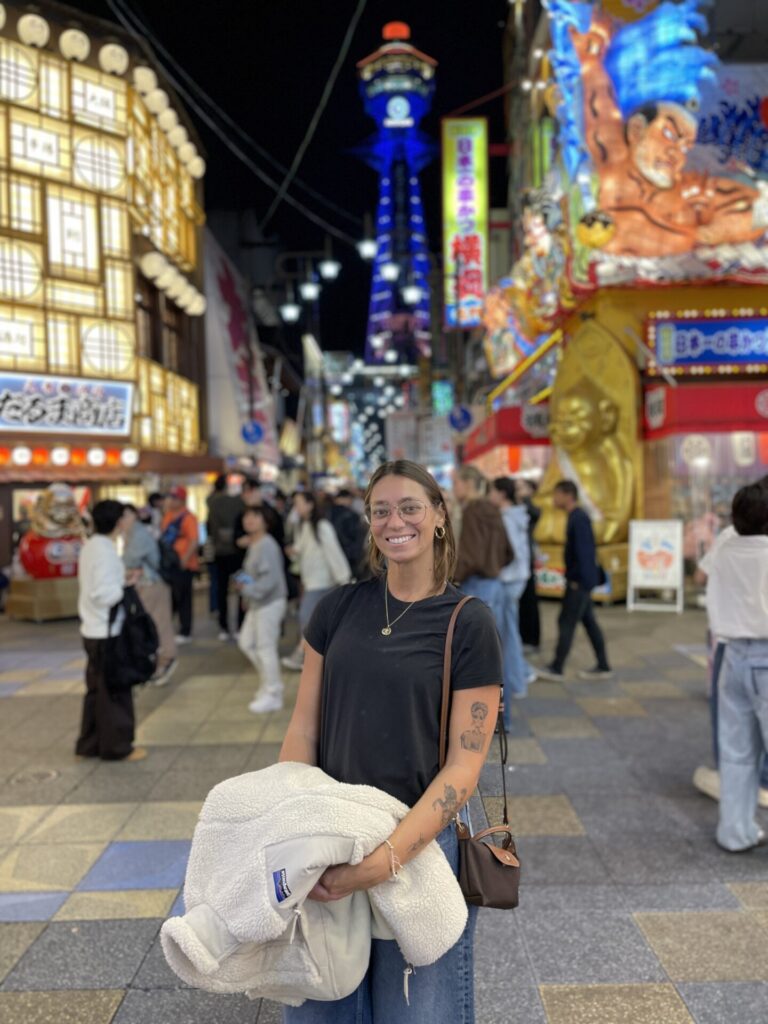
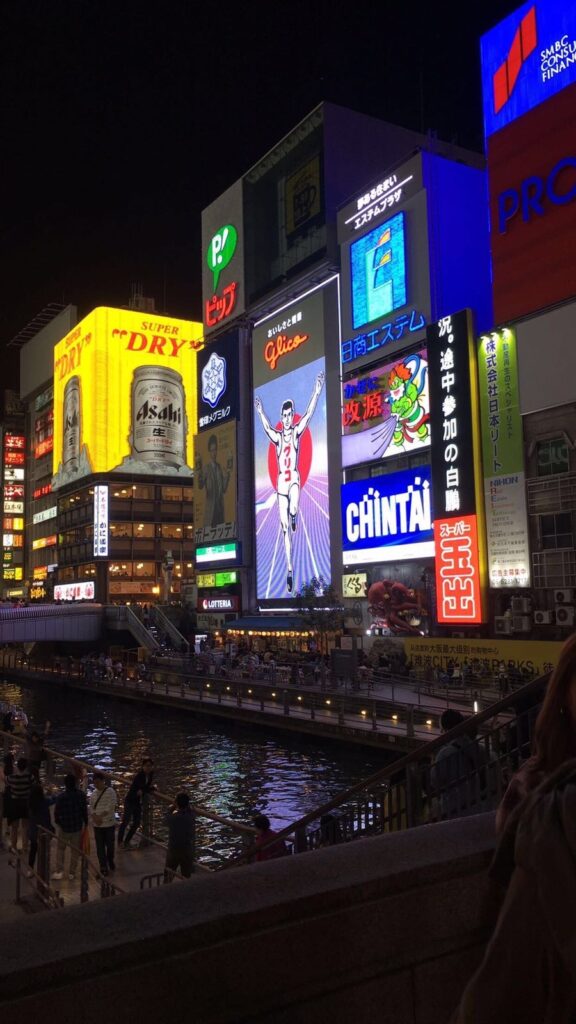
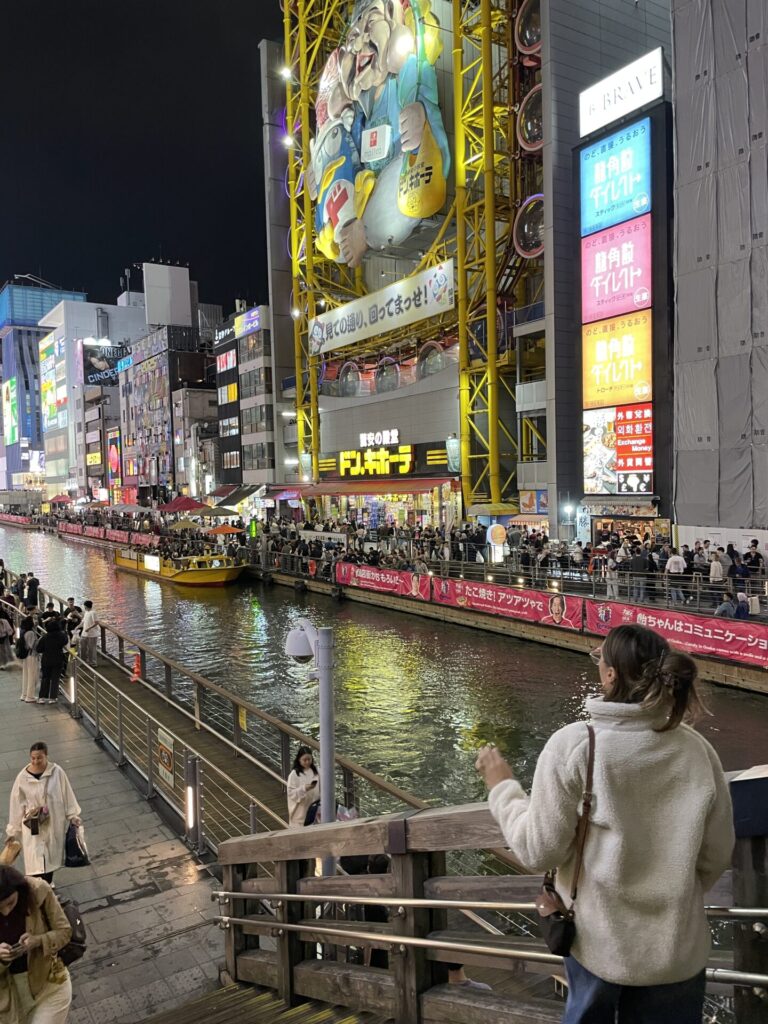
The rest of the day is all about neighborhoods. Shinsekai and Dotonbori are very different, which is why they work so well together. Shinsekai feels a bit rougher around the edges in a good way, lots of old-school neon, retro vibes, and amazing food spots. Dotonbori, on the other hand, is louder and brighter, with endless restaurants, shopping, and crowds. It reminded me a little more of Tokyo.
Other Options for Your Japan Itinerary
Of course, everyone has different priorities when it comes to Japan. This 7-day itinerary is fully based on my own experience and what I enjoyed most, but I know there are a few things that a lot of you will absolutely want to squeeze in. The good news is that Japan is pretty flexible, so you can mix and match days without breaking the whole plan.
Tokyo Disneyland / DisneySea
While I laid this out with three full days in Tokyo, you could compress the main sights into two fairly busy days if you really wanted to. That would free up an extra day for Tokyo Disneyland and DisneySea, which, let’s be honest, is the real reason some people come to Japan. Just know it’ll be a long day and your feet will hate you by the end.
Universal Studios Japan (Osaka)
I’m not going to pretend to be neutral here, I had a genuinely great time at Universal Studios Japan in Osaka. If that’s high on your list, you’ve got a few options. You could skip most of Osaka and dedicate the day entirely to the park, or shave a day off Kyoto and spend two nights in Osaka instead, one for the city and one for Universal. Both work, it just depends on what you’re more excited about.
Book Here: Universal Studios Tickets
Book Here: Universal Studios Fast Pass
Day Trip to Mount Fuji
Similar to the Disney option, you can tighten your Tokyo schedule into two days and use the extra day for a Mount Fuji trip. I did this myself and thought it was absolutely worth it. It’s a long day, but seeing Fuji in person was just incredible and one of my top experiences, especially if you get lucky with clear weather.
At the end of the day, this itinerary is meant to be a framework, not a rulebook. Steal the parts you like, ditch the rest, and build something that actually fits how you want to travel.
Book Here: Day Trip to Mount Fuji

FAQs About My Japan Itinerary 7 Days
How much does 1 week in Japan cost?
That really depends on how you travel. Based on my own experience as a mid-range traveler, I spent around $150–200 USD per day in Japan. For one week, that comes out to roughly $1,400 USD per person, excluding flights.
Is Japan worth visiting?
Absolutely. Japan is one of my favorite countries I’ve ever been to. It’s incredibly unique, exciting, and full of contrast, from the food and culture to the nature and history. I loved pretty much every part of it.
What should I do in Japan?
Japan has an amazing mix of culture and cities. I had a great time exploring Tokyo, Kyoto, and Osaka, but I also made sure to visit Hiroshima for its history and Mount Fuji for a bit of nature. That combination felt very well-rounded to me.
Is Japan expensive?
I’d definitely put Japan in the “more expensive” category compared to many other countries I’ve visited. Accommodation, especially in big cities like Tokyo, can be pricey, and hotel rooms are often small, very similar to booking a hotel in New York City.
Final Thoughts on One Week in Japan
I’ll be honest: one week in Japan feels a little short to me. Ideally, I’d want at least 10–12 days. That said, I’m a big believer in making the most of the time you have. If you’ve got seven days, then seven days it is, and you can still have an incredible trip.
With this itinerary, you’ll get a really good feel for what Japan is all about. I personally loved Tokyo and Kyoto, and if I had to tweak things, I’d even consider skipping Osaka and doing four nights in Tokyo and three in Kyoto instead. That would mean more time exploring beyond the obvious tourist spots, eating amazing sushi in Tokyo, and treating yourself to a great Kobe beef dinner in Kyoto.
Think of this 7-day Japan itinerary as inspiration rather than strict rules. Mix and match, adjust it to your own interests, and make it your own. It’s a solid starting point, and from there, you can shape the trip that fits you best.
I hope this helps you get your Japan planning off the ground. Happy travels!
Check Out My Other Tokyo Guides
Tokyo Travel Guide: Everything You Need to Know Before Visiting Tokyo
Is Tokyo Worth Visiting: My Honest Review
The Best Time to Visit Tokyo: Tokyos Seasons Explained
3 Day Itinerary Tokyo: How I Spent 3 Days in Tokyo
What to Eat in Tokyo: My Top Restaurants in Tokyo
How to Get Around in Tokyo: A Guide for Public Transportation in Tokyo
Is Tokyo expensive: My Budget Breakdown for Tokyo
1 Week in Tokyo: My 7 Day Tokyo Itinerary
Things to Do in Tokyo Japan: My Top Activities in Tokyo
Where to Stay in Tokyo: My Favorite Areas & Hotels in Tokyo
Tokyo Skytree vs. Shibuya Sky: Which one is better?
Shinjuku or Shibuya: The Best Areas in Tokyo
Where to Stay in Shibuya Tokyo: My Favorite Hotels
Where to Stay in Shinjuku Tokyo: Top Hotels & Areas
1 Day in Tokyo Itinerary: How I Spent 24 Hours in Tokyo
Best Cafes in Tokyo: The 7 Best Coffee Shops
How Many Days in Tokyo do You Need: My Honest Opinion
Tattoo Friendly Onsen Tokyo: My Favorite Onsen
Tokyo Tower vs Tokyo Skytree: My Honest Comparison
Senso-Ji Tokyo: A Mini Guide
Teamlab Planets Review: Is Teamlab Planets Worth it?
Teamlab Borderless Review: Is Teamlab Borderless Worth it?
Check Out My Other Japan Travel Guides
Japan Travel Guide: Everything You Need to Know Before Visiting Japan
Best eSIM for Japan: My Honest Comparison
Is Japan Worth Visiting? My Honest Review
Is Japan Expensive to Visit? Japan Budget Guide
7 Days in Japan Itinerary: How I Spent 1 Week in Japan