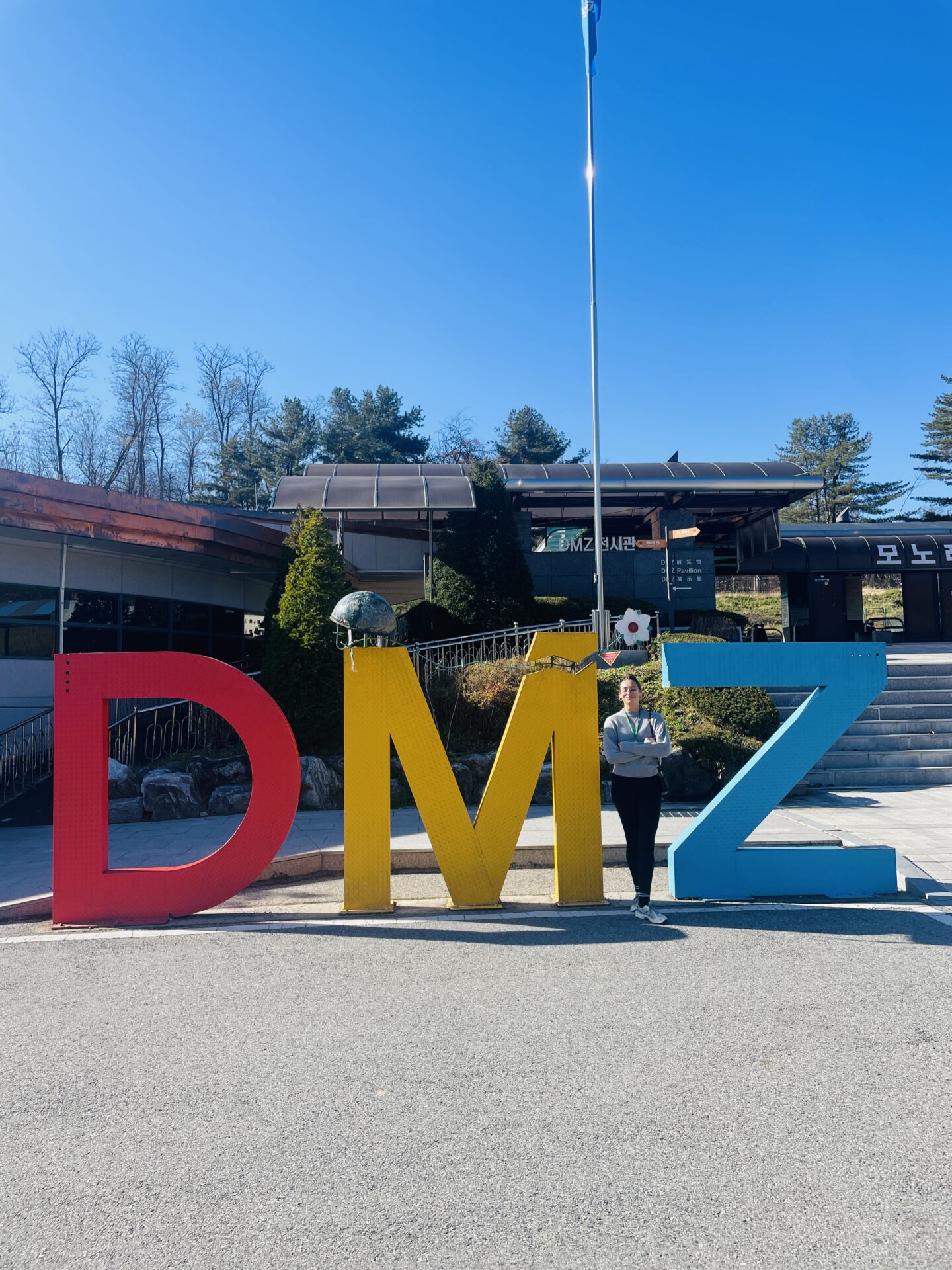
DMZ Tour from Seoul: Is It Worth It & What to Expect in 2026
I was lucky enough to have six full days in Seoul, and while I was planning out my itinerary, I decided to include a day trip to the DMZ. I mean, never in my life did I think I’d be able to get that close to North Korea. It wasn’t even remotely on my radar. But once I realized the border was only about an hour away from Seoul, I knew I had to make it happen.
As I started doing research, I quickly learned that the only way to visit the DMZ is by joining a tour, which is usually not my first choice when planning my days. So, I did what I always do. I read all the reviews, compared inclusions, and went way too deep scrolling through different DMZ tours before finally landing on the one that felt like the best fit.
This article is a review of the DMZ tour from Seoul that I actually did, and why I’d recommend it. I’ll be honest, this was one of the coolest things I did in Korea, and it absolutely deserves a spot on your Seoul itinerary. By the end of this guide, you’ll know exactly what to expect, whether a half-day or full-day tour makes more sense, and everything you need to know before heading to the DMZ.
In a Rush? Here Are Our Favorite Hotels in Seoul South Korea
⭐️⭐️⭐️ Hotel 28 Myeongdong- Click here for rates & availability
⭐️⭐️ Royal Hotel Seoul – Click here for rates & availability
⭐️ Hanok Hotel Daam Seoul – Click here for rates & availability
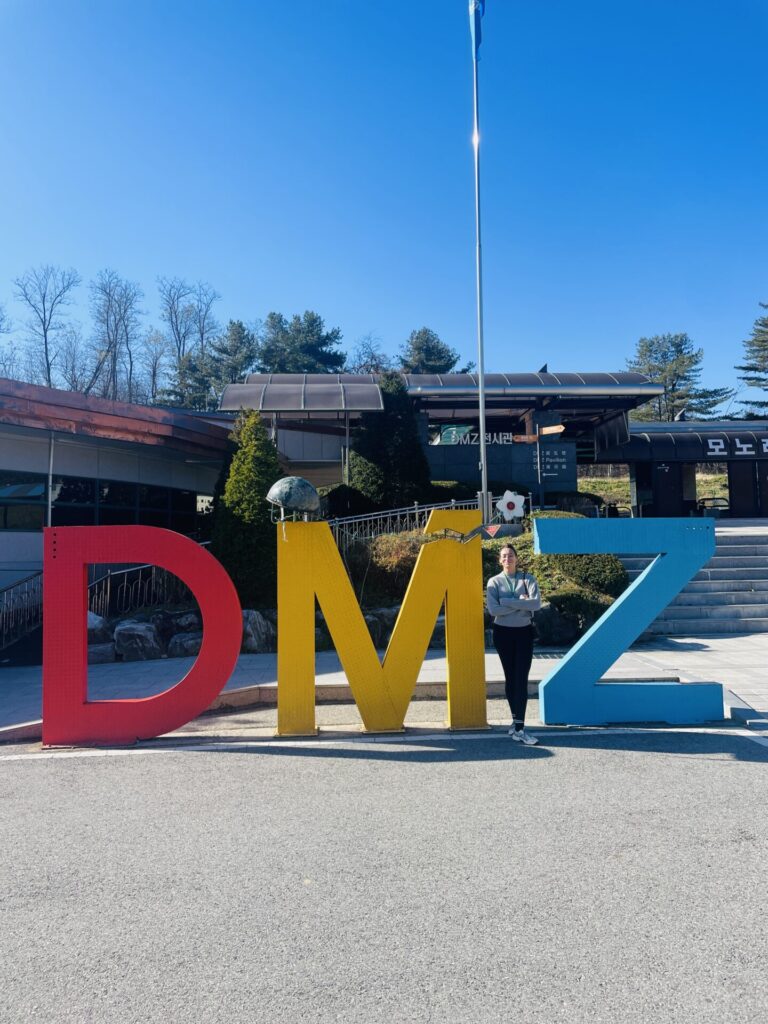
My Experience doing a DMZ Tour from Seoul
I had a fantastic experience on my DMZ tour. Oliver and I ended up choosing the half-day tour because as we started reading through the itineraries, we realized a few of the activities on the full-day options didn’t actually have much to do with the DMZ. They felt a little like filler activities, and honestly, there are so many amazing things to do in Seoul that we wanted to get back in time to explore more neighborhoods. For us, this was the perfect option. We left at 7:00 AM and were back in Seoul by around 1:00 PM, which made it super easy to slide into our itinerary without losing a full day.
Our tour guide was awesome, the bus was new, and the driver was great. When we arrived, we got a briefing on the bus before diving into the history of North and South Korea. Our guide, Paul, actually has family ties to North Korea. His father’s side of the family is from there, and he still has relatives who are stuck there. You could really feel how personal this topic was for him, and I think that passion made the entire tour even better. I’m sure all the guides are knowledgeable, but Paul was honestly fantastic.
He even timed our day around the weather, arranging the schedule so the skies would clear by the time we reached Dora Observatory. That meant we had the best possible chance of seeing into North Korea without fog, and wow… it did not disappoint. We had insanely clear views and could see North Koreans working in the fields and riding bicycles. It was genuinely mind-boggling to witness.
I’ll get more into what you can expect at each stop, but I have to say this was a really well-paced tour. It wasn’t rushed, and it didn’t drag. We had enough time at every location to actually take things in and learn a lot along the way. If you don’t feel like reading the rest, I can confidently recommend the tour we did and say it’s absolutely worth booking. For those who want more details, let’s move on to the logistics and what you can expect.
Book the exact DMZ tour we did here!
What is the DMZ?
DMZ stands for Demilitarized Zone, and the Korean Demilitarized Zone is a buffer zone separating North and South Korea. It stretches about 250 kilometers across the peninsula and was created in 1953 at the end of the Korean War, which technically never officially ended.
The zone itself is 4 kilometers wide, with 2 kilometers on the South Korean side and 2 kilometers on the North Korean side, and something that really surprised me was learning that the southern side is actually monitored by the United Nations, not just South Korea.
What makes the Korea DMZ so fascinating is the contrast. It’s one of the most heavily guarded borders in the world, yet the area itself is completely untouched. No one lives there, there’s been no development, and nature has taken over.
Standing there feels calm and quiet, but also intense once you realize how close you are to North Korea. It’s not scary, but it is powerful, and seeing it in person gives you a level of understanding that you just don’t get from reading about it online.
How to Get to the DMZ From Seoul
The DMZ is located about 50 kilometers north of Seoul, and when I first started planning, I honestly thought Oliver and I might just take an Uber up to the observatory and figure it out from there. One quick Google search shut that idea down immediately.
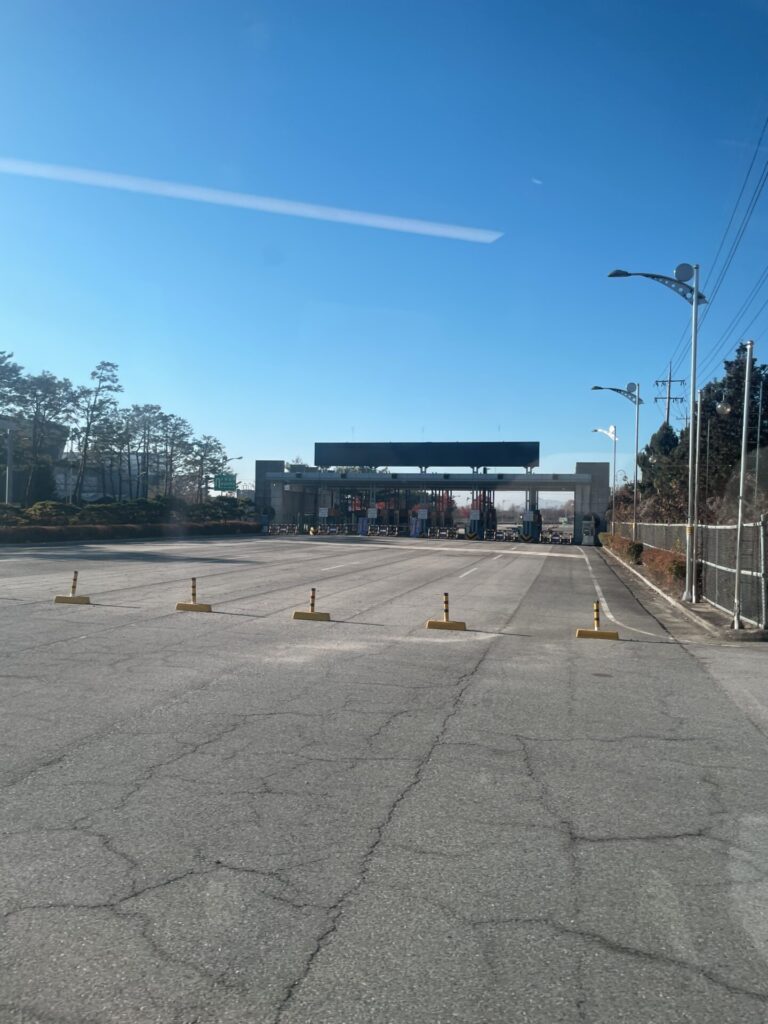
The reality is, the only way to visit the DMZ is on an organized day tour. It’s a highly controlled military area, and access is restricted to authorized tour vehicles only. You can’t go independently, you can’t walk in, and ride-shares or taxis won’t get you anywhere near the main sites.
Once I realized that, booking a tour actually felt like a relief. Everything from transportation to checkpoints and timing is handled for you, so you can focus on the experience instead of logistics.
Half-Day vs Full-Day DMZ Trip from Seoul
After learning that a tour was the only way to visit the DMZ, the next big task was choosing the right one. If I’m being honest, I think most DMZ tours on Viator, GetYourGuide, and Klook are probably all solid options. For the most part, they include the same core stops, with a few optional add-ons depending on whether you choose a half-day or full-day tour.
Most DMZ tours include some combination of the following:
- Third Infiltration Tunnel
- Dora Observatory
- Unification Village
- Imjingak Park
- Mangbaedan Altar
- Freedom Bridge
- Gamaksan Suspension Bridge (full-day only)
What the Half-Day DMZ Tour Includes
The half-day DMZ tour focuses purely on the DMZ itself, which is exactly what we wanted. You meet your guide at a designated pickup point in Seoul, then head to Imjingak Park, where you’ll visit Mangbaedan Altar, the Bridge of Freedom, and the historic steam locomotive. From there, your passports will be checked by the Korean military and continue into the DMZ.
Stops include the Third Infiltration Tunnel, Dora Observatory, and Unification Village before heading back to Seoul. We were dropped off in the early afternoon, around 1:30 PM at Myeongdong Station, which made it super easy to continue exploring the city afterward.
What the Full-Day DMZ Tour Includes
The full-day tour includes everything from the half-day option, plus an additional stop at Gamaksan Suspension Bridge. This part involves a short hike (about 15 minutes) to reach the bridge and adds a few extra hours to the day. With this option, you’re typically back in Seoul between 4:00 and 4:30 PM, depending on your drop-off location.
Which DMZ Day Trip Do I Recommend
For us, the choice was easy. We didn’t really care about the suspension bridge. It looks like nice scenery, but it doesn’t have much to do with the DMZ itself and felt more like a tourist add-on. Since there are so many great things to do in Seoul, we preferred to spend our extra time exploring the city instead.
If you’re on the fence because you’re worried about missing out, don’t be. The Third Infiltration Tunnel and Dora Observatory are the highlights, and those are included on both tours. If your main goal is to experience the DMZ, the half-day tour is more than enough.
The DMZ Tour Stops: What It Was Actually Like
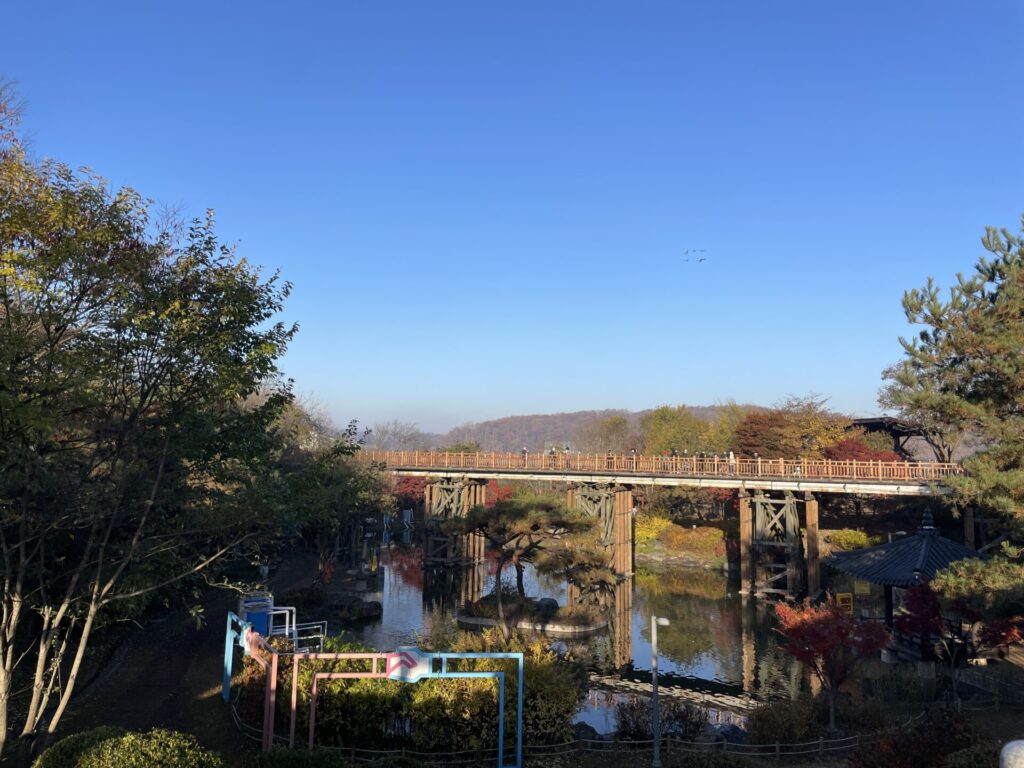
One thing I appreciated about this DMZ tour was how well the day flowed. Nothing felt rushed, but we also weren’t standing around wondering what was next. Each stop added a different layer to the experience, and by the end, everything kind of clicked together.
Imjingak Park
Imjingak Park was our first stop, and it was a really gentle way to ease into such a heavy topic. Walking around here, I immediately felt the emotional side of the DMZ. This was also where we learned more about Japan’s occupation of Korea and how deeply it affected the country even before the Korean War and eventual civil war broke out. I found this part especially eye-opening, and it gave a lot of important context to everything that followed.
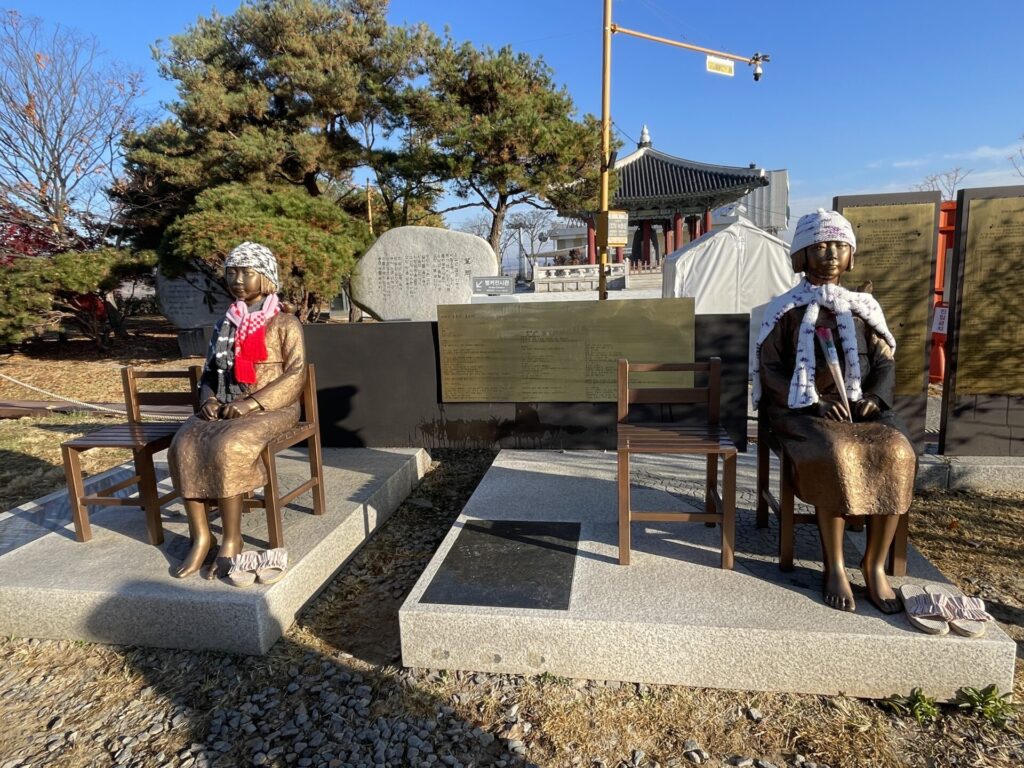
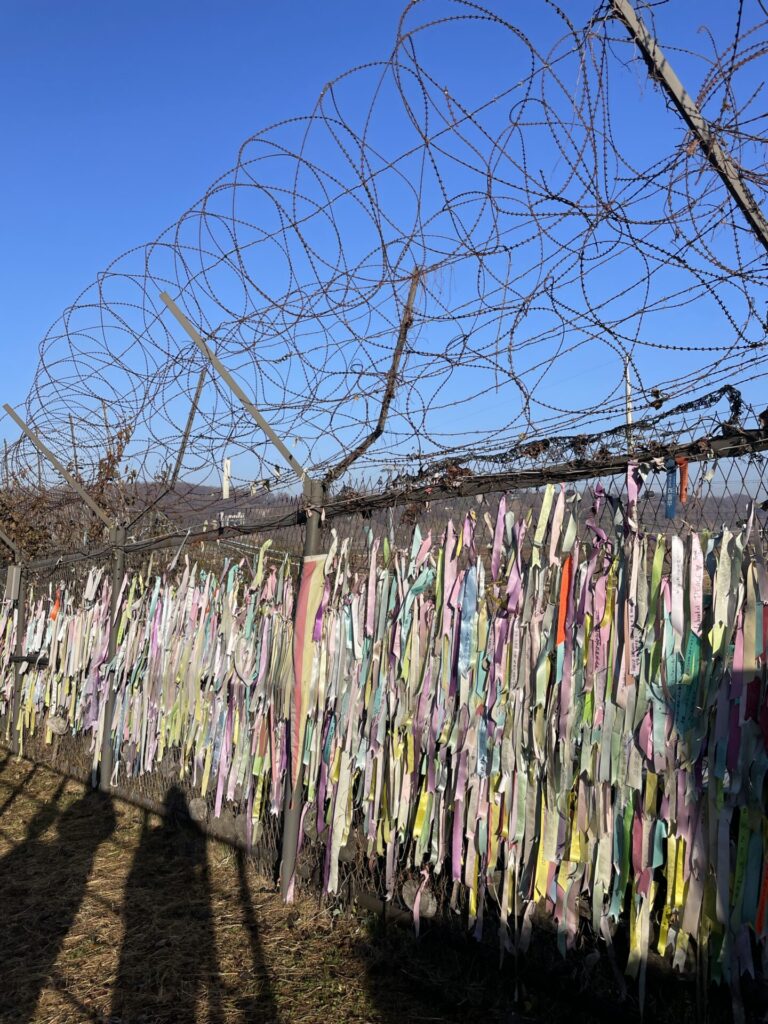
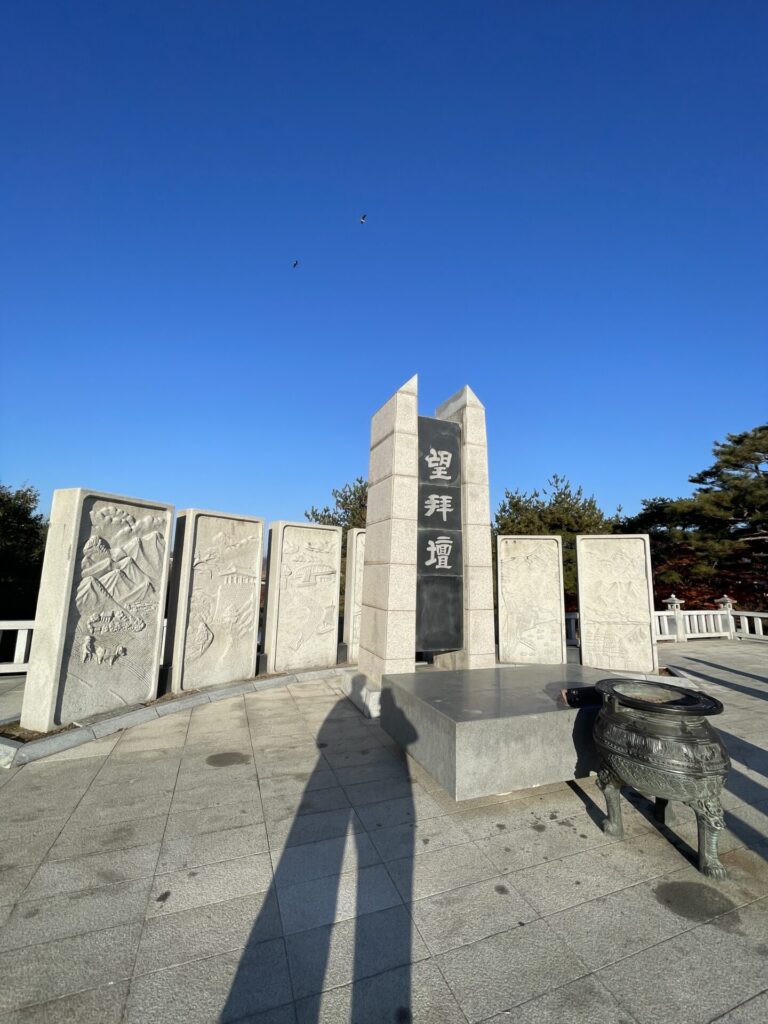
Seeing the Mangbaedan Altar, where families still come to honor relatives they can no longer reach in North Korea, was incredibly moving. We also saw the Statue of Peace, and what really stuck with me was learning that there are two statues here. One represents South Korea, and the other faces north, symbolizing the women who suffered during the occupation and the families still divided across the border. Paired with the Bridge of Freedom and the old steam locomotive, this stop really set the emotional tone for the rest of the tour.
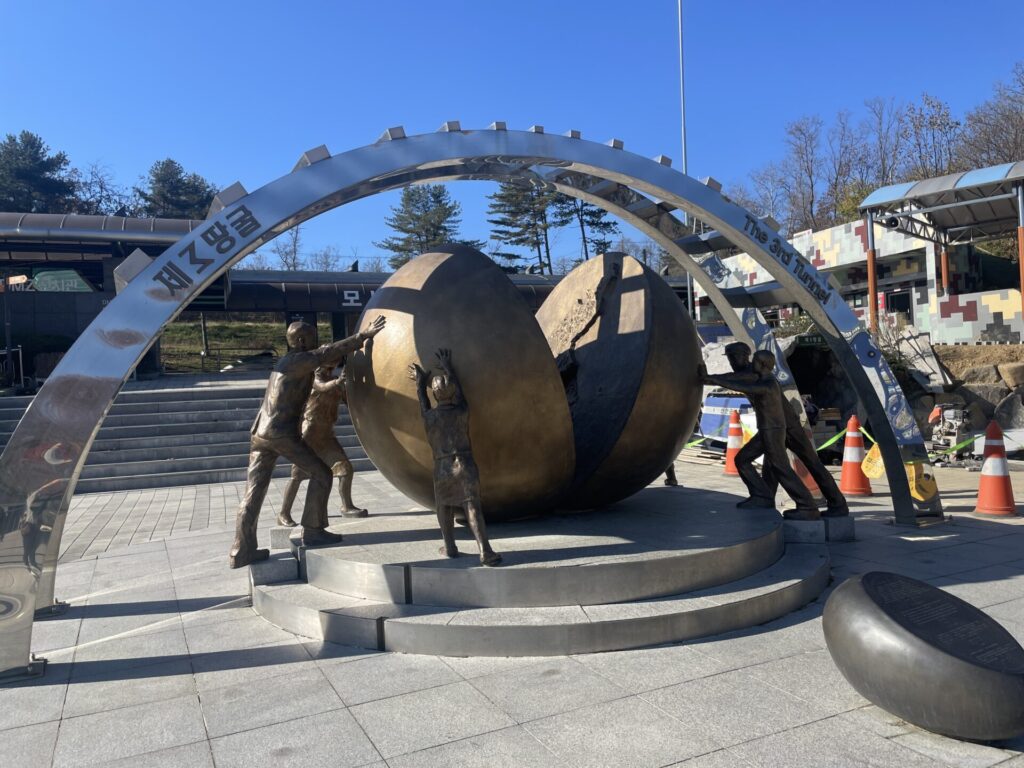
Third Infiltration Tunnel
The Third Tunnel was probably the most intense stop for me. You aren’t allowed to take your phone into the tunnel but you can actually walk down into the tunnel that North Korea secretly dug under the border, and standing inside it felt surreal.
It’s not a long visit, but it really hits once you realize what it was built for. You do have to walk downhill and back up again and it’s a bit of a steep incline, so comfortable shoes are a must, but this stop alone made the tour feel worth it.
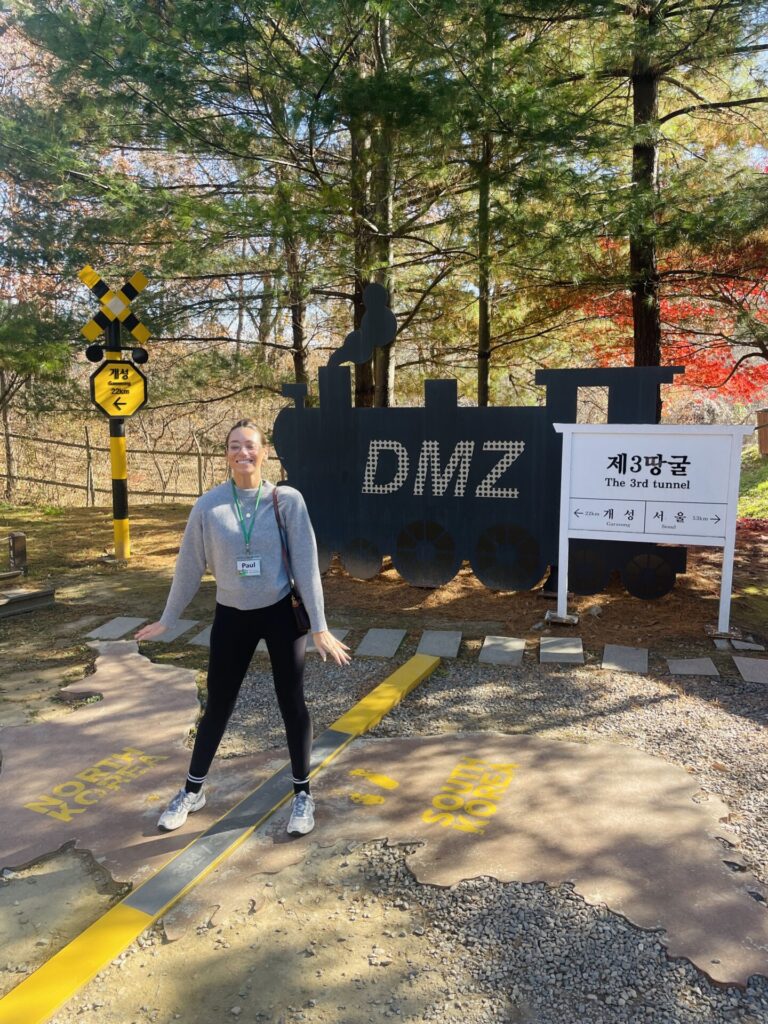
We were also able to straddle the line of North and South Korea here, obviously I have no idea if it’s a real border lol but it makes for an interesting photo!
Dora Observatory
Dora Observatory was hands down my favorite part of the tour. The had closed the rooftop for a few months, but about 2 weeks before our trip we were super lucky as they opened it back up to the public. We also weren’t allowed to take any photos here, but our tour guide was awesome and sent us some photos from before the phone ban!
Our guide spent a few minutes telling us interesting stories about the areas around the DMZ from who has the better speakers, who has the taller flag poles, and pretty much how everything around this area is almost like competition between North and South Korea.
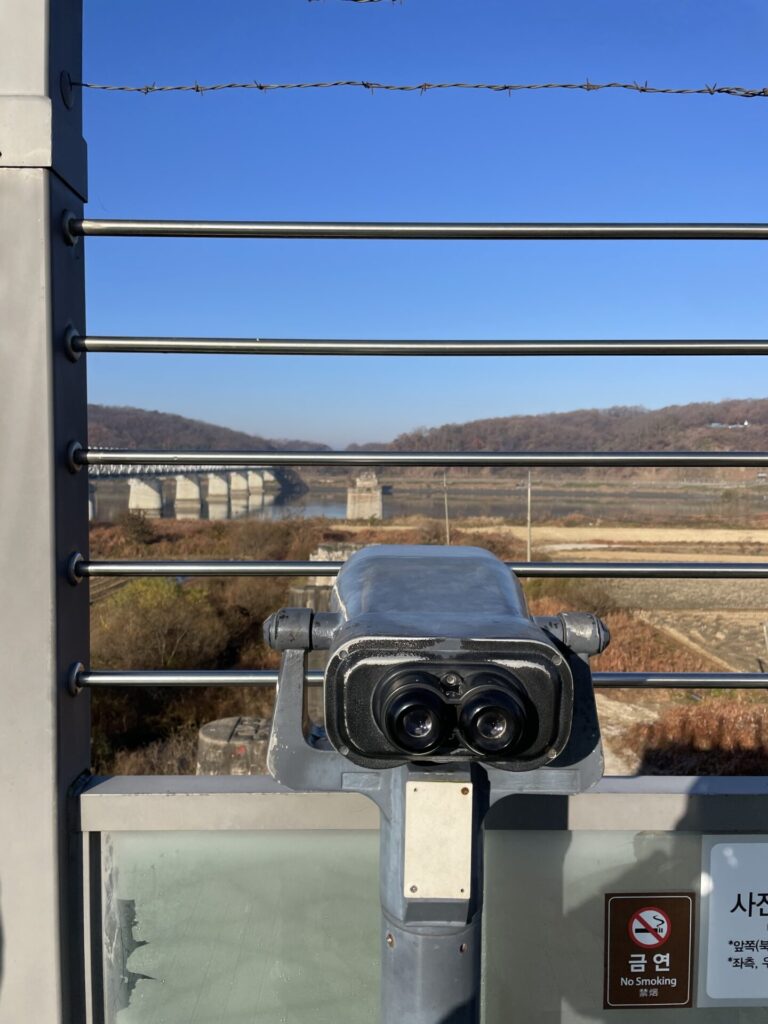
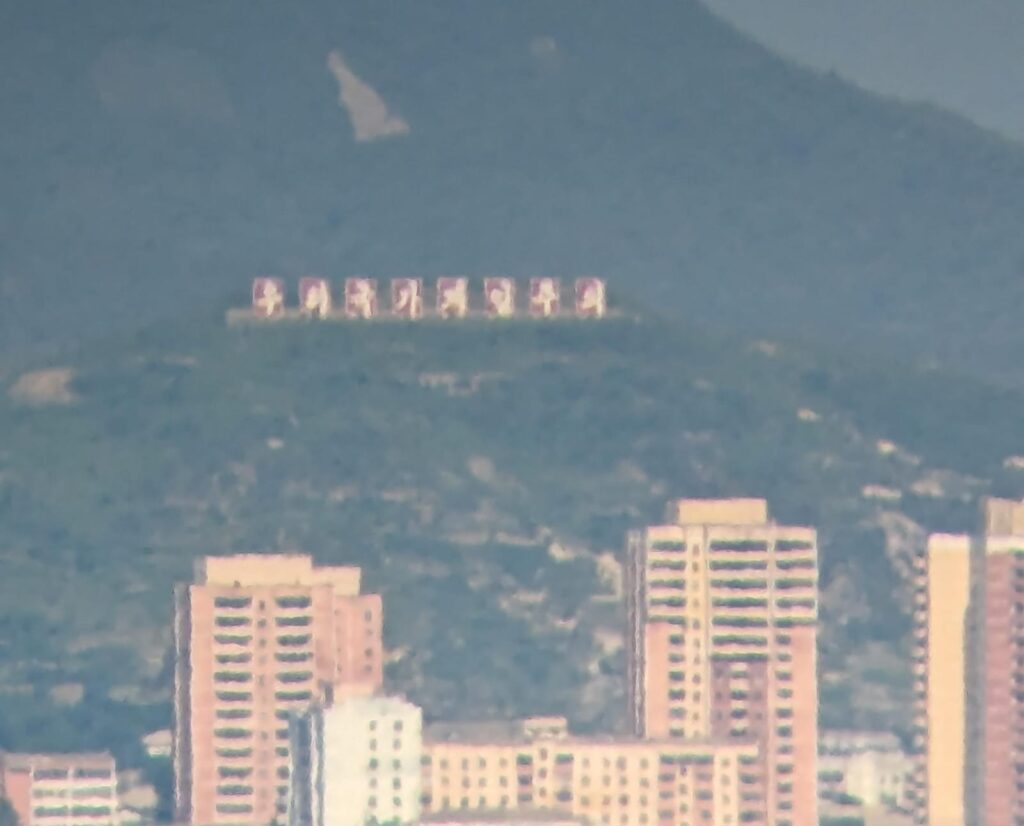
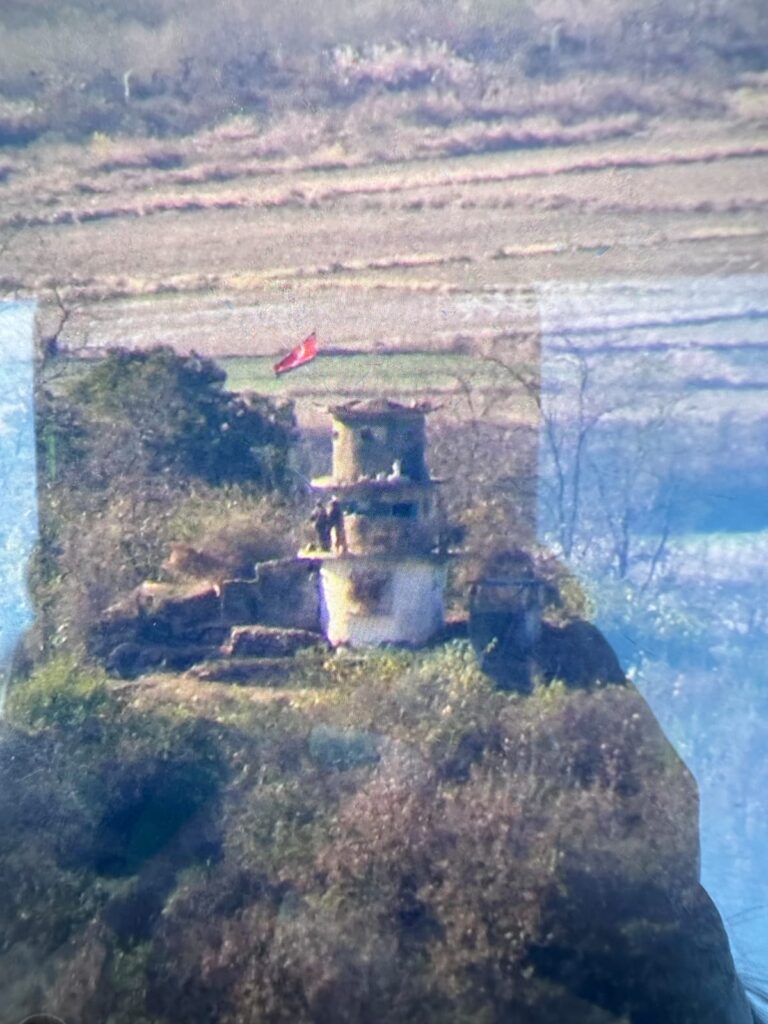
We also got really lucky with the weather, and the visibility was incredible. Through the binoculars, we could see straight into North Korea, including people working in the fields and riding bicycles. It felt so quiet and normal, which somehow made it even more mind-blowing. Being able to actually see North Korea with my own eyes was something I never expected to do.
Unification Village
Our final stop inside the DMZ was Unification Village. People are allowed to live here under very specific rules, and it felt surprisingly ordinary given the location. After everything we had seen, this stop felt a little underwhelming, but you can buy some snacks and drinks here to support the community which was a nice way to wrap up the DMZ portion of the tour before heading back to Seoul.
What to Know about the DMZ Tour in Seoul We Took
DMZ Tour Group Size
Our group was about 15–20 people, which I thought would feel crowded but it was totally fine. The vibe was relaxed, and our guide wore a microphone, so no matter where we were, we could hear everything he was saying. He was always available for questions, which made me feel like I really understood each area and the history behind it.
The tour operators do a fantastic job of staggering groups. We were able to switch up some of our stops to hit the Dora Observatory at the best time for visibility, and we never felt like we were waiting behind other groups. At each stop, we had time to wander, take photos (or just absorb it quietly), and step away from the group if we wanted. There was a clear time to return to the bus, but the freedom made the day feel really flexible.
DMZ Tour Guide Quality
Our guide, Paul, was amazing. He’s passionate and knowledgeable, and you could tell he genuinely cared about sharing the history and the current situation in Korea. He also made the experience feel personal, it wasn’t just reciting facts, he shared stories and context that really brought everything to life.
Security Process at the DMZ
Security is everywhere, but it never felt intimidating. The guide will let you know when you can and can’t take photos, and as long as you follow the rules, everything is smooth. We had to bring our passports and went through two military checkpoints, but it was simple, we just held up our passport and they verified our identity.
Because it’s an active military zone, tours can be canceled or certain areas closed at a moment’s notice. Even if we hadn’t been able to use the binoculars at Dora Observatory, I think it still would have been 100% worth it. The access, the history, and the experience of being there make it incredible.
FAQ: Best DMZ Tour from Seoul South Korea
How far is Seoul from the DMZ?
The DMZ is about 50 kilometers north of Seoul, which is roughly a 1–1.5 hour drive depending on traffic. Most tour buses get to the first stop in about an hour!
What is the DMZ tour from Seoul price?
Prices vary depending on the operator and whether you choose a half-day or full-day tour. When we went in 2026, the half-day tour was around $35 USD, while full day trips with extra stops were usually closer to $55 USD. Book the exact DMZ Tour we did here!
Is the DMZ tour worth it in Seoul?
Absolutely. I give it a 10/10. Even if you only have a couple of days in Seoul, it’s an experience you can’t replicate anywhere else. Seeing the Third Tunnel, Dora Observatory, and just being that close to North Korea is surreal and unforgettable. Even if you don’t think you’re interested, I assure you it’s worth the time and effort.
Is the suspension bridge worth it on the DMZ tour?
If you’re mainly interested in the DMZ itself, the Gamaksan Suspension Bridge isn’t a must-do. It’s scenic, but it doesn’t really have anything to do with the border or history. For us, skipping it made the half-day tour the perfect choice.
Can I visit the DMZ without a tour?
No. The DMZ is an active military zone, and independent travel isn’t allowed. The only way to visit is on an organized tour, which handles all transportation, checkpoints, and permissions for you.
My Review: Would I Recommend the DMZ Tour from Seoul?
If you can’t already tell, I give this DMZ tour a 10/10, and I would highly recommend it to anyone visiting Seoul. In my opinion, the half-day tour is the way to go, it’s excellent value for money, and while it does mean an early wake-up, you still have the rest of the day to explore other parts of the city once you get back.
The tour was insightful, heartbreaking, and fascinating all at once. While I love K-pop, Korean beauty, and all the dramas, this was an entirely different side of Korea that you just can’t get anywhere else. Even if you only have a couple of days in Seoul, I genuinely think this day trip is a must-do travel experience.
Check Out My Other Seoul Travel Guides
Is Seoul Worth Visiting? My Honest Review
The Best Time to Visit Seoul: My Weather in Seoul Guide
Seoul Travel Itinerary: How to Spend 3-5 Days in Seoul South Korea
Cafes in Seoul: My Favorite Cafes in Seoul
Things to Do in Seoul: My Top Activities in Seoul
Where to Stay in Seoul: My Top Areas & Hotels in Seoul
How Many Days in Seoul: My Day by Day Guide
Best Cocktail Bars in Seoul: My Favorite Spots for a Drink
Seoul Food Guide: My Top Restaurants in Seoul
Best Seoul Neighborhoods: My Area Guide for Seoul
Best DMZ Tour from Seoul: My Honest Review
Best Markets in Seoul: My Top Street Food Markets Seoul
Is Myeongdong Worth Visiting? My Honest Review
Solo Travel in Seoul: My Tips and Tricks for Solo Travelers
Must Buys in Seoul: My K-Beauty Guide for Seoul
Mini Guide to Gyeongbokgung Palace: Is it worth visiting?
The Starfield Library Seoul: Is it worth visiting?
Mangwon Seoul: My Full Mini Guide
Check Out My Other South Korea Guides
Is South Korea Worth Visiting? My Honest Review
South Korea Travel Itinerary: My 5,7 & 10 Day Itinerary
Things to Know Before Visiting South Korea: My Favorite Travel Tips