The Perfect 1–2 Day Gyeongju Itinerary (First Timers Guide)
If you’re planning a trip to Gyeongju, you’ll quickly realize this isn’t your typical city. It’s often called an open-air museum, and once you start exploring, that description makes a lot of sense. Instead of museums and galleries, the history is just… everywhere. Ancient tombs, temple ruins, and historic landmarks are scattered right across the city.
The best part is you don’t need a complicated itinerary to see it all. Gyeongju is surprisingly compact, and most of the main sights are close enough that you can easily walk between them, making it one of the easiest places in Korea to explore at a relaxed pace.
Oliver and I spent two nights in Gyeongju, but in reality, we saw almost all of the highlights in one full day without feeling rushed. We moved from tomb parks to traditional villages to temples without needing to constantly check Google Maps or call a taxi; it was great for exploring.
This Gyeongju itinerary is exactly what we did, step by step. It’s a super easy walking route that hits all the major sights, with plenty of stops for food, coffee, and a few slower moments in between. If you’ve only got a day, this will cover everything you need. If you have a second day, I’ll also share a couple of extra spots worth adding on.
In a Rush? Here Are Our Favorite Hotels in Gyeongju South Korea
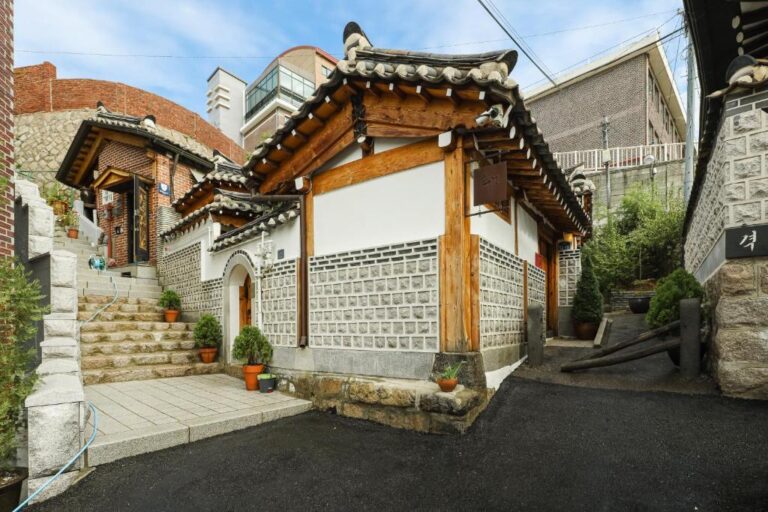
⭐️⭐️⭐️ Hanokstay Gyeongju – Click here for rates & availability
⭐️⭐️ Hwangridan Stay – Click here for rates & availability
⭐️ SieunJae – Click here for rates & availability
Building the Best Gyeongju Itinerary – My Experience
I had 10 full days in South Korea and knew I wanted to add one more stop alongside Seoul and Busan. Gyeongju just made sense. It’s super close to Busan, and pretty much everyone I spoke to wouldn’t stop talking about it.
That said, I didn’t do a ton of research before going. I booked two nights in a hanok stay (which was honestly such a cool experience) and figured I’d plan things out once I arrived. At first, I was a little worried I wouldn’t have enough time to see everything, but after actually being there, I can confidently say you really only need one full day in Gyeongju unless you’re really into history.
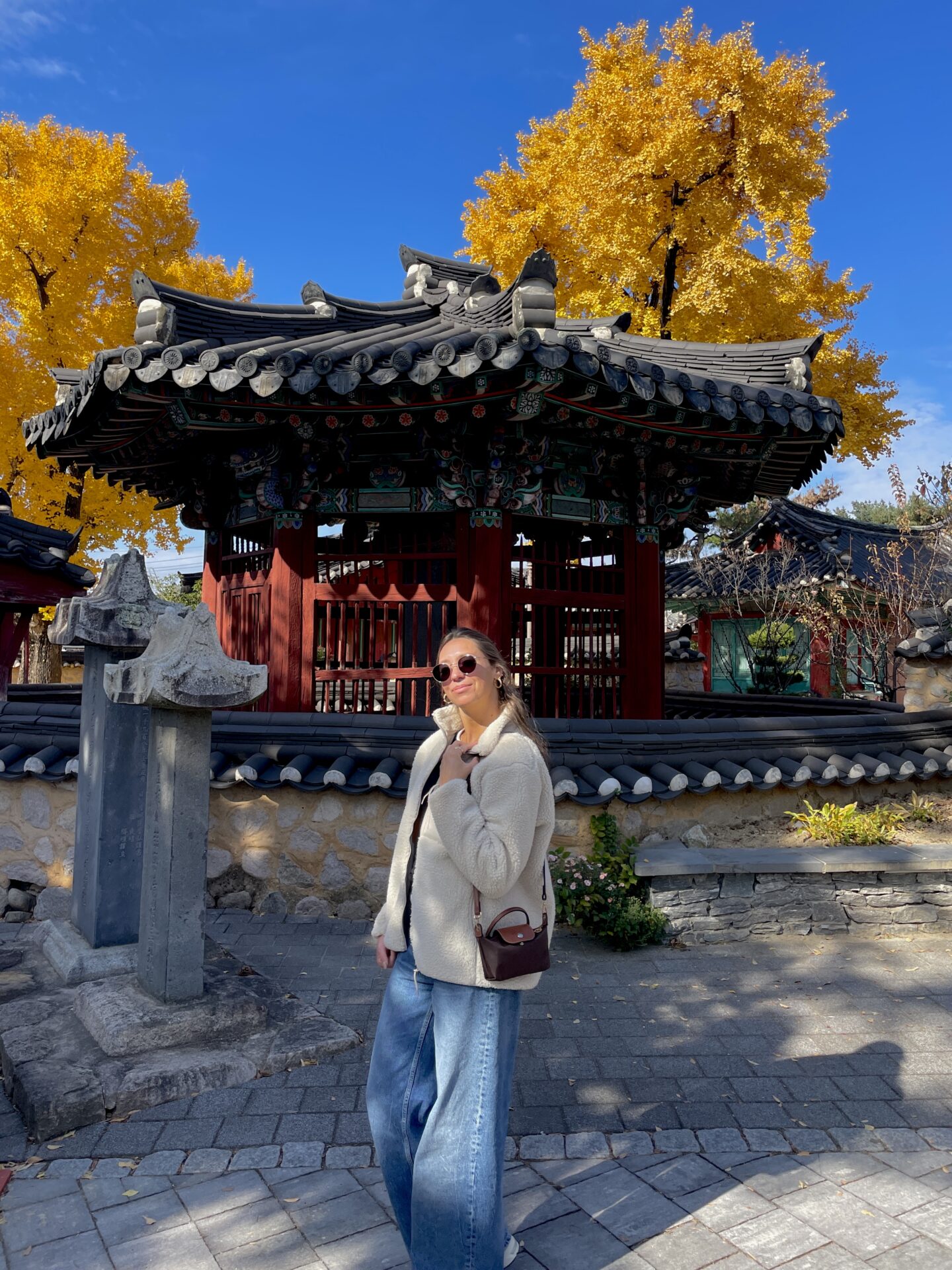
I mapped out a rough route between all the main sights, and it ended up being so easy to follow. I was out exploring all day, definitely hit my usual 20,000 steps, but it never felt overwhelming. I learned about the Silla Dynasty, spent the entire day outside in fresh air, and got to see some really beautiful architecture and historic sites. After the pace of exploring Seoul, it felt like such a nice reset.
I ended up leaving the next morning because I wanted more time in Busan, but there were a couple of spots I didn’t get to that I think would be worth adding if you have a second day or even just a slower morning in Gyeongju.
How to Get Around Gyeongju
Getting around Gyeongju is honestly one of the easiest parts of visiting. Most of the main sights are clustered around the historic center, which means you can walk to almost everything without needing to rely on transport.
Oliver and I didn’t take a single taxi or rent bikes, or scooters. We just walked everywhere, and the routes between attractions are really pleasant, with parks, open fields, and historic sites along the way, so it never felt like a chore.
If you don’t feel like walking, you’ll see plenty of options around the city, from rental bikes to those little electric scooters and even the cute Snoopy-style cars people zip around in. But honestly, if the weather is decent, I’d recommend sticking to walking. It’s the best way to experience Gyeongju, and you’ll naturally come across little spots you might have otherwise missed.
My Step by Step Itinerary for Gyeongju
This is the exact route I followed during my time in Gyeongju, and it flows really naturally from one stop to the next. It’s an easy, walkable day that hits all the highlights without feeling rushed or overplanned.
Day 1 in Gyeongju
Morning: Coffee, Tombs & Wandering the Streets
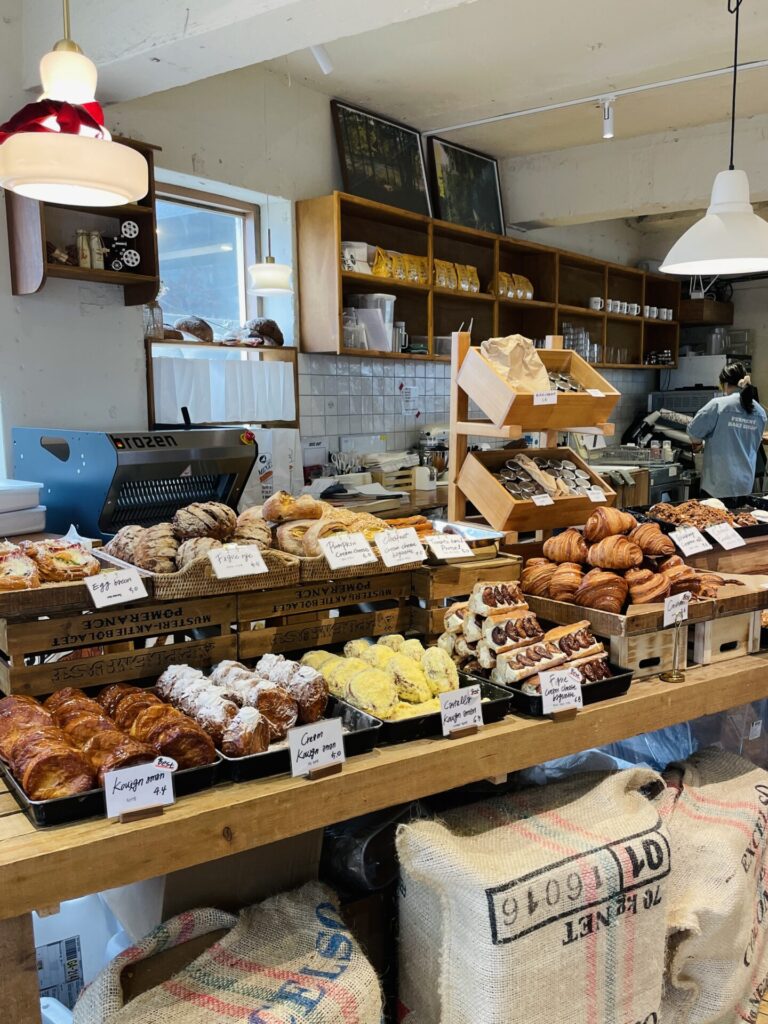
Start with a Coffee at Coffee Place
We kept things slow and started the day with a coffee at Coffee Place, which gets super busy and is clearly a local favorite. It’s in a perfect location right across the street from one of the biggest tomb mounds, so you’re basically sipping your coffee with a pretty iconic view.
We grabbed a table, took a minute to wake up properly, and it honestly set the tone for the rest of the day. If you go a little later in the morning, expect a line.
Daereungwon Tomb Complex
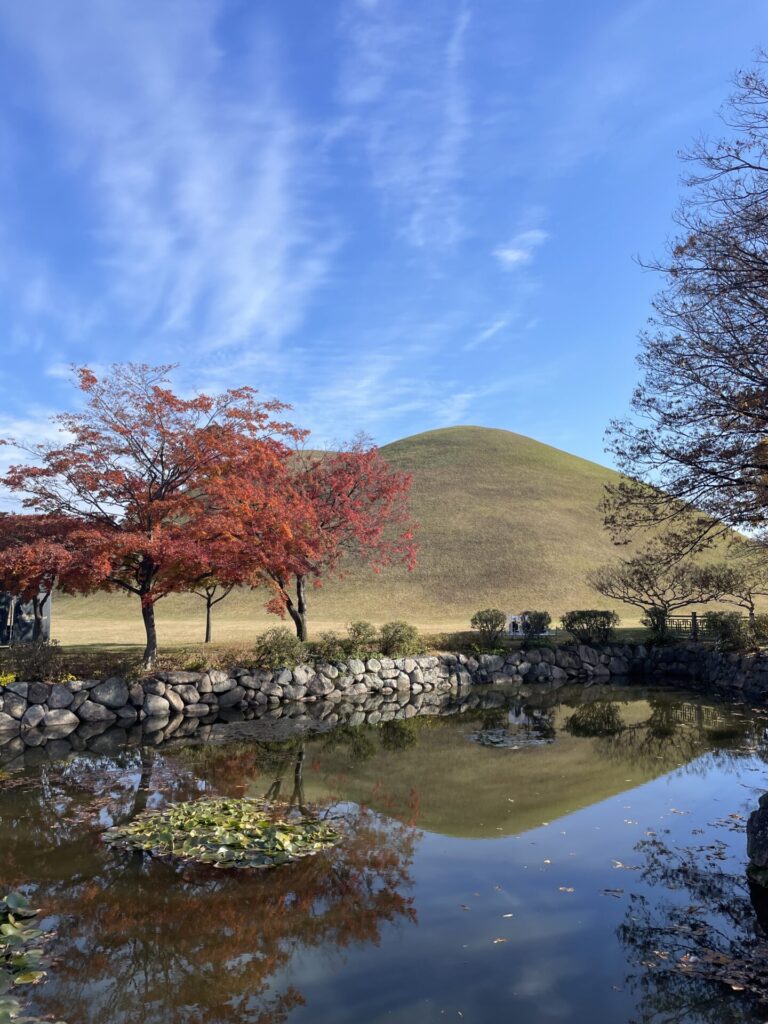
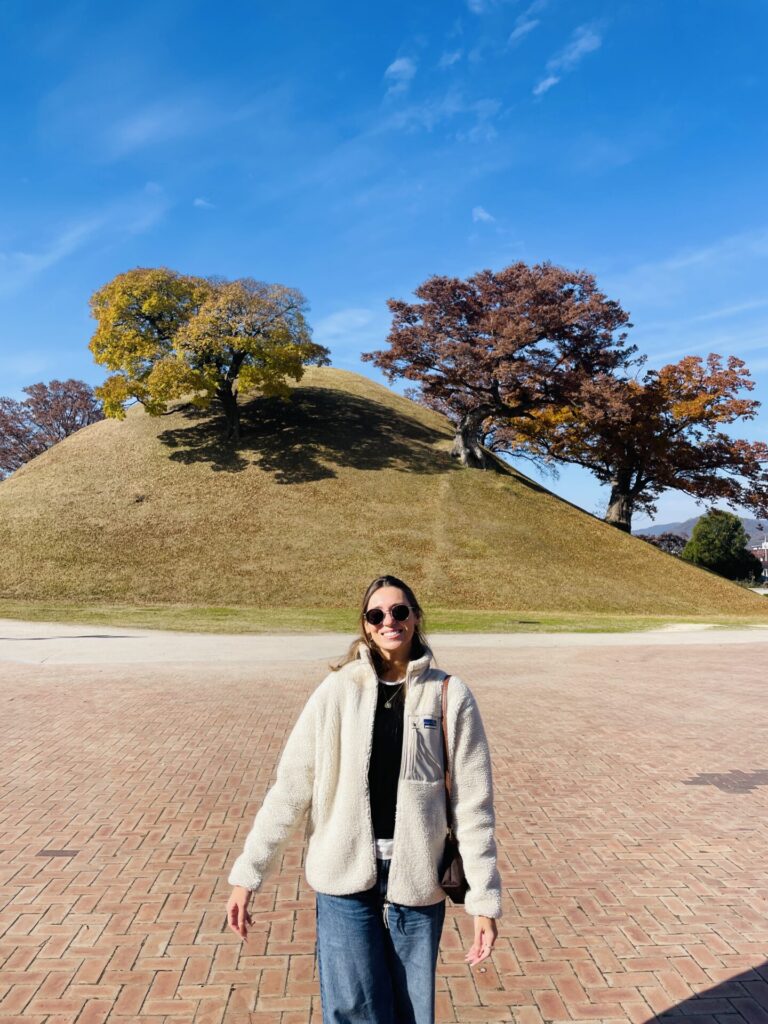
From there, we headed straight to the Daereungwon Tomb Complex, and this place is honestly so cool to see in person. You’re walking through these huge grassy burial mounds from the Silla Dynasty, and it almost feels like a park at first until you realize what you’re actually looking at.
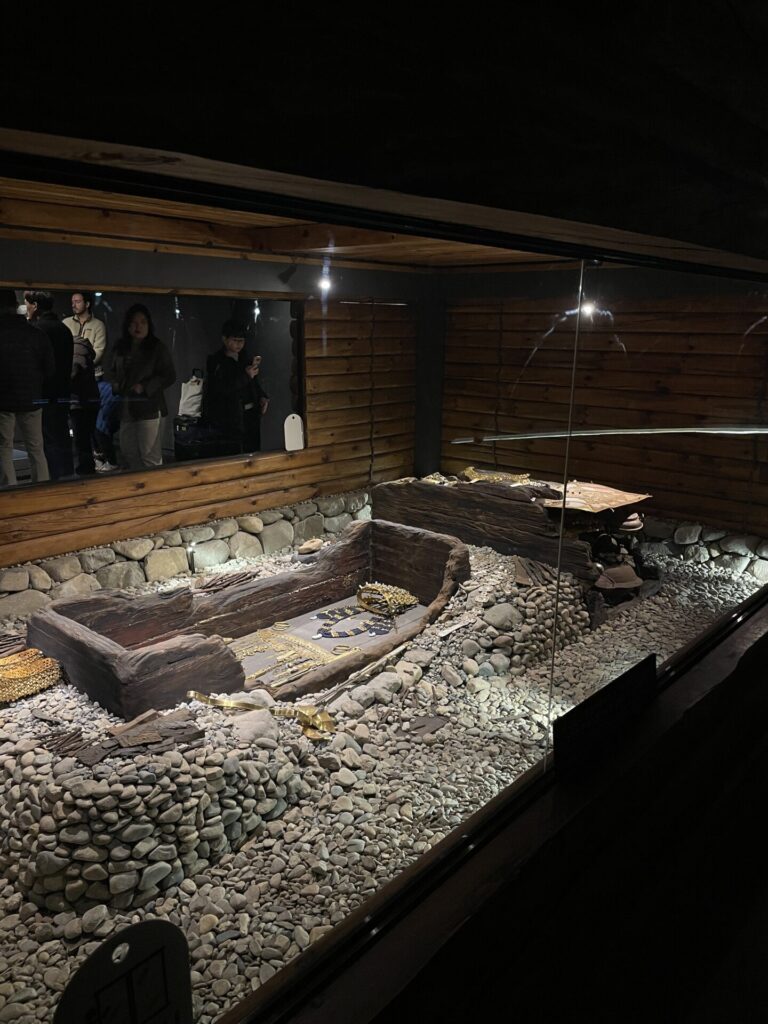
We spent a good amount of time just wandering around the paths here. It’s an easy place to explore without rushing, and a great introduction to Gyeongju’s history. There are a few spots where you can actually go inside one of the tombs and look at the different articfacts that are buried in the tombs.
Wandering Hwangnidan-gil Street & Street Food
After the tombs, we made our way back toward the main streets and just explored with no real plan. We popped into a few shops, tried some street food (the sticky sweet potato fries were so good), and even jumped into a photo booth for some very necessary travel pics.
This area has a fun energy during the day, and it’s a good mix of touristy but still enjoyable. I recommend getting some of the famous Gyeongju bread, a sweet bread filled with red bean paste, and it’s delicious!
Afternoon: Traditional Sights & Scenic Walks
Gyochon Hanok Village
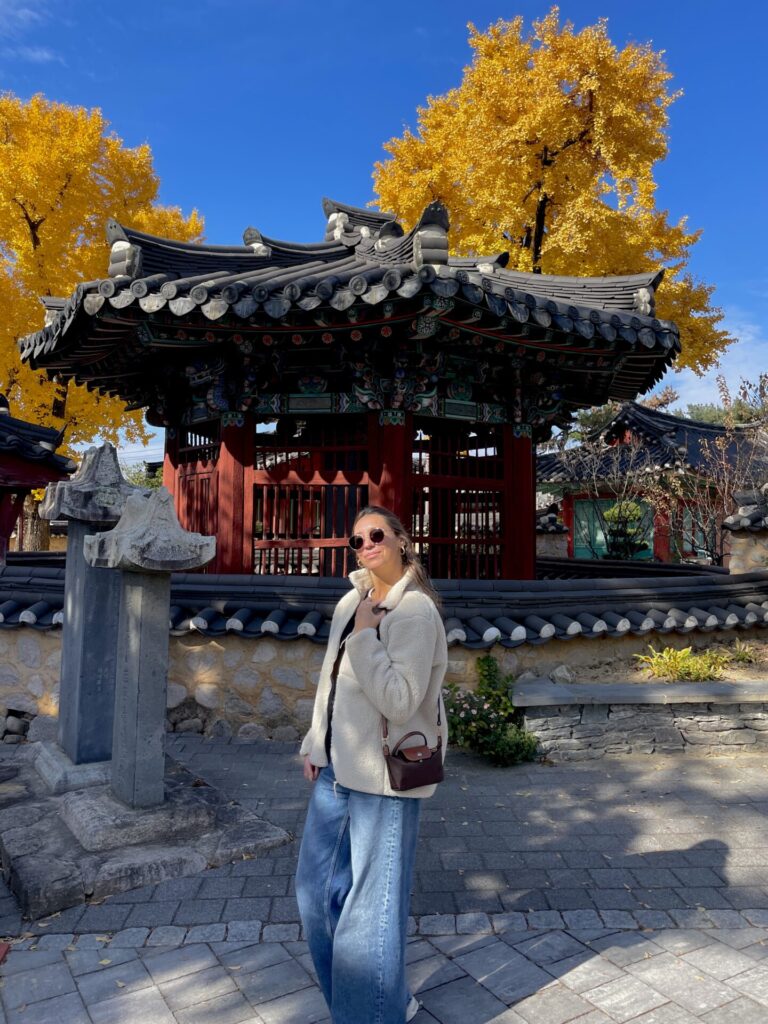
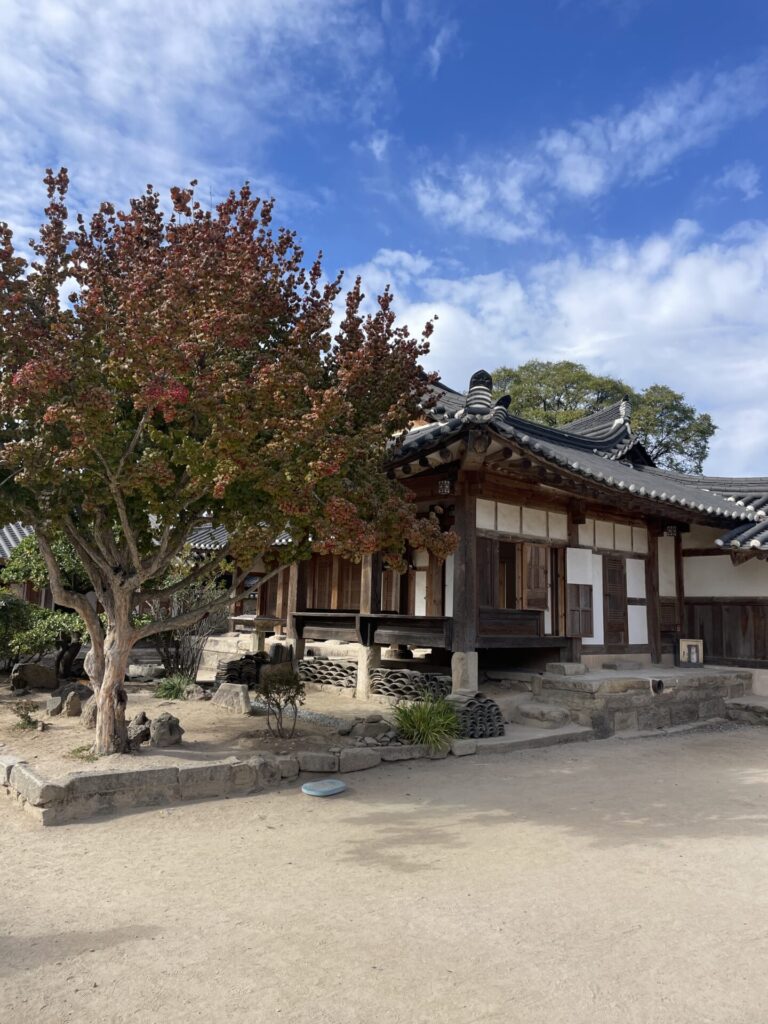
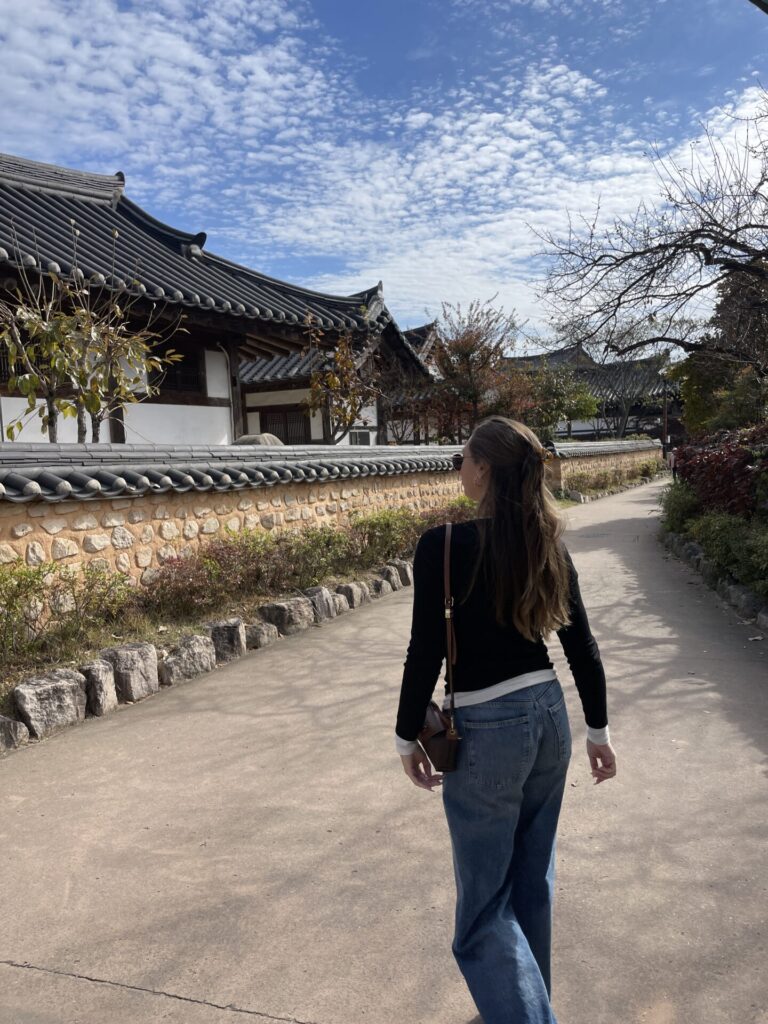
Next, we walked over to Gyochon Hanok Village to see some of the more traditional architecture. It’s not a huge area, but it’s worth stopping by to get a feel for what old Korea looked like and to slow things down a bit.
There are a few cultural spots and small exhibits here, so you can actually learn a little as you walk through. It’s a nice contrast to the more open park-style sights you visit earlier in the day.
Woljeonggyo Bridge
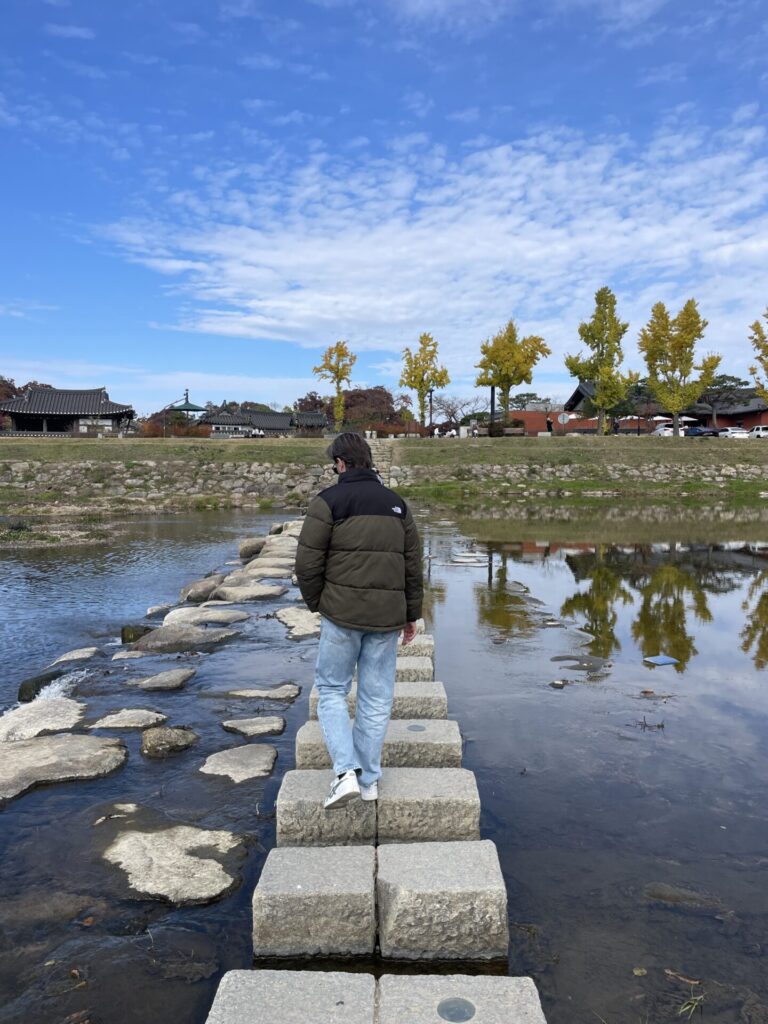
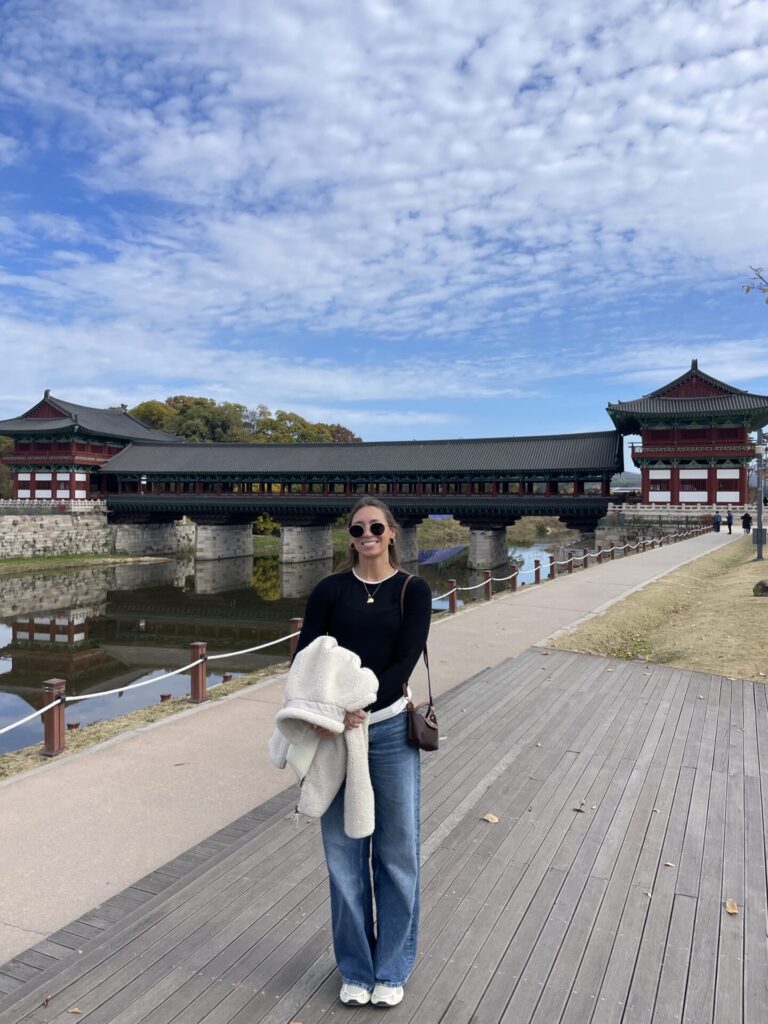
From there, we made our way to Woljeonggyo Bridge, which ended up being one of my favorite stops of the day. The detail in the structure is seriously impressive, and it’s just a really peaceful place to sit for a bit.
We grabbed a bench, watched people crossing the stepping stones, and took a proper break before continuing on. It’s one of those spots that doesn’t take long to see, but you’ll probably end up staying longer than you expect.
Coffee Break at Eyst 1779
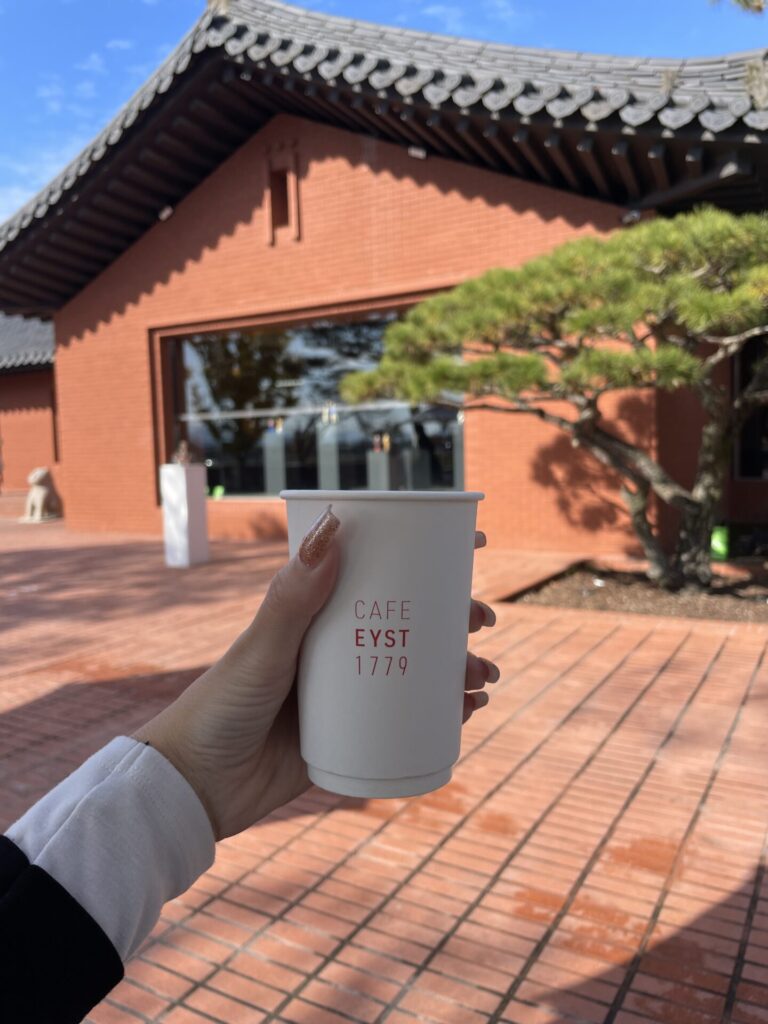
At this point, we were ready for another coffee, so we stopped at Eyst 1779. This place was such a good find. They had traditional artwork displayed inside, and we ended up sitting outside for a while just relaxing before heading off again.
It felt a bit more tucked away and quiet compared to the main streets, which made it a great reset before diving back into sightseeing.
Wolseong Fortress
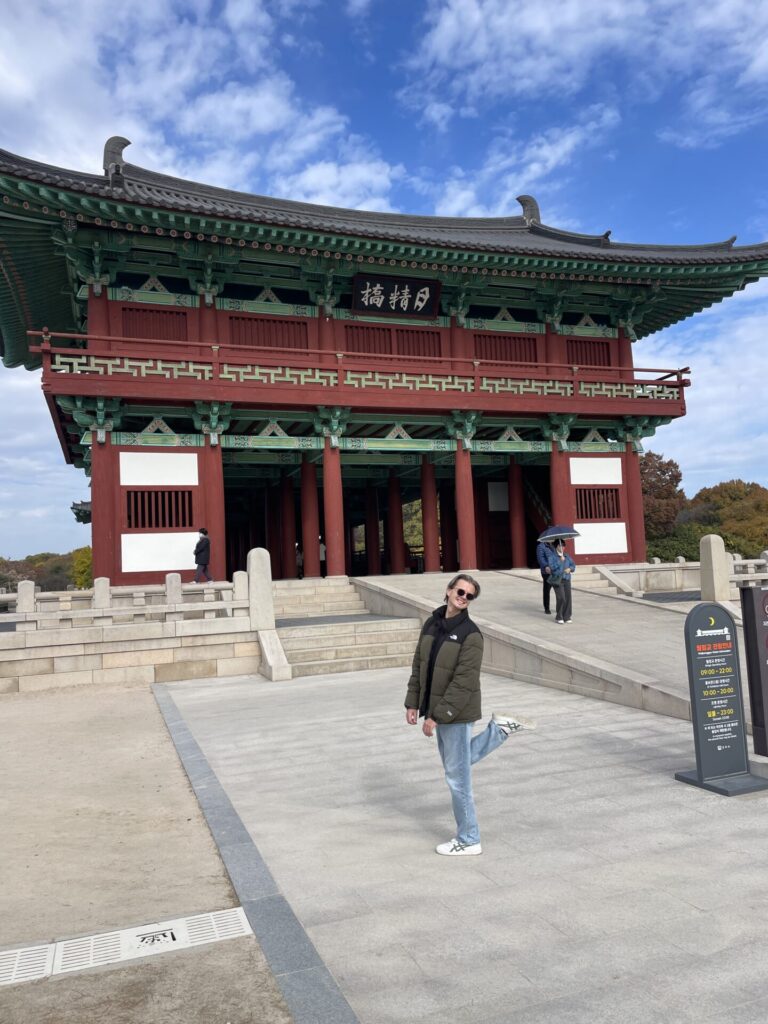
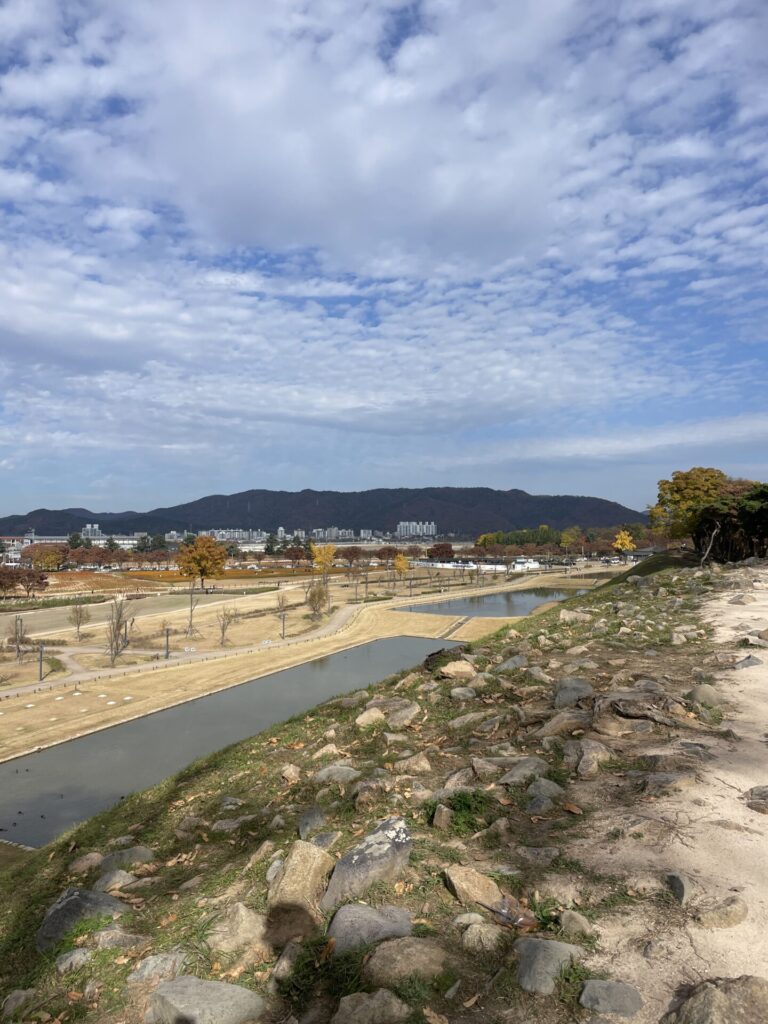
After recharging, we wandered over to the Wolseong Fortress area. This part felt a bit more open and less structured, with different walking paths, signs explaining the history, and plenty of space to just explore.
We didn’t follow a strict route here, which made it more fun. We just walked wherever looked interesting and slowly made our way toward the next stop, passing a mix of ruins, open fields, and shaded paths.
Donggung Palace & Wolji Pond
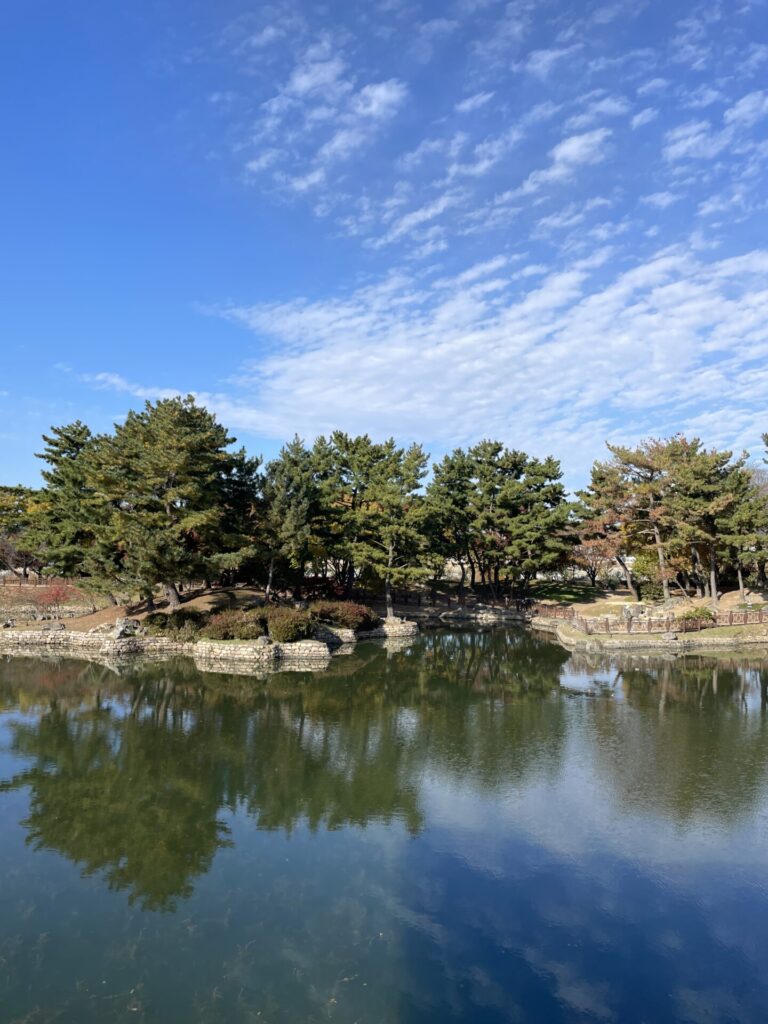
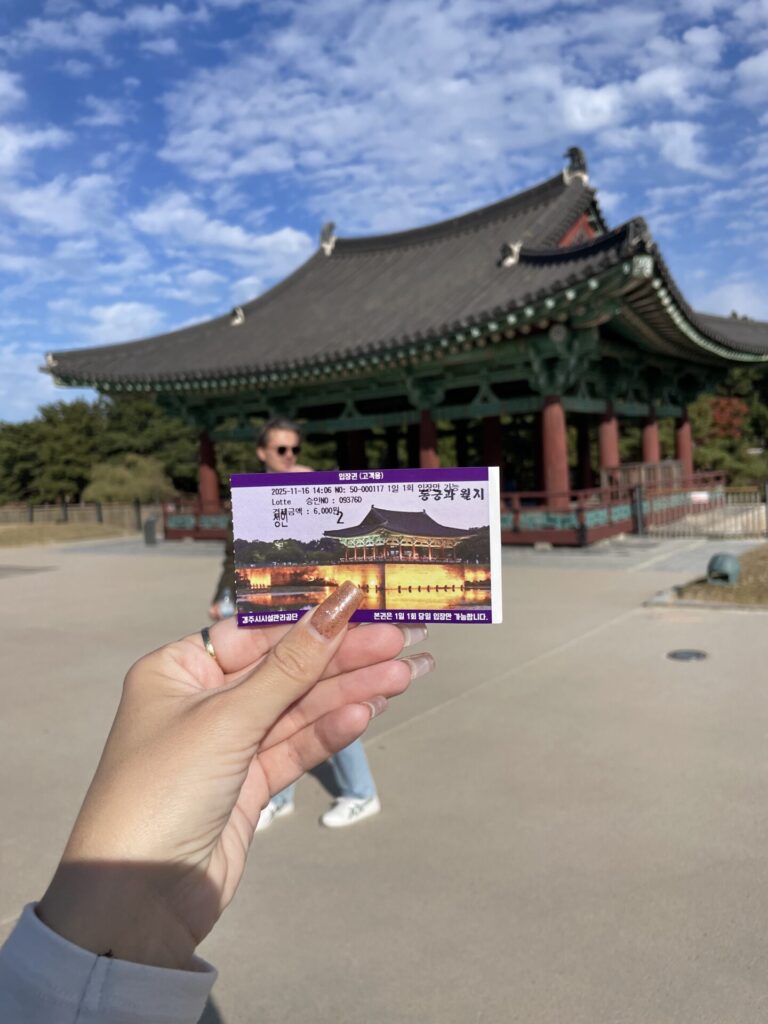
We followed the paths all the way to Donggung Palace and Wolji Pond, and this was easily my favorite place in Gyeongju. The grounds are beautiful, and it’s one of those spots where you just want to take your time walking around and taking it all in.
If you time it right, this is also an amazing place for late afternoon or sunset. The reflections on the water with the palace buildings are seriously impressive.
Evening: Views, Food & a Drink
Cheomseongdae Observatory
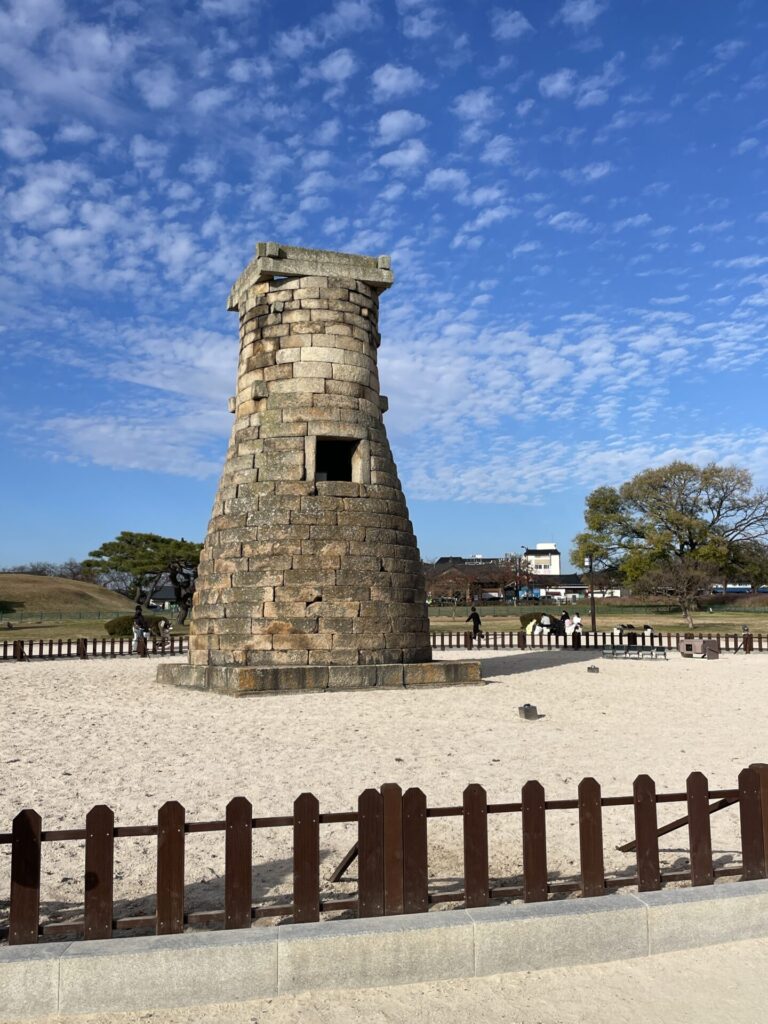
In the late afternoon, we headed toward Cheomseongdae Observatory. On the way, we walked through open fields that were full of flowers when we visited, which made it feel even more scenic.
It’s a quick stop, but definitely worth seeing. The structure itself is simple but really interesting once you’re standing in front of it, especially knowing how old it is.
Dinner & Rooftop Drinks
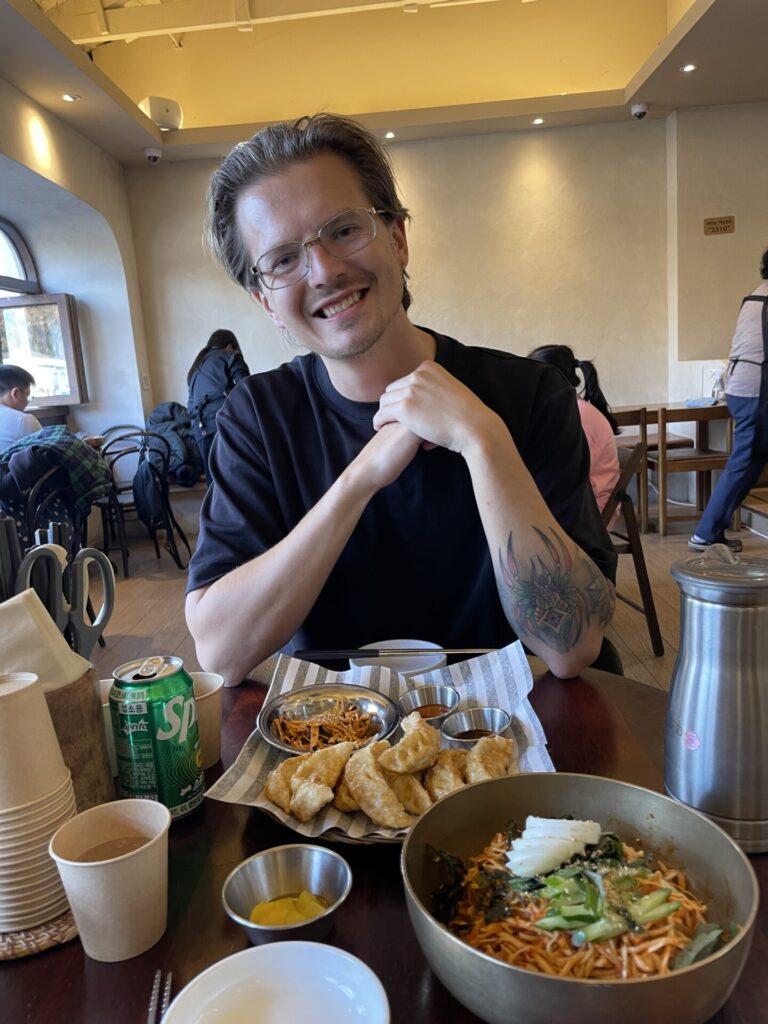
After that, we made our way back toward the main area, grabbed a late lunch/early dinner here (it was one of our favorite Korean meals!), and spent a bit more time wandering around. It was much busier in the evening, so prepare for packed streets.
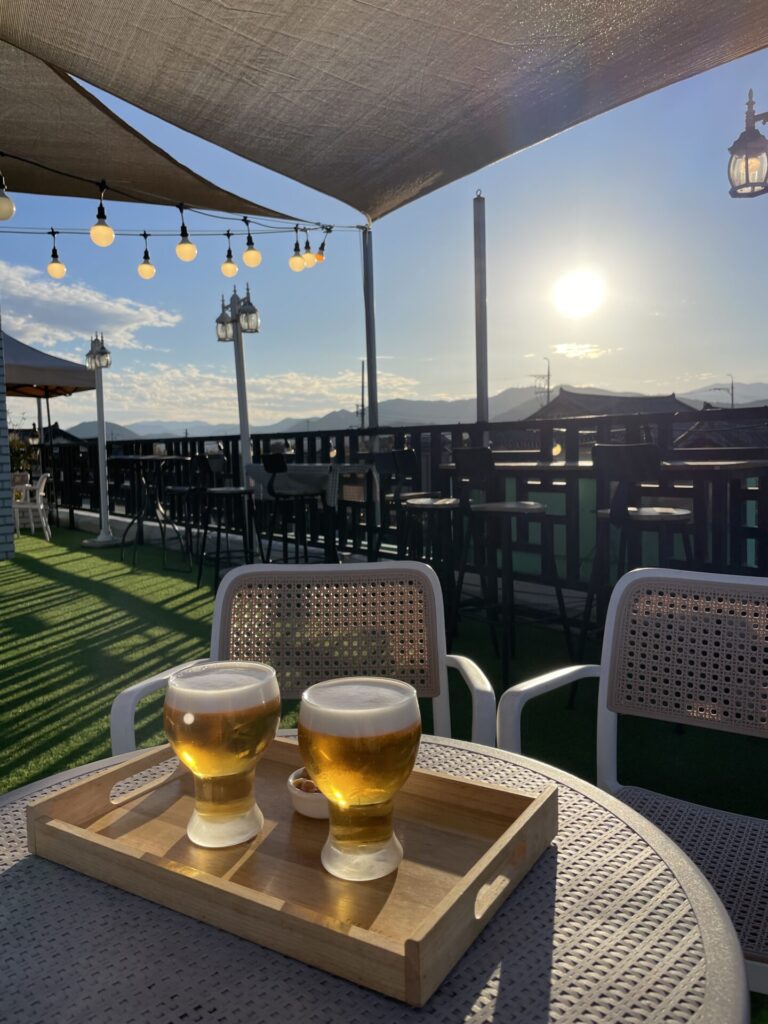
To finish the day, we found a rooftop bar, ordered a beer, and watched the sun go down. Honestly, such a good way to end the day after all the walking. We headed back to the hotel after that and kept the evening pretty relaxed.
Day 2 in Gyeongju
Morning: Temples & Mountain Views
Bulguksa Temple
If you have a second day in Gyeongju, this is where I’d start. Bulguksa Temple is one of the most important temples in Korea, and from everything I’ve seen and heard, it’s absolutely worth the trip.
I’ll be honest, Oliver and I didn’t make it here because we had just come from Japan and were experiencing some temple fatigue. But looking back, this is the one place I kind of wish we had pushed ourselves to visit. The temple is a UNESCO World Heritage Site and known for its beautiful stone terraces, detailed wooden buildings, and mountain setting, which makes it feel a bit more special than your average temple stop.
Seokguram Grotto
Not too far from Bulguksa, you’ve got Seokguram Grotto, which is often paired together in one trip. It’s a bit more effort to get to, but it’s home to a famous stone Buddha statue set inside a cave overlooking the mountains.
If you’re already making the journey out to Bulguksa, it makes sense to combine the two. Just keep in mind you’ll likely need a taxi or bus to reach both spots since they’re outside the main city area.
Afternoon: Museum or Head Back
Gyeongju National Museum (Optional)
If you’re still in the mood for more history, you can stop by the Gyeongju National Museum on your way back into town. It gives more context to everything you’ve seen around the city, with artifacts from the Silla Dynasty and detailed exhibits.
That said, if you’re anything like me, you might be ready to slow things down a bit by this point.
Wrap Up & Departure
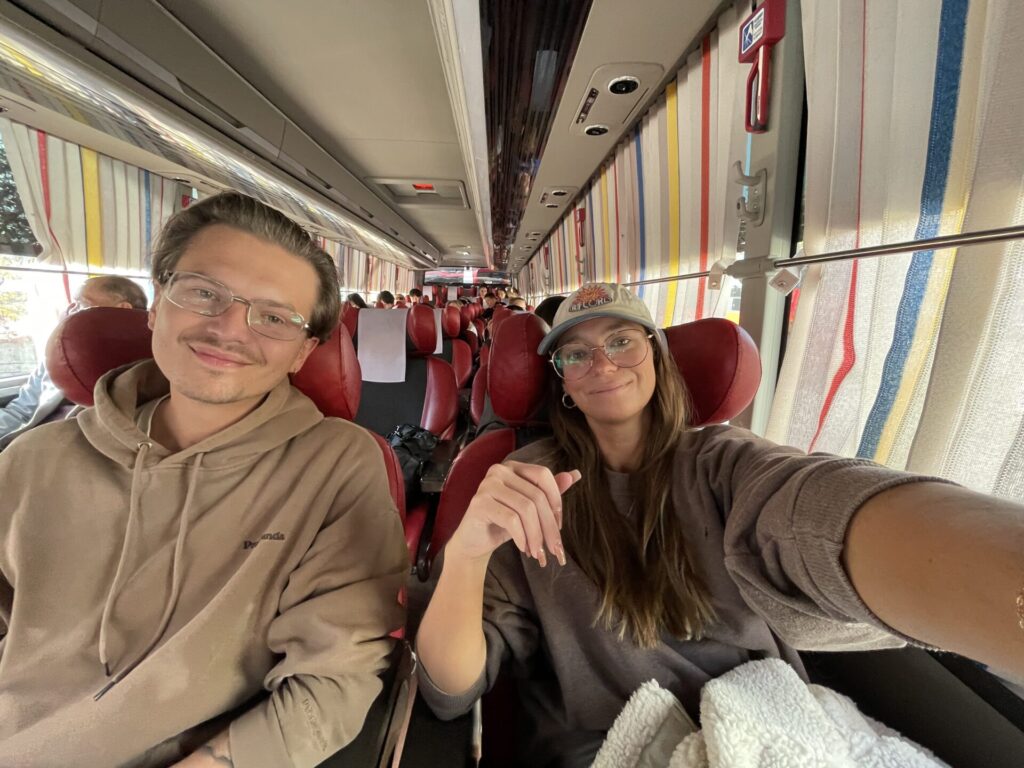
From here, you can either grab some food, squeeze in one last wander through the main streets, or start making your way back to Busan or Seoul. We grabbed a bus from the main station to Busan, and it was super convenient.
You don’t need a packed schedule in Gyeongju, yes, we were out and about all day but it was very doable. Even with just a day and a half, you’ll leave feeling like you covered the highlights without rushing around too much.
FAQ: Gyeongju Travel Itinerary
How to get from Busan to Gyeongju
Getting from Busan to Gyeongju is super easy and quick. The fastest option is the train, which takes around 30–60 minutes depending on the service. You can also take a bus, which usually takes about an hour. Either way, it’s an easy day trip or short transfer between cities.
How many days do I need in Gyeongju?
You really only need one full day to see the main highlights. That’s enough time to visit the tombs, temples, and historic sites without rushing. If you want a slower pace or plan to visit spots outside the city like Bulguksa Temple, then 2 days is ideal.
What are the most popular Gyeongju attractions?
Some of the most popular spots include the Daereungwon Tomb Complex, Donggung Palace and Wolji Pond, Bulguksa Temple, Cheomseongdae Observatory, and Woljeonggyo Bridge. Most of these are close together, which makes sightseeing really easy.
Is one day enough in Gyeongju?
Yes, one day is enough for most people. The city is compact, and you can walk between the main attractions pretty easily. If you start early, you’ll be able to see all the key sights and still have time to relax along the way.
Final Thoughts on The Perfect Gyeongju Itinerary
And there you have it, that’s exactly how I’d spend 2 days in Gyeongju. Like I mentioned, I personally think one full day is enough to see the main highlights, but if you want to slow things down or dive a bit deeper into the history, two days is more than enough time.
It’s an easy place to explore, not overwhelming, and a really nice change of pace from bigger cities like Seoul and Busan. You can take your time, walk everywhere, and still feel like you’ve seen a lot without rushing around.
If you’re still not sure whether Gyeongju is worth adding to your itinerary, I’d definitely check out my full “Is Gyeongju Worth Visiting?” guide where I break it all down a bit more.
Check Out My Other Gyeongju South Korea
Is Gyeongju Worth Visiting? My Honest Review
My Gyeongju Itinerary: How I Spent 2 Days in Gyeongju
Best Things to Do in Gyeongju: My Favorite Activities in Gyeongju
Where to Stay in Gyeongju: My Favorite Areas & Hotels
Check Out My Other South Korea Guides
Is South Korea Worth Visiting? My Honest Review
South Korea Travel Itinerary: My 5,7 & 10 Day Itinerary
Things to Know Before Visiting South Korea: My Favorite Travel Tips