Things to Know Before Going to South Korea (Must-Read Travel Tips) 2026
Korea really took me by surprise in so many different ways. The country has completely moved past its old reputation and has become this super modern, comfortable, and honestly amazing destination for travelers. The technology is next-level, the cities feel incredibly livable, and it’s clear Korea has put a lot into making tourism easy.
But… it wasn’t all roses and butterflies. I landed and immediately realized Google Maps wasn’t working, I needed cash to do something as simple as getting on the train, and asking locals for help wasn’t always as easy as I expected.
TBH, I did basically zero research before coming (that one’s on me). So consider this my way of making sure you don’t make the same mistakes I did. This guide is the ultimate rundown of all the top things to know before going to South Korea, so your trip feels smooth, stress-free, and seamless from day one. Let’s get into it!
In a Rush? Here Are Our Favorite Hotels in Seoul South Korea
⭐️⭐️⭐️ Hotel 28 Myeongdong- Click here for rates & availability
⭐️⭐️ Royal Hotel Seoul – Click here for rates & availability
⭐️ Hanok Hotel Daam Seoul – Click here for rates & availability
Things to Know Before Going to South Korea – My Quick Guide
Before we keep going, I just want to say… I don’t want this article to intimidate you. Korea really is a super easy country to travel in, and once you get there, everything feels way more simple than it might sound at first.
With just a few things to know before you go, you’ll be totally fine. So if you’re someone who doesn’t want to feel overwhelmed with a million details, here’s a quick little guide to the main things that will make your trip smoother right away.
Check if you need a visa – Most travelers can enter Korea visa-free for 30–90 days, but it’s always worth confirming before you fly.
Download Naver Map – Google Maps works kind of, but Naver will make getting around so much easier.
Bring a little cash – Korea is very card-friendly, but you’ll still want cash for markets, small food stalls, and topping up transit cards.
Get a T-Money card right away – This is essential for metros and buses and will save you so much hassle.
Public transportation is amazing – Seoul’s metro is cheap, clean, and easy to use, even for first-timers.
Don’t only stay in Seoul – Busan, Gyeongju, and Jeju are all so different and totally worth adding if you have time.
Learn a couple basic Korean words – Even just “hello” and “thank you” goes a long way, especially outside tourist areas.
Visa Requirements + Entry Rules
One of the most appealing reasons to visit South Korea is that many travelers can enter visa-free. Depending on where you’re from, you’re usually allowed to stay anywhere from 30 to 90 days without needing to apply for a tourist visa in advance, which makes planning a trip feel so much easier.
That said, entry requirements can change, and the exact rules depend on your passport, so it’s always worth doing a quick check on the official government website before you fly. It only takes a few minutes, and it’ll save you any stressful surprises at the airport.
eSIMs in Korea
This past year I’ve fully committed to the eSIM life and honestly… I’m never going back. I used to either completely avoid getting a SIM card because the whole process felt like a chore, or I’d land after a long flight, half-delirious, and immediately start running around an airport trying to figure out how to get data.
Using an eSIM in Korea made everything so much easier. I used SIMlocal while I was there and it worked perfectly from the second I landed, which meant I could pull up maps, book trains, translate menus, and actually feel like a functioning human right away. Korea is super tech-forward, so having data instantly just makes the whole trip smoother.
If you want to make your life easier too, I definitely recommend grabbing an eSIM before you go. Use my code GIRLONAZEBRA to save a little $$$ and stay connected the entire time.
Apps You Need to Download Before You Arrive in Korea
This one seriously took me by surprise. Like I mentioned, I didn’t do that much research before arriving in Seoul, and it honestly took me a couple of days to figure out why I was having so much trouble getting around with Google Maps.
And just to clarify… Google Maps does work in Korea… kind of. It has locations on it, and it can give you public transportation directions, but the routes aren’t always the fastest or most accurate. You’ll also notice a lot of restaurants and cafes might only have a handful of Google reviews, and that’s not because they’re bad… it’s just because Koreans don’t really use Google Maps. Most reviews come from foreigners, so don’t let low review counts scare you off.
That’s why I ended up switching between Google Maps and Naver Map, which is the main navigation app Koreans actually use. KakaoMap is another option, but I personally found Naver a bit more foreigner-friendly. It’s not the most amazing app ever, but it absolutely gets the job done.
Here are the main apps I recommend downloading before you arrive:
- Naver Map – The best alternative to Google Maps for accurate walking routes, transit directions, and finding places in Korea.
- KakaoMap – Another popular Korean navigation app, sometimes better for very local spots.
- KakaoTaxi – Korea’s version of Uber and the easiest way to call a taxi. Uber does work as well though, and was super affordable. Personally, I used uber instead of Kakao Taxi.
- Papago – The best translation app for Korean (honestly better than Google Translate for full sentences).
- Google Translate – Still useful for quick menu translations or scanning text.
If you download these ahead of time, you’ll save yourself so much confusion during your first couple of days in Korea.
Cash vs Card in Korea
One of the things that shocked me most in Korea was how often I was able to use my credit card. I have a Capital One Venture card, and it was accepted literally everywhere… it never got declined once. I’ve since read a few guides where people mentioned their debit cards didn’t always work, but I can’t fully speak to that since I never use my debit card when I travel.
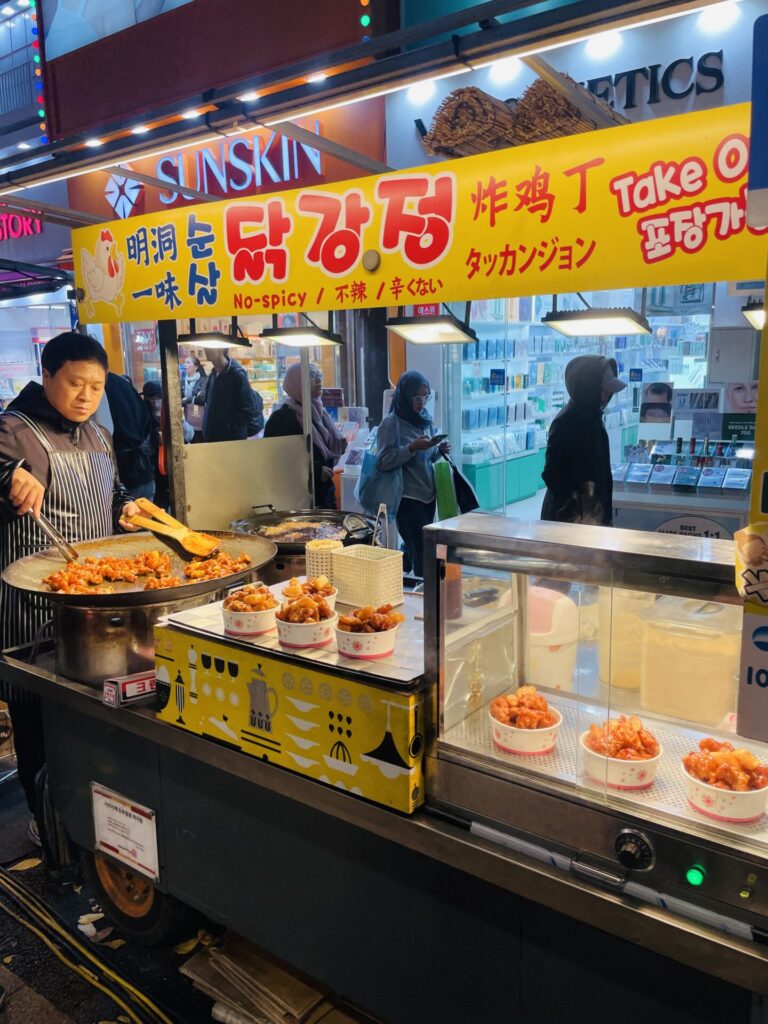
Honestly, I barely needed cash at all. The only times it really came up were at street markets or small food stalls, and even then, a lot of vendors still had card machines. Korea is definitely one of the most card-friendly countries I’ve visited.
The one place where cash is completely non-negotiable though is public transportation. You can buy your T-Money card with a card, but it will always need to be topped up with cash. Whether you do it at a convenience store or at the subway stations, the ticket and top-up machines only take cash, so make sure you have some on you. Trust me, getting a T-Money card is 100% worth it and makes getting around so much easier.
Transportation Tips + T-Money Cards
Transportation in Korea is genuinely some of the best I’ve come across in Asia. Everyone always talks about Japan’s train system, and yes it’s amazing… but have you ever tried to escape Shinjuku Station without getting humbled? Yeah. Korea’s metro feels way more straightforward. There are only a handful of main lines, it’s easy to understand, and you can get basically anywhere without needing a full-on strategy session first.
The subway is also super clean, safe, and cheap, which makes getting around Seoul (and other cities) so simple. The only thing I’ll warn you about is that some stations are connected to massive underground malls, and transferring lines can feel like you’re walking for five straight years. But if the signs tell you to keep going… just trust the process. You will eventually get there.
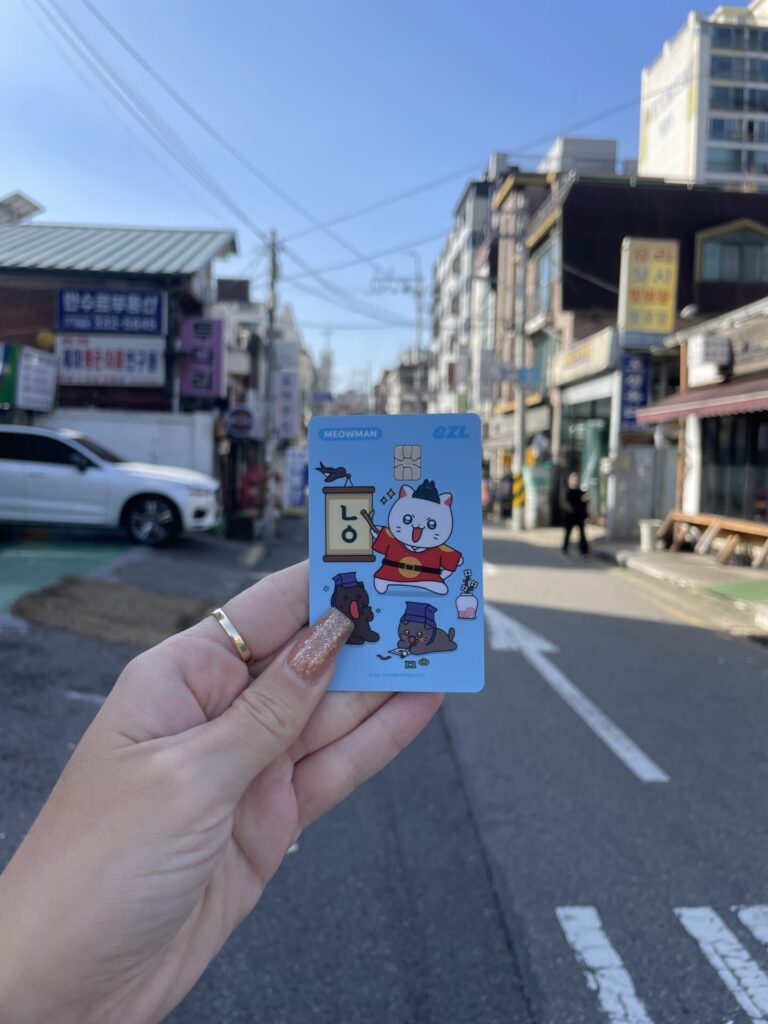
The best thing you can do as soon as you arrive is grab a T-Money card. This is Korea’s public transportation card, and you’ll use it for subways and buses in most cities. You can buy one at convenience stores or in metro stations, and it makes traveling so much easier than buying individual tickets. Just remember: topping it up requires cash.
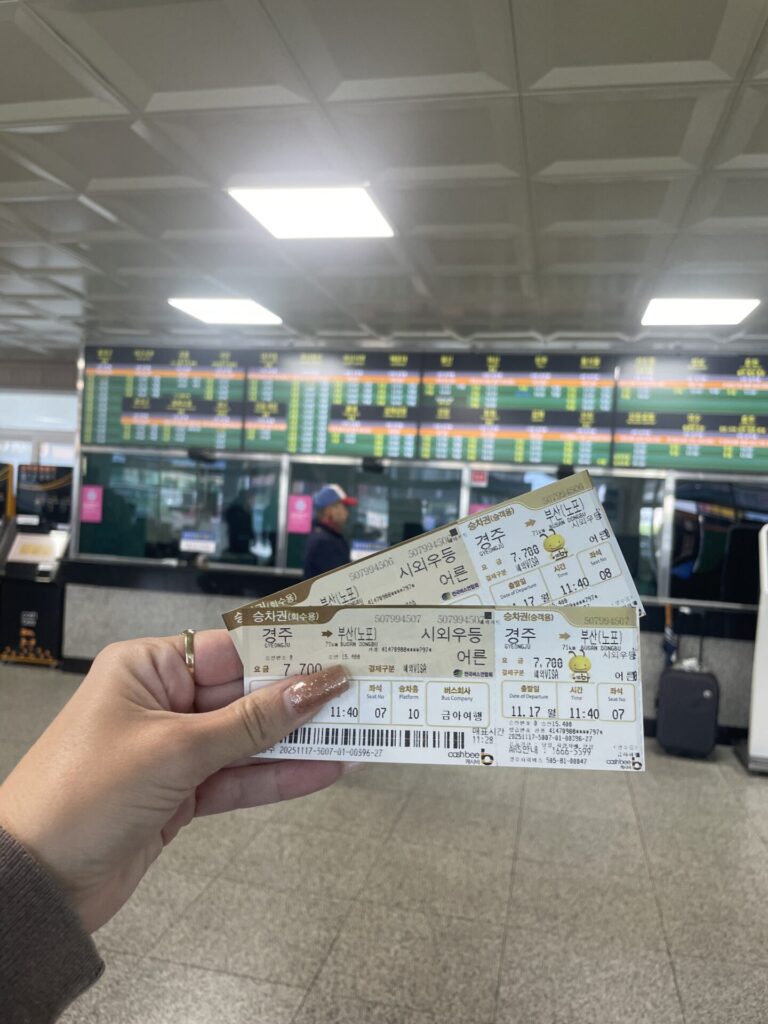
Buses are also a great option once you get comfortable, especially for shorter trips around the city, and the same T-Money card works for them too. For traveling between cities, Korea’s trains are fast, affordable, and super convenient, so it’s easy to add places like Busan or Gyeongju to your itinerary.
One last thing: metro etiquette is pretty simple. People are generally quiet on public transport, and it’s normal to just keep to yourself. Let passengers off before you get on, don’t talk loudly on the train, and you’ll fit right in. Overall, getting around Korea is incredibly stress-free once you’ve done it once or twice.
Korean Culture and Etiquette Basics
I just want to quickly touch on this because when I first decided to visit Korea, I had it in my head that it would feel really similar to Japan when it comes to social norms and etiquette… and I’ve gotta say, I was wrong.
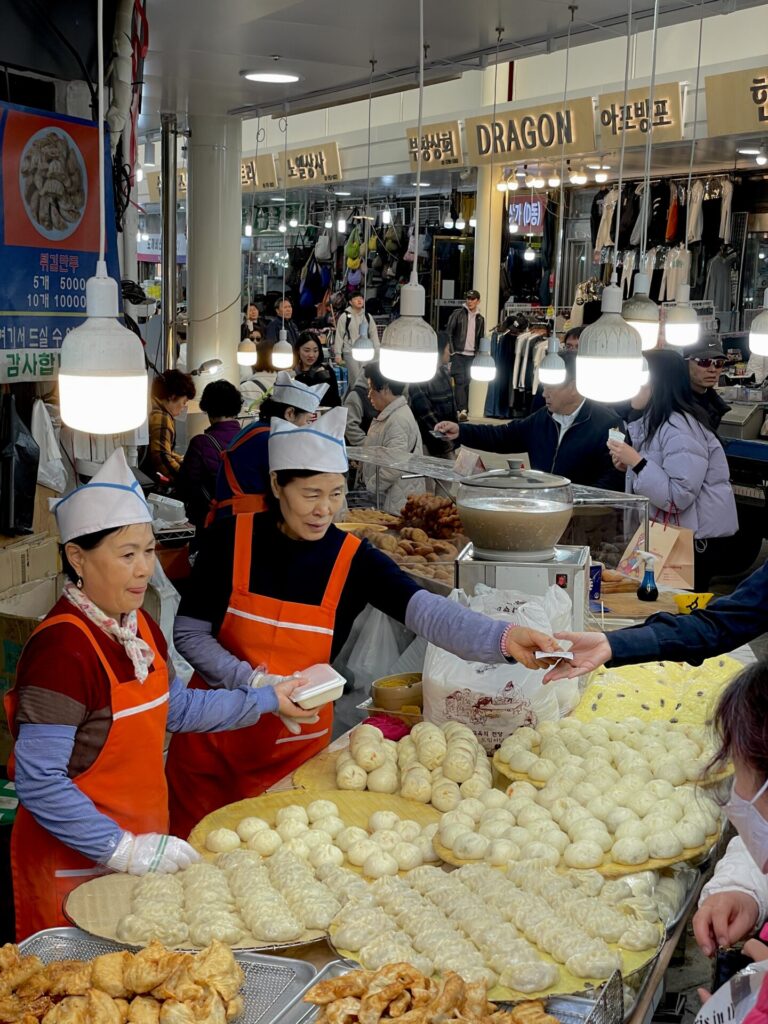
Japan felt much more structured and quiet, with a huge emphasis on rules and respect in public spaces. Korea, on the other hand, felt almost the opposite. Everyone’s walking around with iced coffees, vendors are yelling out deals at the markets, and friend groups are out grilling BBQ with beers and soju. Overall, it just felt way more relaxed, like I didn’t need to be on my absolute best behavior 24/7.
That said, there are still a few cultural things worth knowing before you go:
- Public transport is pretty quiet – People aren’t as silent as in Japan, but most commuters still keep to themselves on the metro.
- Let people exit before you enter – This is a big one in busy stations, especially in Seoul.
- Tipping isn’t really a thing – It’s not expected in restaurants, taxis, or cafes.
- Shoes off indoors sometimes – In traditional guesthouses, some restaurants, and certain homes, you’ll be expected to take your shoes off.
One interesting thing I noticed is that Korea, especially places like Busan, feels like a pretty old society. There are a lot of older generations around, and with younger people not having kids at the same rate, you really notice the demographic shift. What surprised me though was that there didn’t seem to be a huge amount of seat-offering or acknowledgement toward elderly people on the metro. I honestly found it a little strange at first, because it’s not what I expected based on other Asian countries.
Overall, Korean culture feels warm, lively, and much more casual than people assume, and as long as you’re respectful and aware of your surroundings, you’ll fit in just fine.
Language Barrier: What to Expect
Out of all the countries I’ve visited in Asia, Korea has had one of the biggest language barriers for me, second only to China. That’s not to say there’s zero English at all, it’s just a bit more limited than places like Japan or Thailand. I also honestly think a lot of younger Koreans speak really good English… they just seem a little shy about using it.
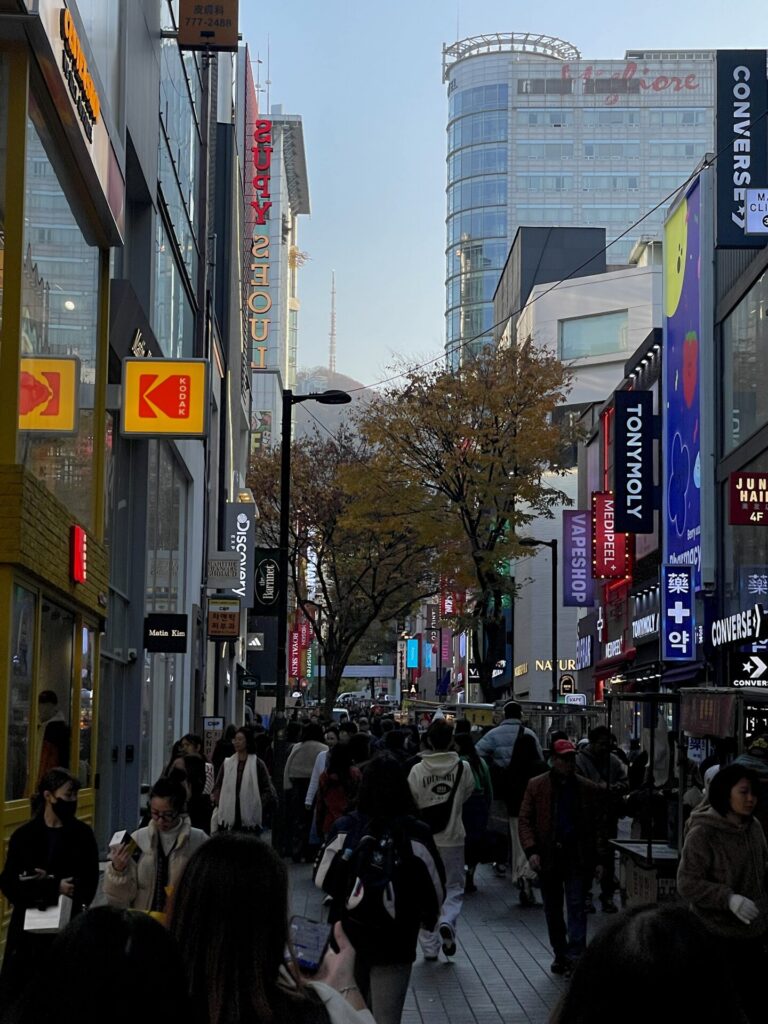
In areas like Myeongdong and Hongdae in Seoul, you’ll definitely come across more English speakers, especially in hotels, popular cafes, and tourist spots. But once you get outside of those neighborhoods, you’ll notice that most daily life is very much happening in Korean.
That said, I never really struggled. A lot of restaurants use tablets for ordering that you can switch to English, or they’ll have photos on the menu, which makes things so much easier. And when push came to shove, we just used Papago (the Korean translation app), which was a lifesaver for anything more complicated. The metro system also has English signage everywhere, so getting around is very manageable.
Overall, the language barrier didn’t affect my trip much, but it’s definitely something to be aware of before you go.
What Korea Travel is Like
I feel like this is a really important thing to talk about, especially if you only get one or two holidays a year and you want to make the right choice on where to travel. I fully believe Korea is an amazing destination, with incredible cities, fascinating history, the DMZ and North Korea, and even places like Busan and Jeju if you want some beach time. But it’s also important to know that Korea isn’t the kind of place where you’re ticking off huge iconic sights all day long like you might in Italy, France, or even Japan.
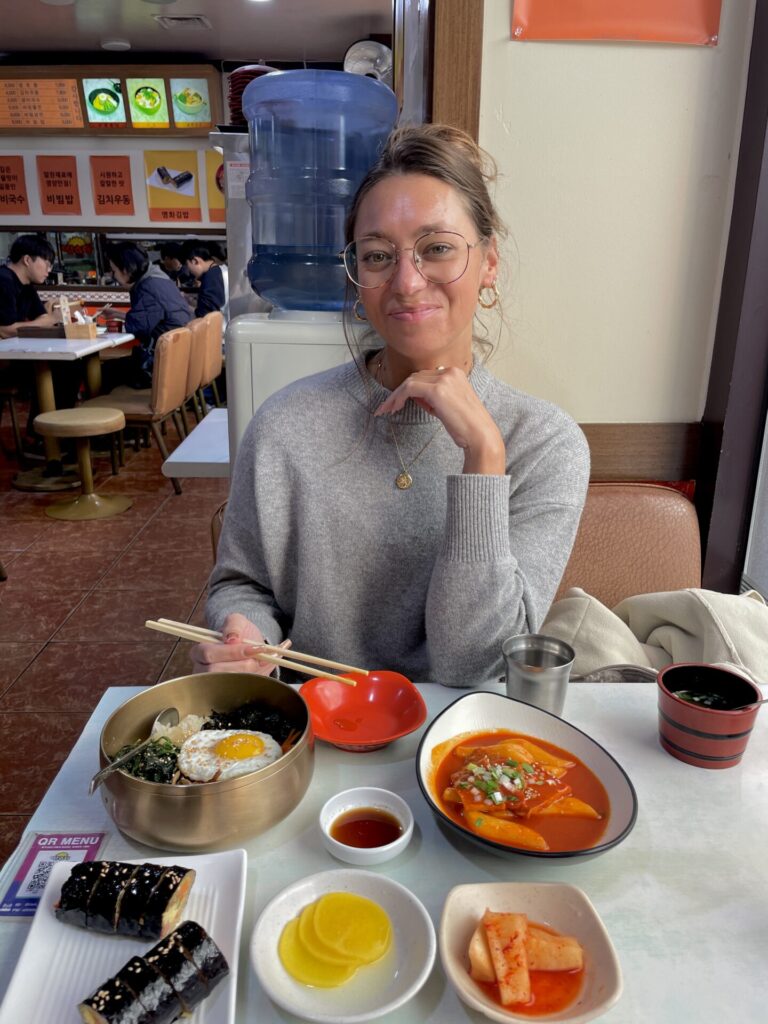
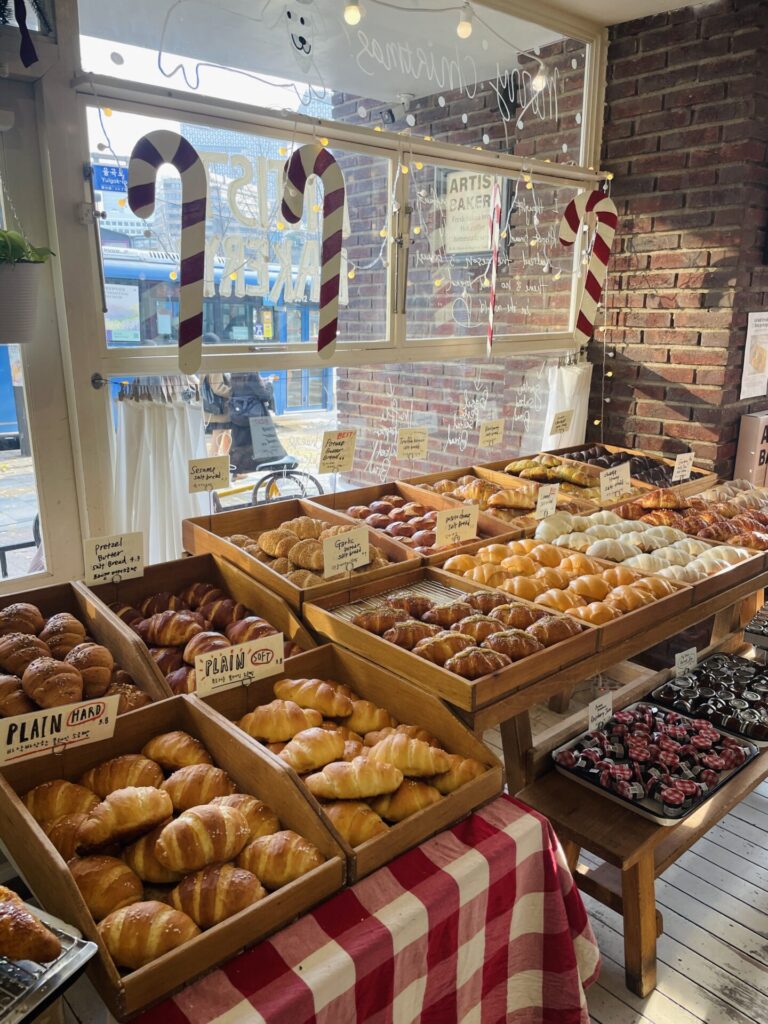
A lot of my days in Korea were spent wandering through neighborhoods, finding cute cafes, exploring markets, and just soaking up the atmosphere, with a few tourist highlights sprinkled in. And for me, that was perfect. I loved that the trip felt more like living there for a bit rather than constantly running from landmark to landmark.
So if you’re looking for a destination that’s nonstop go-go-go sightseeing, or if you want a super laid-back tropical holiday where you do nothing but sit by the ocean, Korea might not be the best fit. But if you enjoy slower travel days filled with great food, cozy streets, local culture, shopping, and discovering the vibe of a place instead of just the famous attractions, then Korea is honestly such a special country to visit.
Best Places to Visit Beyond Seoul
Seoul is an amazing starting point, but one of the best things about traveling in South Korea is how easy it is to explore beyond the capital. The country is fairly compact, the trains are fast, and you can end up somewhere that feels completely different in just a couple of hours.
If you have more than a few days, I really recommend adding at least one extra stop to see a different side of Korea.
Busan
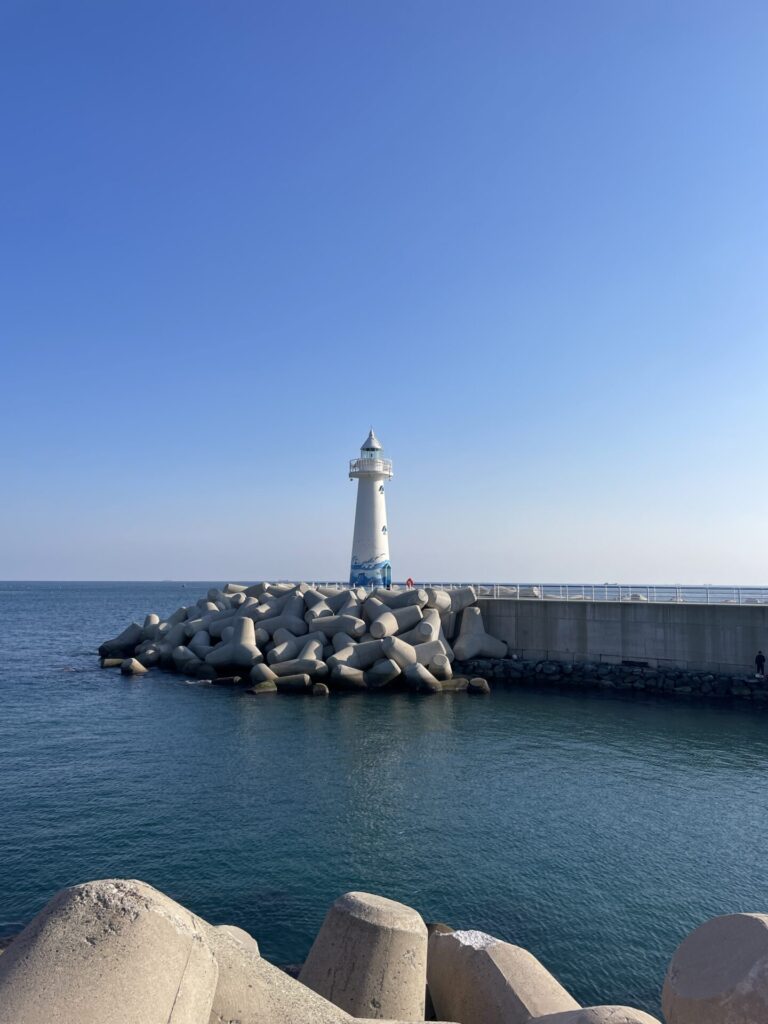
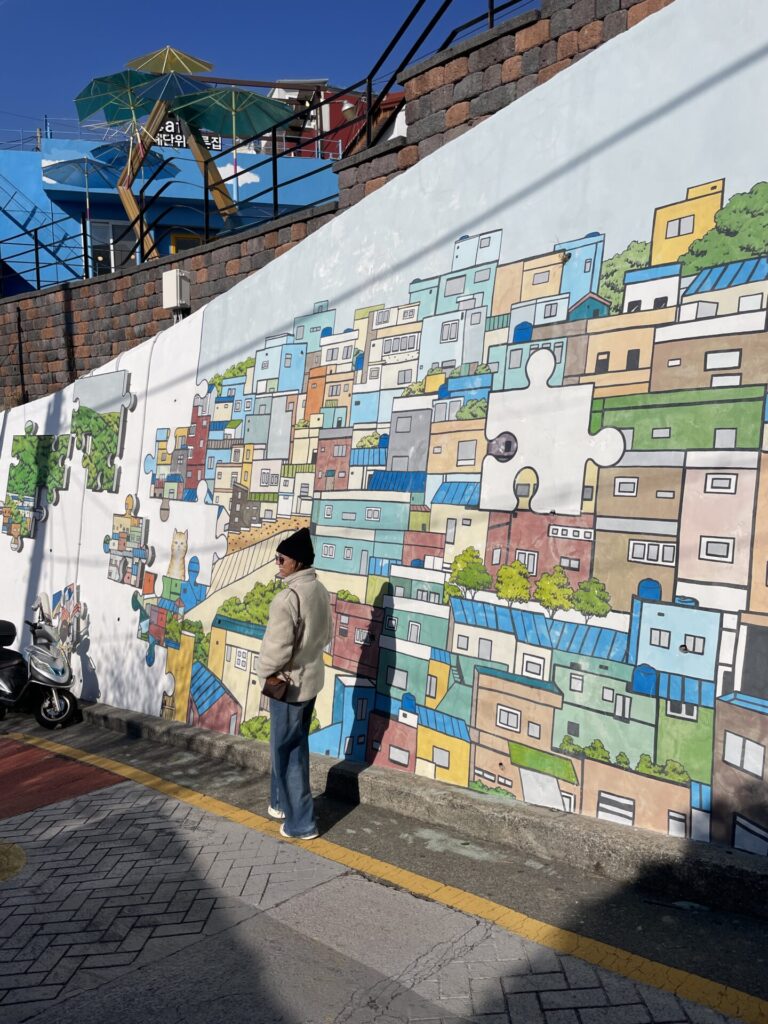
Busan is usually the first place people go after Seoul, and it’s perfect if you want a mix of city life and ocean views. You’ll find beaches, fresh seafood markets, and a slightly more relaxed vibe compared to the capital. It’s still a big city, but it’s a great change of pace and super easy to reach by train. I stayed 3 days in Busan and it was awesome!
Gyeongju
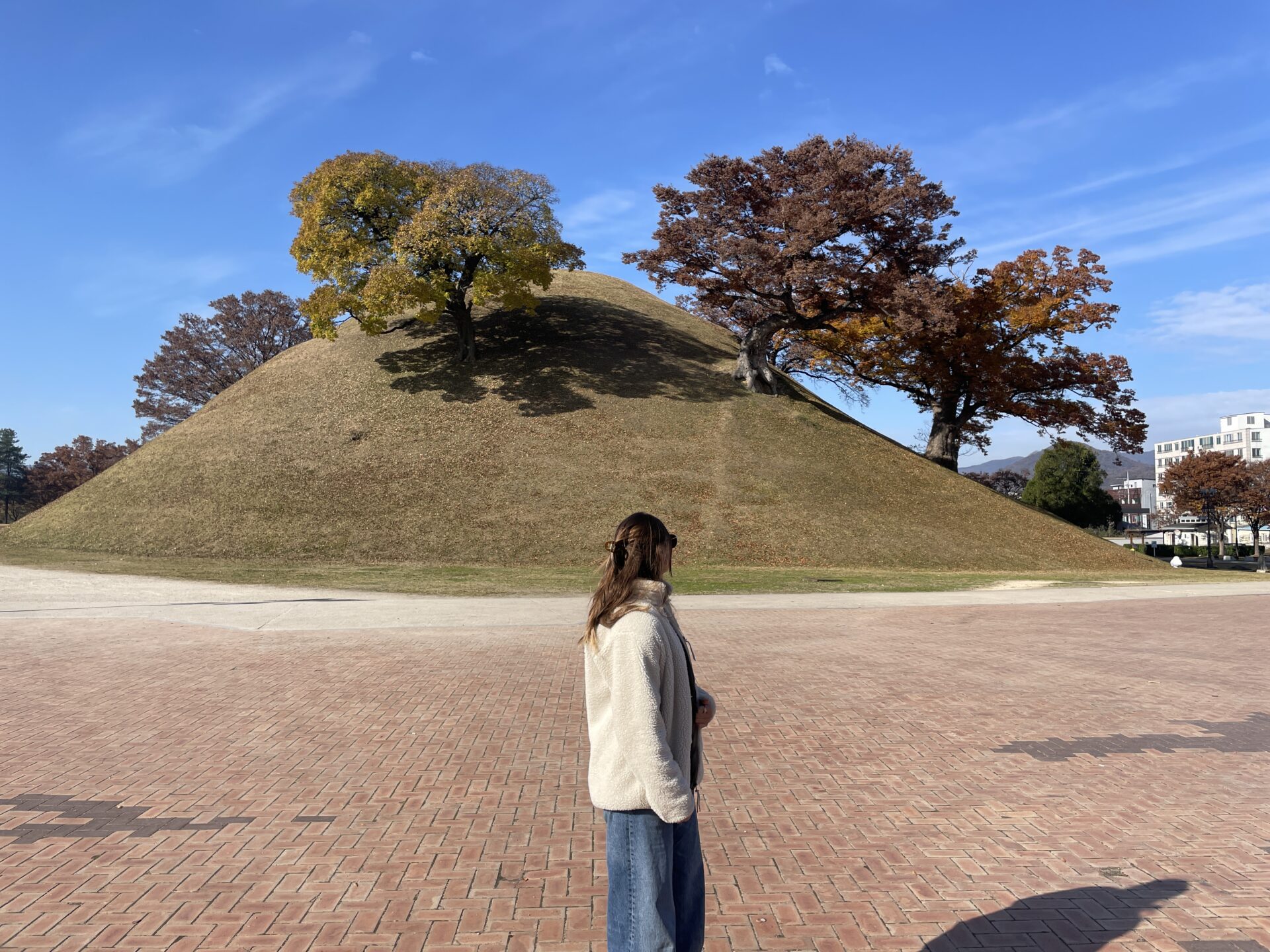
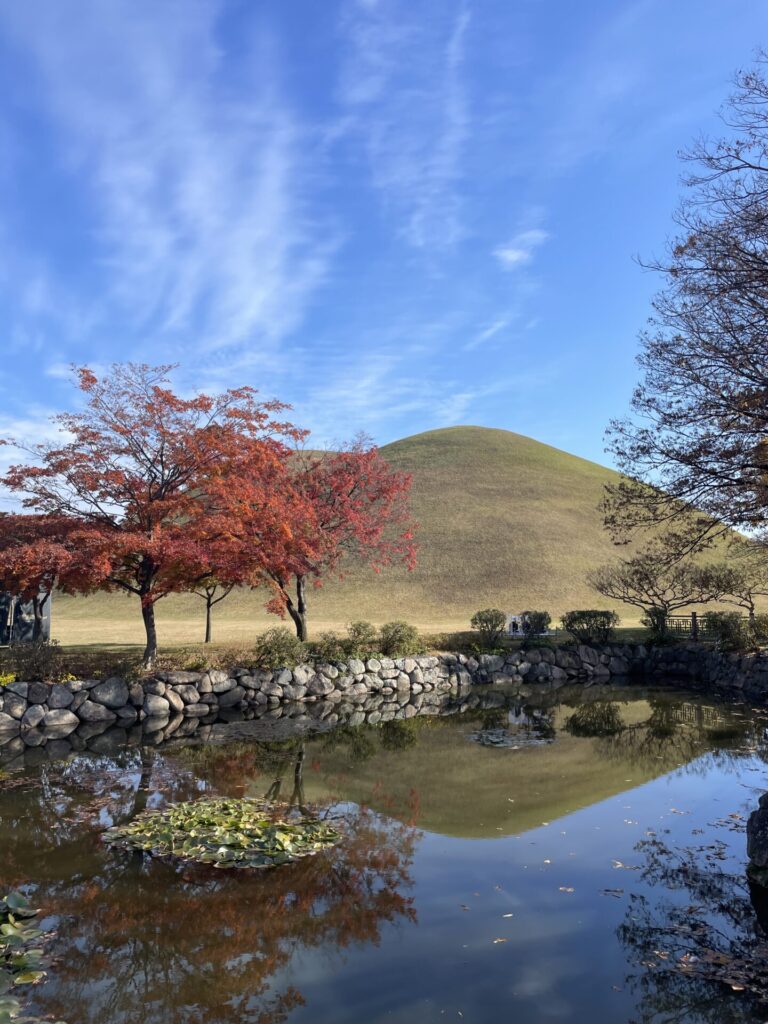
If you want to see Korea’s historical side, Gyeongju is one of the most special places to visit. It feels much calmer than Seoul, with traditional architecture, ancient sites, and a slower pace that makes it really enjoyable to wander around. This is the kind of place that gives you a deeper look into Korea’s past. It was only about an hour bus ride from Busan and makes one of the best day trips!
Jeju Island
Jeju is Korea’s nature escape and feels totally different from the mainland. People come here for volcanic landscapes, coastal hikes, waterfalls, and beachy summer vibes. If you’re visiting in warmer months and want a break from city travel, Jeju is absolutely worth considering. I’m so sad I wasn’t able to visit as I was there in late November, but I will definitely be back one day!
Daegu
Daegu is a great option if you’re looking for something a little more cultural and off the typical tourist path. We went mainly to do a temple stay at Donghwasa Temple, and it was honestly such a memorable experience. If you want a quieter, more meaningful stop, Daegu can be a really good choice.
Suncheon
Suncheon was one of the biggest surprises for me. It has a really relaxed atmosphere, feels much smaller and more local, but still has plenty to do. It’s a great destination if you want to slow down and see a different side of Korea away from the major tourist crowds.
Day Trips from Seoul
If you don’t have time to add another city, there are also some great day trips you can do from Seoul. Places like Suwon, Nami Island, or even Museum SAN (if you love modern art and architecture) are all doable without needing to move hotels.
The main takeaway is this: Korea isn’t just Seoul. Adding even one extra destination can make your trip feel so much more varied and unforgettable.


Best Time of Year to Visit Korea
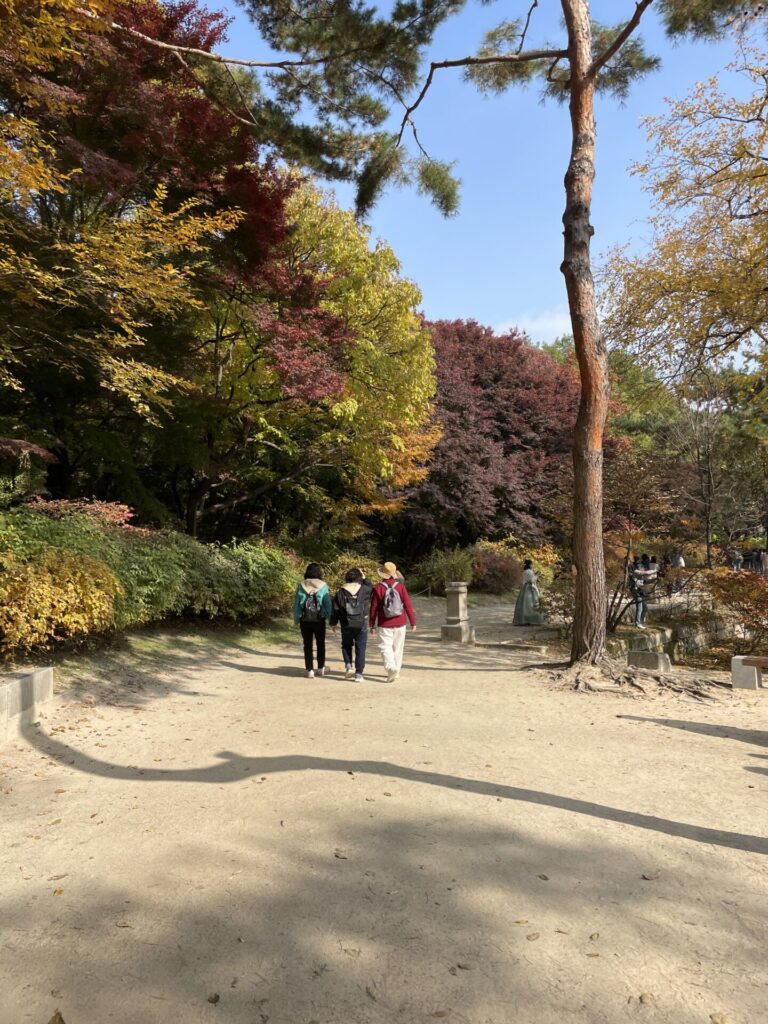
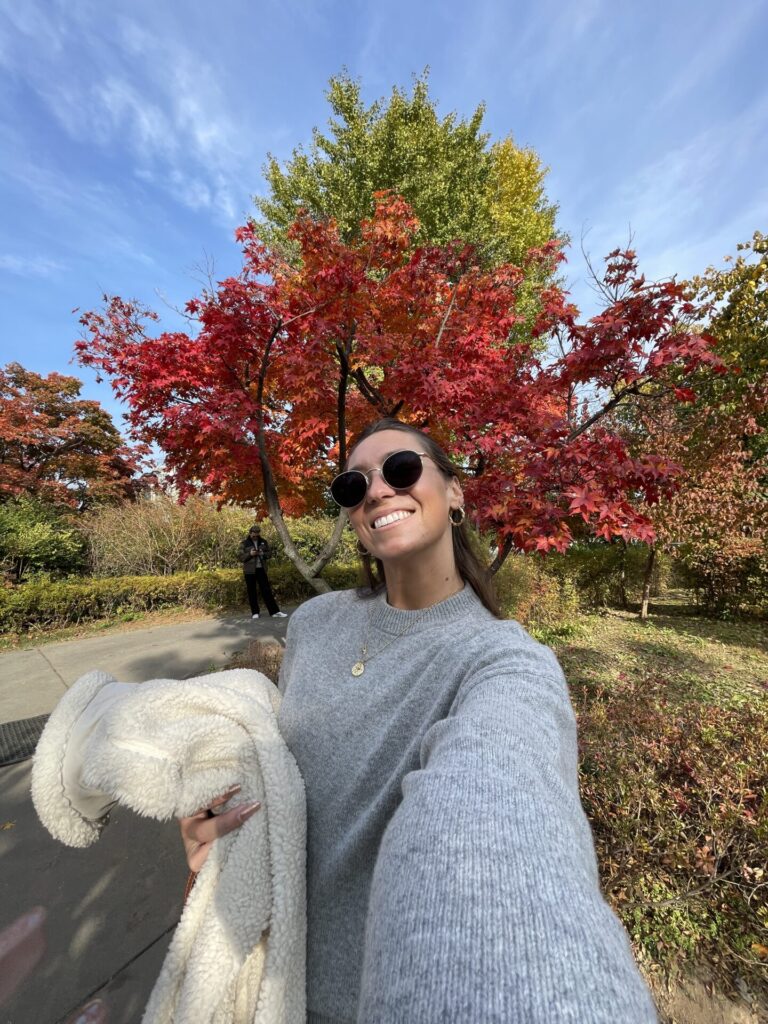
I visited Korea in November, and honestly… it was kind of perfect. The air was crisp but not freezing, the skies were that unreal bright blue, and the autumn leaves made even a random street in Seoul look like it belonged in a movie. It was ideal city weather, the kind where you can walk all day without melting into a puddle or needing five layers.
That being said, I definitely felt like I missed out on some of the more beachy, outdoorsy parts of Korea. Busan and Jeju Island still looked amazing, but it wasn’t exactly swimming season, and Jeju in particular seems like it would be next-level in the warmer months. So if you’re trying to figure out when to go, here’s a quick seasonal breakdown to help you pick the best time for your trip.
Spring (March to May) is one of the most popular times to visit, especially because of cherry blossom season. The weather is mild, everything starts blooming, and it’s perfect for a mix of city exploring and day trips.
Summer (June to August) is hot, humid, and peak beach season. This is the best time for Busan and Jeju if you want coastal vibes, swimming, and island adventures. Just be prepared for sticky weather and some rainy days.
Fall (September to November) is personally my favorite. The temperatures are comfortable, the fall colors are unreal, and it’s basically the perfect season for walking around Seoul, hiking, and doing cultural sightseeing without the crowds of spring.
Winter (December to February) is cold, but it has its own charm. If you love cozy cafes, winter markets, or even skiing in Korea’s mountain resorts, this can be a really fun time to visit. Just pack properly because it gets icy.
At the end of the day, there’s no bad season for Korea, it just depends on what kind of trip you want.
Final Tips for South Korea Travel
Before you book that flight and start dreaming about South Korean BBQ every night, here are a few last tips that will genuinely make your trip smoother. Korea is easy to travel… but it’s even easier when you know a couple of things ahead of time.
Fly In and Out of Different Airports
If you’re on a longer trip or doing a backpacking-style adventure, I highly recommend flying into one city and out of another.
We made the mistake of flying into Seoul and then having to backtrack all the way from Busan back to Seoul just for our flight home. Turns out, we could’ve flown straight out of Busan and saved ourselves hours of travel time.
So definitely check your airport options early. It can make your whole itinerary way more efficient.
Book Hotels Ahead of Time
Hotels in Korea book up fast, especially on weekends.
If you want the best value for money (and not the leftover expensive options), book your stays in advance. Korea isn’t always a destination where last-minute winging it works out in your favor. Check out my where to stay guide in Seoul here!
Use Klook for Trains and Buses
For traveling between cities, Klook was honestly a lifesaver.
You can book trains and buses in English, get confirmations instantly, and avoid the little stress of trying to figure everything out at the station with the language barrier.
Yes, you can book tickets in person, but we found it much easier online.
Stay in Myeongdong if It’s Your First Time in Seoul
If you’re a first-timer in Seoul, staying central is a game changer.
We stayed in Mangwon at the start, which is a really cool neighborhood, but Seoul is huge and commuting across the city made our days feel so much longer.
Myeongdong gives you easy access to the main tourist sites, shopping streets, markets, and transport connections.
FAQ: Korea Travel Guide
Is Seoul safe for visitors?
Yes, Seoul is one of the safest cities I’ve traveled to. I felt comfortable walking around even at night, the public transport is super secure, and overall the city just feels really well-organized. Of course, you should still use normal common sense like you would anywhere, but as a tourist, Seoul is incredibly safe and easy to navigate. You can check out my full Seoul travel guide here.
Is Seoul expensive to visit?
Visiting Seoul can be as affordable or as expensive as you make it. Accommodation and shopping can add up quickly, but food, cafes, and public transportation are actually really budget-friendly. You can eat amazing meals for cheap, metro rides cost almost nothing, and there are tons of free things to do like walking through neighborhoods or visiting markets.
How many days do I need in Korea?
I’d say 7–10 days is the sweet spot for traveling to Korea on your first trip. That gives you enough time to properly explore Seoul and also add another destination like Busan or Gyeongju without feeling rushed. If you only have 4–5 days, Seoul alone is still worth it, but Korea really shines when you can see more than one place.
Best things to do in Korea?
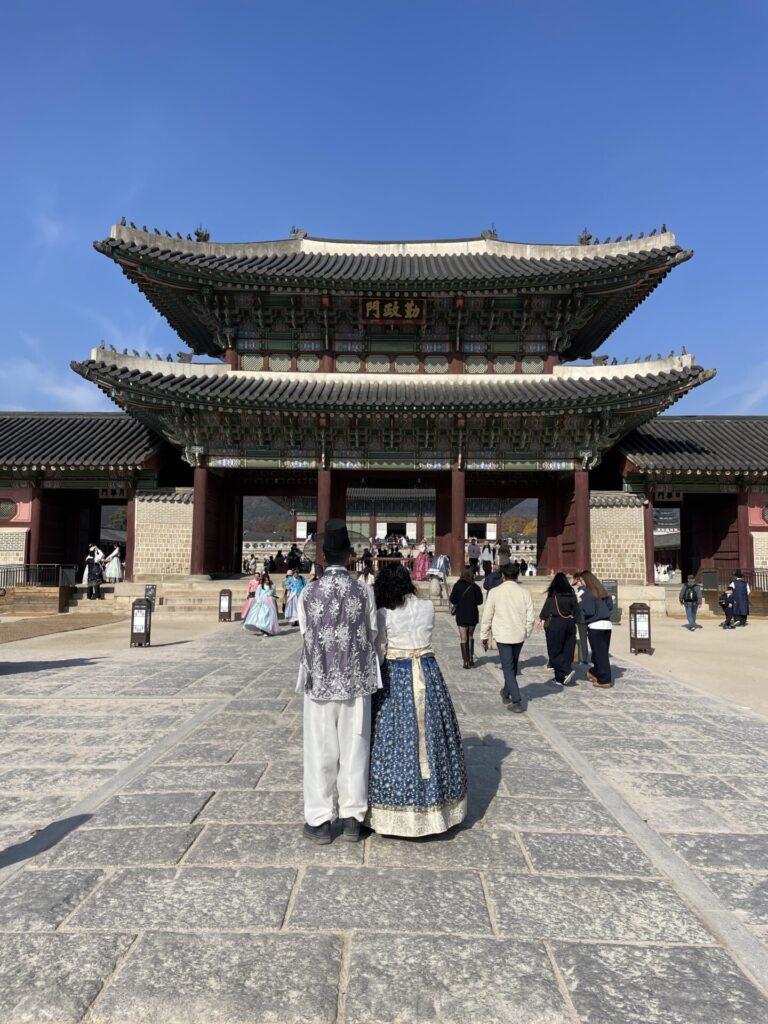
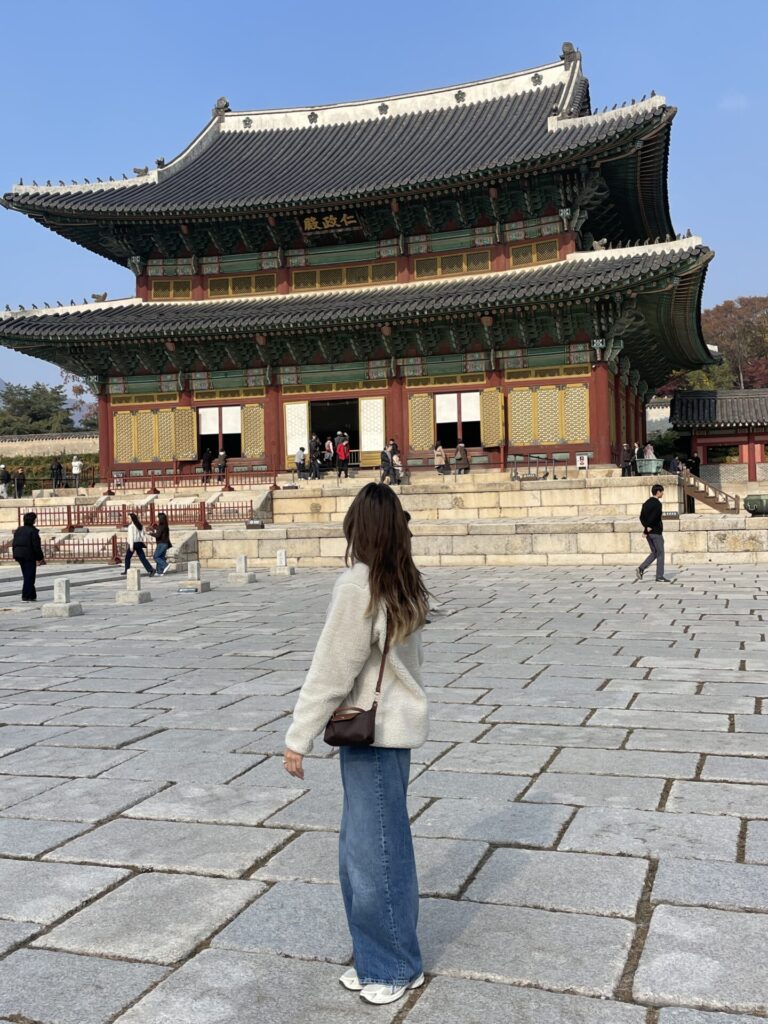
Some of the best experiences in Korea are a mix of culture, food, and just soaking up the vibe. Visiting the palaces in Seoul is a must, the night markets are so much fun, and doing a Korean BBQ dinner is basically required. If you have time, a DMZ tour is unforgettable, and getting out of Seoul to places like Busan, Jeju, or Gyeongju makes the trip even more special.
Final Thoughts on Things to Know Before Going to South Korea
Honestly, Korea completely stole my heart. I went in with basically zero expectations and somehow left already planning my next trip back. Between the food, the neighborhoods, the late-night markets, the palaces, the cafe mornings, and the overall vibe of just living in the city for a bit, it ended up being one of the most fun and surprising destinations I’ve ever visited.
I truly had the most epic time there, and I feel like Korea is one of those destinations that has something for everyone, whether you want big city energy, coastal escapes, cultural history, or just a really unique travel experience that feels different from anywhere else in Asia. If Korea is even slightly on your radar, take this as your sign to go. I promise you’re going to have the best time.
Check Out My Other Seoul Travel Guides
Is Seoul Worth Visiting? My Honest Review
The Best Time to Visit Seoul: My Weather in Seoul Guide
Seoul Travel Itinerary: How to Spend 3-5 Days in Seoul South Korea
Cafes in Seoul: My Favorite Cafes in Seoul
Things to Do in Seoul: My Top Activities in Seoul
Where to Stay in Seoul: My Top Areas & Hotels in Seoul
How Many Days in Seoul: My Day by Day Guide
Best Cocktail Bars in Seoul: My Favorite Spots for a Drink
Seoul Food Guide: My Top Restaurants in Seoul
Best Seoul Neighborhoods: My Area Guide for Seoul
Best DMZ Tour from Seoul: My Honest Review
Best Markets in Seoul: My Top Street Food Markets Seoul
Is Myeongdong Worth Visiting? My Honest Review
Solo Travel in Seoul: My Tips and Tricks for Solo Travelers
Must Buys in Seoul: My K-Beauty Guide for Seoul
Mini Guide to Gyeongbokgung Palace: Is it worth visiting?
The Starfield Library Seoul: Is it worth visiting?
Mangwon Seoul: My Full Mini Guide
Check Out My Other South Korea Guides
Is South Korea Worth Visiting? My Honest Review
South Korea Travel Itinerary: My 5,7 & 10 Day Itinerary
Things to Know Before Visiting South Korea: My Favorite Travel Tips